Culinary Explorer
A cooking platform built around craft, culture, and the stories behind what we eat.
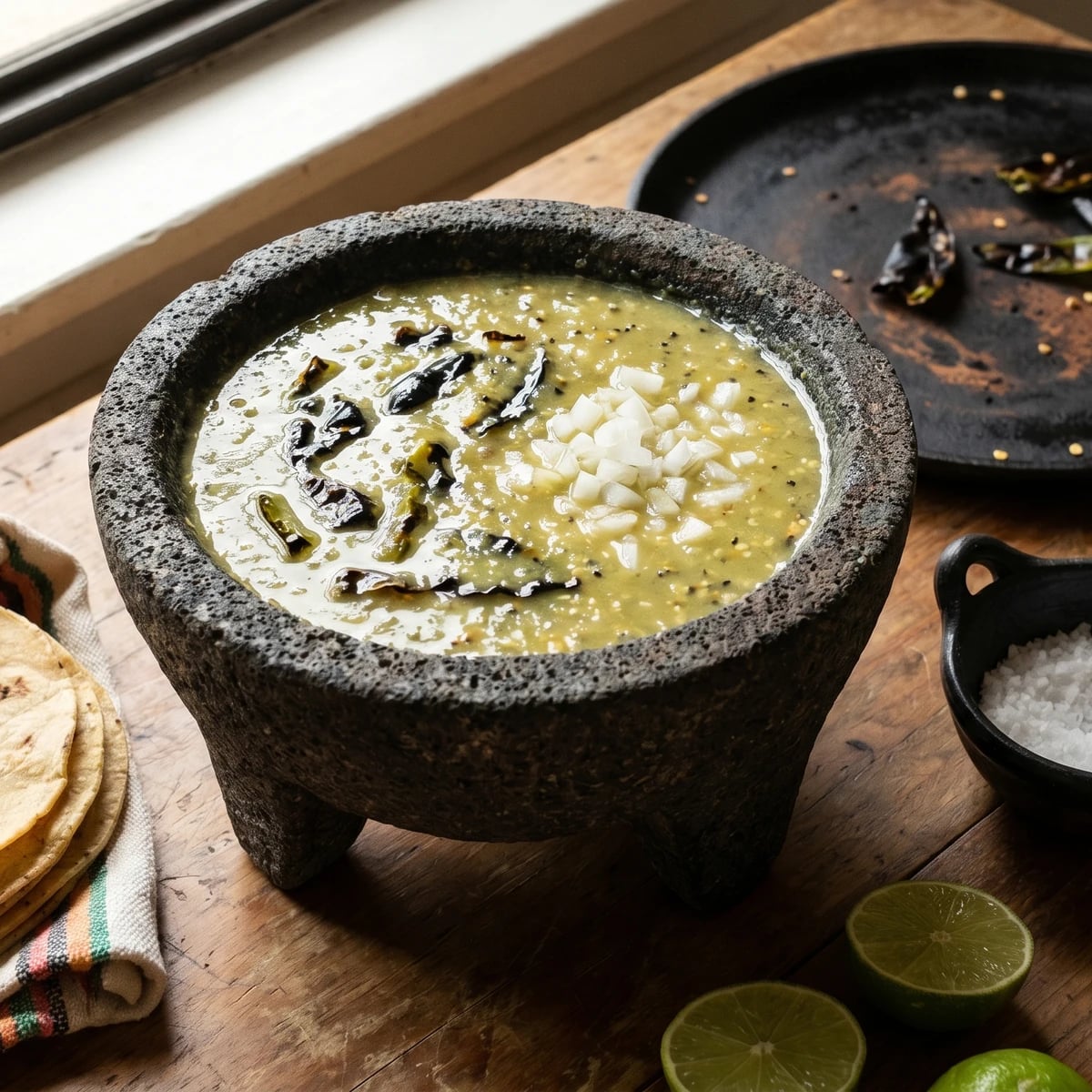
Salsa de Chile de Agua
Created by Chef Lupita
An Oaxacan table salsa from the Valles Centrales, built on the heirloom chile de agua, charred on a comal with tomate verde and garlic, ground rough in the molcajete and eaten the same day.
This salsa is from Oaxaca. Specifically from the Valles Centrales, the high valleys around the capital where the chile de agua is grown and where, outside that small geography, you will not find it. Etla, Tlacolula, Ocotlan, Zaachila. The chile is named for the irrigation it demands and the moisture it carries. It does not travel well, it does not dry well, and it does not exist in most US markets. If you do not live in Oaxaca or have a vendor who imports from there, you may never taste this salsa the way it is meant to taste, and that is part of the truth of Mexican regional cuisine. Cada estado, su propia cocina, and within Oaxaca, this salsa belongs to one valley.
The chile de agua is pale green, broad-shouldered, thin-skinned, and it carries a heat that arrives clean and leaves quickly. It is not the heat of a habanero or a manzano. It is sharp and immediate. The senoras at Mercado 20 de Noviembre will tell you the salsa needs nothing more than chile, tomate verde, garlic, salt, and lime. No cilantro. No cumin. No olive oil. The chile is the dish and everything else is there to frame it.
My mother never made this salsa. Jaliscienses do not have chile de agua. The first time I tasted it I was twenty-three and a senora named Dona Eustolia in Tlacolula put a molcajete down in front of me with the salsa still warm from the grinding. She told me to eat it with a fresh tortilla and nothing else. No me vengas con atajos. The blender does not make this salsa. The molcajete does. The grinding releases the seeds and bruises the skins and gives the salsa a texture you cannot get any other way. Saber cocinar es saber vivir.
Ingredients
fresh chile de agua
Quantity
6
stemmed (do not seed)
tomate verde (tomatillos)
Quantity
4 medium
husked and rinsed
garlic cloves
Quantity
3
unpeeled
| Ingredient | Quantity |
|---|---|
| fresh chile de aguastemmed (do not seed) | 6 |
| tomate verde (tomatillos)husked and rinsed | 4 medium |
| garlic clovesunpeeled | 3 |
Where cooking meets culture.
Culinary guides, cultural storytelling, and the editorial depth that makes cooking meaningful.
Discover Culinary Explorer