Chef Lupita
Aceite de Chiltepin Bajacaliforniano
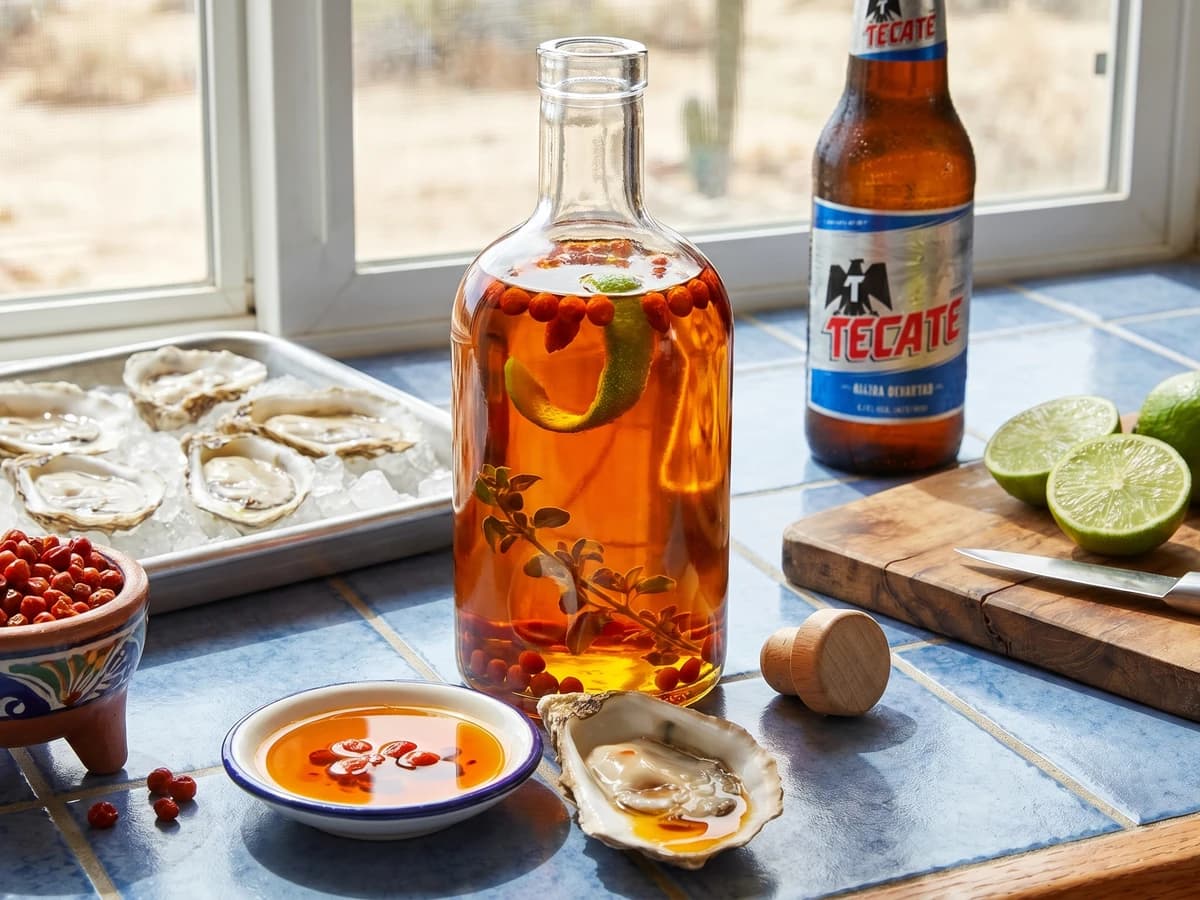
Baja California's wild chiltepin steeped in olive oil with garlic, orejon, and lime peel, until the oil turns ruby-amber and carries the slow, sneaky burn of the desert coast.
A cooking platform built around craft, culture, and the stories behind what we eat.
Created by
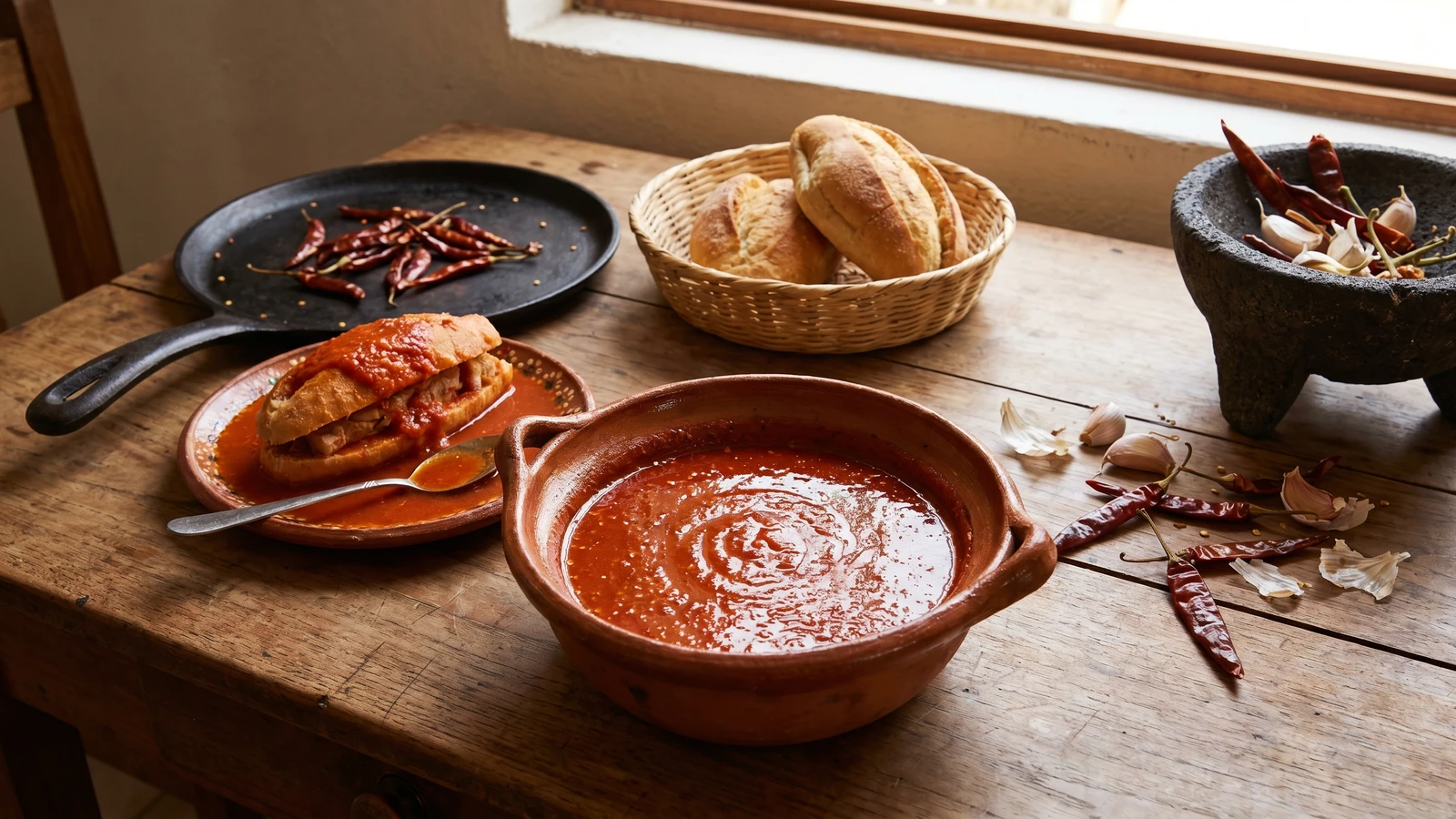
Guadalajara's table sauce for torta ahogada, made with chile de árbol de Yahualica, garlic, vinegar, and salt. Clean heat, no tomato, no sweetness, no apology.
Jalisco, specifically Guadalajara and the towns tied to its markets, owns this salsa. The torta ahogada does not become itself until the birote salado, carnitas, tomato sauce, and this chile de árbol sauce meet on the plate. Not a drizzle. A drowning. That is why it is called ahogada.
The chile that matters here is chile de árbol de Yahualica, from Los Altos de Jalisco. Small, thin, bright red, and direct. It does not give you the raisin sweetness of ancho or the brick-red softness of guajillo. It gives you heat with a clean edge, the kind that cuts through pork fat and soaked bread. If you use a random stale chile from a dusty bag, the salsa will punish you with bitterness before it gives you flavor. Start at the market, not the blender.
I learned this version from a señora near Mercado Libertad who kept the salsa in a little barro canelo jar on the counter, with a spoon so small it looked like a warning. She toasted the chiles fast, softened them in hot water, blended them with garlic and vinegar, and strained only when the skins were too tough. No tomato in this one. The tomato sauce is separate. Mix the two and you have confused the architecture of the torta. Cada estado, su propia cocina.
This is a budget salsa, yes, but budget does not mean careless. Toast without burning. Soak without boiling. Blend until the seeds disappear into the sauce. The heat should be fierce, clean, and useful. Recetas probadas y garantizadas.
The torta ahogada is a 20th-century Guadalajara specialty built around birote salado, the crusty, salty bread whose structure allows it to be submerged without collapsing immediately. Chile de árbol de Yahualica received Mexican Denomination of Origin protection in 2018, recognizing the specific growing region across municipalities in Jalisco and neighboring Zacatecas. In Guadalajara torterías, the tomato sauce and the chile de árbol sauce are traditionally kept separate so each diner can control the drowning and the heat.
Quantity
2 ounces
stemmed
Quantity
3
peeled
Quantity
1/2 cup
Quantity
1 cup, plus more for soaking
Quantity
1 teaspoon, plus more to taste
Quantity
1/4 teaspoon
crumbled
| Ingredient | Quantity |
|---|---|
| dried chile de árbol de Yahualicastemmed | 2 ounces |
| garlic clovespeeled | 3 |
| white vinegar | 1/2 cup |
| hot water | 1 cup, plus more for soaking |
| kosher salt | 1 teaspoon, plus more to taste |
| dried Mexican oreganocrumbled | 1/4 teaspoon |
Spread the chile de árbol on the table and inspect them before they touch the comal. They should be deep red, flexible enough to bend a little, and smell sharp and fruity. If they are brown, dusty, or smell like cardboard, they are old. No me vengas con atajos. Bad chiles make bad salsa.
Heat a dry comal or heavy skillet over medium. Toast the chiles in batches for 10 to 15 seconds, moving them constantly with tongs. They should darken slightly and smell nutty, not blacken. Chile de árbol is thin and burns fast. One burned batch will make the whole salsa bitter.
Put the toasted chiles in a heatproof bowl and cover with hot water. Hot, not boiling. Let them soak for 10 minutes, just until the skins soften. Boiling water roughens the skin and pushes bitterness forward. Drain the chiles and discard the soaking water.
On the same comal, toast the peeled garlic cloves until they show golden spots and smell sweet, about 3 minutes. Do not burn them. Raw garlic bites too hard in this salsa, and burned garlic tastes dirty. You want the middle road: softened, fragrant, still strong.
Put the soaked chiles, toasted garlic, vinegar, 1 cup hot water, salt, and Mexican oregano in a blender. Blend on high for 60 to 90 seconds, until the sauce is smooth and the seeds are broken down. The color should be bright brick red with a sharp vinegar smell and a little gloss from the chile oils.
Taste carefully with the tip of a spoon. Add salt if it tastes flat. Add a splash of hot water if it is too thick to pour. For torta ahogada, the salsa should run from the spoon but still cling to bread. Strain it only if your chiles had tough skins. In Guadalajara, many cooks leave the body in the salsa because the seeds and skins carry the heat.
Let the salsa sit for at least 15 minutes before serving. The vinegar sharpens, the garlic settles, and the chile heat becomes cleaner. Spoon it over tortas ahogadas at the table, separate from the tomato sauce. That separation matters. Así se hace y punto.
1 serving (about 27g)
Culinary guides, cultural storytelling, and the editorial depth that makes cooking meaningful.
Discover Culinary ExplorerChef Lupita
Baja California's wild chiltepin steeped in olive oil with garlic, orejon, and lime peel, until the oil turns ruby-amber and carries the slow, sneaky burn of the desert coast.

Chef Lupita
Puebla's Lenten convent adobo, a brick-red vinegar chile paste of ancho, guajillo, garlic, oregano, and comino made to dress fish for the meatless calendar.
Chef Lupita
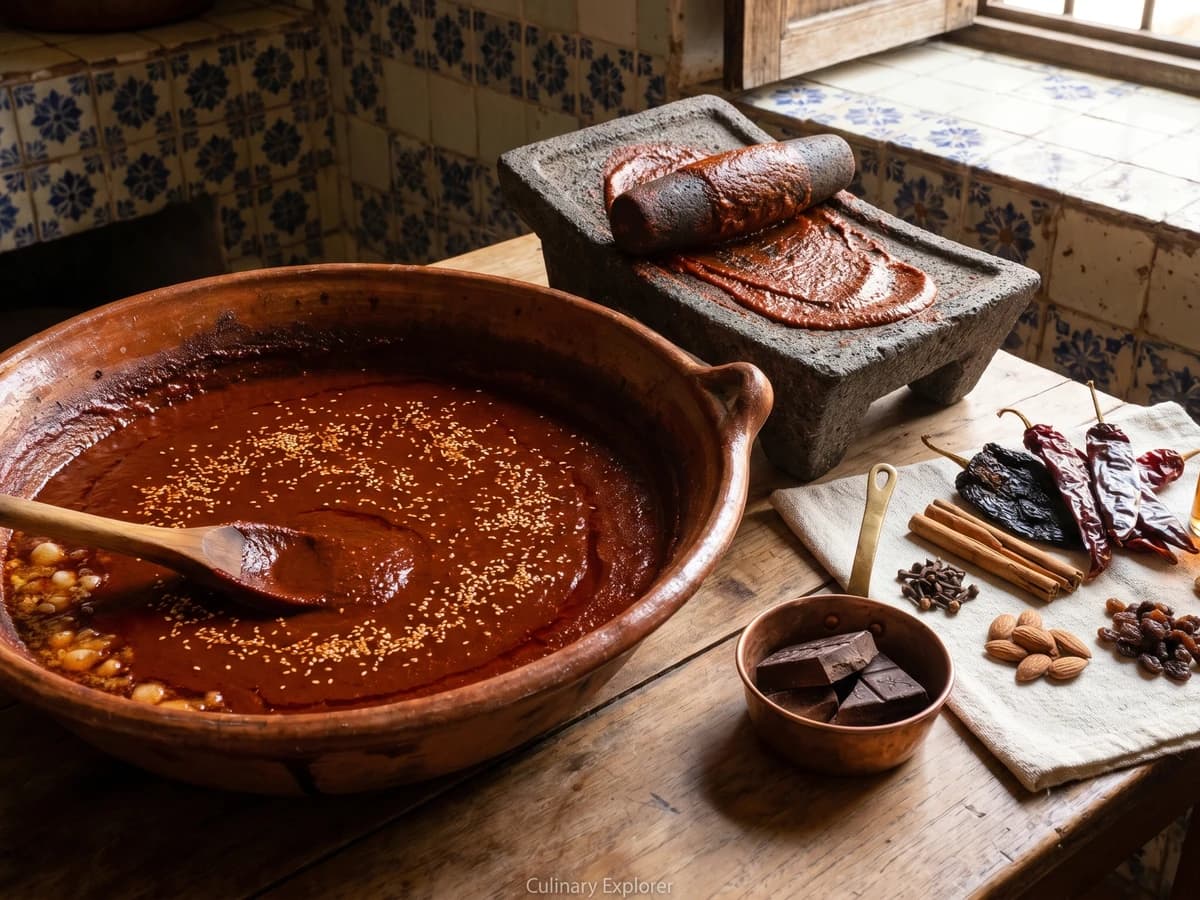
Zacatecas' wedding-table adobo, built from toasted guajillo and ancho, piloncillo, sour orange, chocolate, canela, clavo, almonds, sesame, and lard.

Chef Lupita
Puebla's convent kitchens built this adobo with ancho, guajillo, jerez, almonds, raisins, clove, and lard, a baroque marinade that stains pork loin and finishes as the sauce.