Chef Lupita
Aceite de Chiltepin Bajacaliforniano
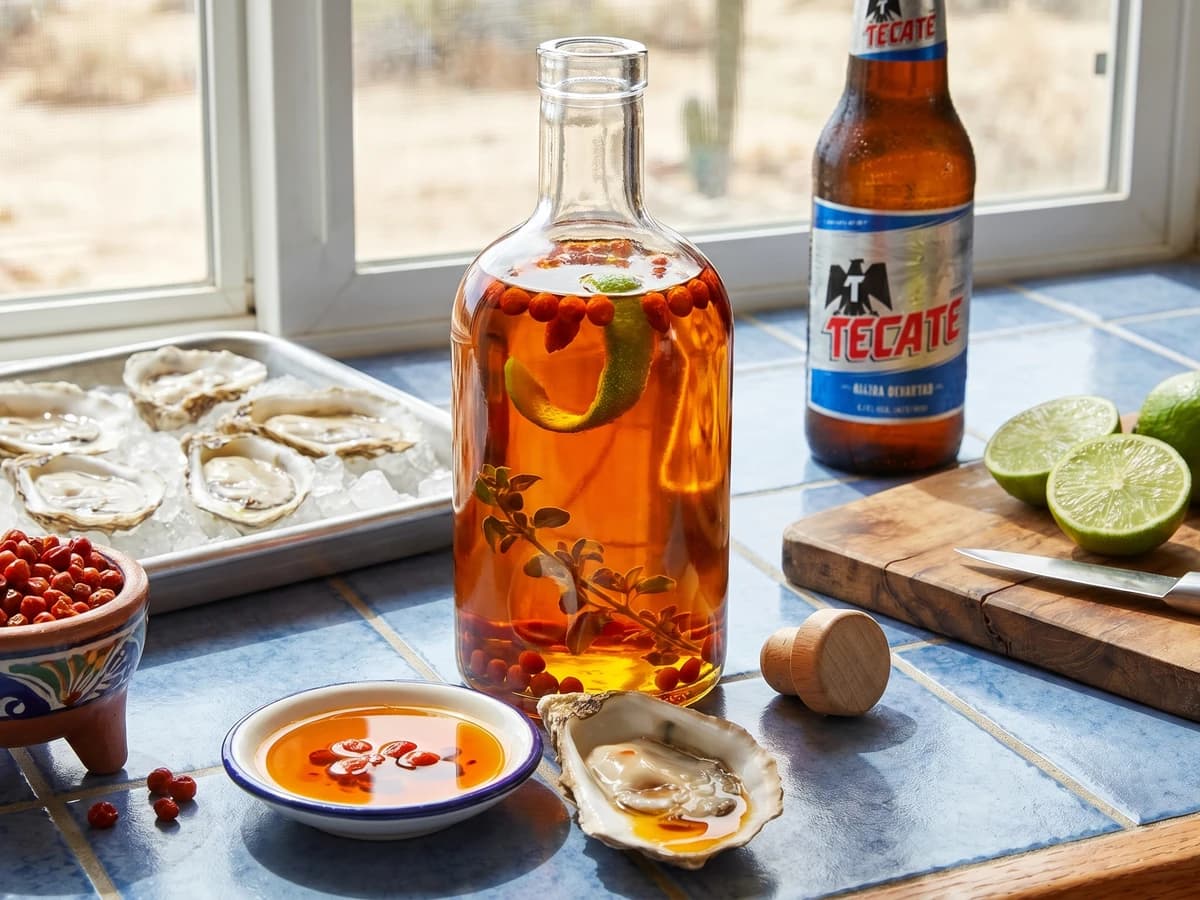
Baja California's wild chiltepin steeped in olive oil with garlic, orejon, and lime peel, until the oil turns ruby-amber and carries the slow, sneaky burn of the desert coast.
A cooking platform built around craft, culture, and the stories behind what we eat.

Created by
Oaxaca's salsa borracha built on smoke-dried pasilla mixe rehydrated and ground with mezcal joven, charred garlic, and orange juice. The salsa that lives next to barbacoa de chivo and on the table at every mezcal-pairing meal worth attending.
This is a Oaxacan salsa. Specifically, it belongs to the Sierra Mixe and the valleys around it, where the pasilla mixe is grown on small plots and dried over wood fires by farmers whose families have been doing it for generations. The chile is the recipe. Without it, you are making a different salsa.
A word about the chile, because most cooks outside Mexico get this wrong. The pasilla you find at the supermarket, the long wrinkled black one, is the chilaca dried, grown in the central highlands. It is a fine chile and it has no business in this salsa. Pasilla oaxaqueño, also called pasilla mixe, is shorter, wider at the shoulder, brick-red rather than black, and it carries the smoke of the wood fire it was dried over. Open the bag and the kitchen smells like a Oaxacan campo. If your chile does not smell like that, you have the wrong chile. Cada estado, su propia cocina, and this one belongs entirely to Oaxaca.
The mezcal is the second half of the equation. The salsa is called borracha, drunk, because it is laced with mezcal joven and the alcohol is what carries the smoke through the salsa. Use real mezcal from a small Oaxacan palenque. The kind that comes in a clay copita, not the kind that comes with a worm and a marketing campaign. The smoke of the pasilla mixe and the smoke of a good espadin are cousins, and the whole salsa is built on that conversation between them.
This is the salsa that sits next to barbacoa de chivo at the long Sunday tables in Tlacolula. It is the salsa that comes out at mezcal-pairing meals at the small comedores around Mitla. It is not a dipping salsa for chips. It is not a casual condiment. It is built to live next to slow-cooked goat or grilled meat, with hot tortillas and a copita of the same mezcal that went into the pot. Recetas probadas y garantizadas.
The chile pasilla oaxaqueño, known regionally as pasilla mixe, is grown almost exclusively in the Sierra Mixe of northeastern Oaxaca and is dried over wood fires in adobe-walled smokehouses, a technique documented in the region since the colonial period and likely predating it. Mezcal itself is a post-conquest distillation of pre-Columbian fermented agave beverages, with the still introduced via Spanish and Filipino contact in the 16th century, and the small-batch palenque tradition of the central valleys of Oaxaca was codified into the denominacion de origen mezcal in 1994. Salsa borracha, in its various forms across central and southern Mexico, has historical ties to barbacoa cooking traditions in Tlaxcala, Hidalgo, and Oaxaca, where the slow pit-cooked meat and a strong distilled or fermented agave drink were always paired at the same meal, and the salsa is the table-side bridge between the two.
Quantity
8
stemmed and seeded
Quantity
4
unpeeled
Quantity
1/2 small
peeled
Quantity
1/3 cup
preferably espadin from a small Oaxacan palenque
Quantity
1/3 cup (from 1 large orange)
Quantity
2 tablespoons
Quantity
1 cup
reserved from soaking the chiles
Quantity
1 teaspoon, plus more to taste
Quantity
1/2 teaspoon
preferably oregano oaxaqueño
Quantity
2 tablespoons
Quantity
1/4 cup
crumbled, for serving
Quantity
1/2 small
finely diced, for serving
Quantity
a splash
for serving
| Ingredient | Quantity |
|---|---|
| dried chile pasilla oaxaqueño (pasilla mixe)stemmed and seeded | 8 |
| garlic clovesunpeeled | 4 |
| white onionpeeled | 1/2 small |
| mezcal jovenpreferably espadin from a small Oaxacan palenque | 1/3 cup |
| fresh orange juice | 1/3 cup (from 1 large orange) |
| fresh lime juice | 2 tablespoons |
| hot water (not boiling)reserved from soaking the chiles | 1 cup |
| kosher salt | 1 teaspoon, plus more to taste |
| dried Mexican oreganopreferably oregano oaxaqueño | 1/2 teaspoon |
| manteca de cerdo (pork lard) | 2 tablespoons |
| queso fresco or queso añejo de Oaxaca (optional)crumbled, for serving | 1/4 cup |
| white onion (optional)finely diced, for serving | 1/2 small |
| mezcal joven to finish (optional)for serving | a splash |
Before you turn on the comal, look at your chiles. The pasilla oaxaqueño is not the pasilla you find in most US markets. That one is the long, wrinkled chilaca dried, grown mostly in central Mexico. The pasilla mixe is shorter, wider at the shoulder, with a deep brick-red skin and the unmistakable smell of wood smoke. It is dried over fires in the Sierra Mixe by farmers who have been doing it for generations. If your chile has no smoke smell, you have the wrong chile. No me vengas con atajos. Find the right one or do not make this salsa.
Heat a dry comal or heavy cast iron skillet over medium. Open each chile flat and press it onto the hot surface for about 10 seconds per side. The pasilla mixe is already smoke-dried, so it does not need long. You are waking the oils, not cooking the chile. The skin will give off a deeper smoke smell and turn slightly more pliable. If it puffs and starts to brown, pull it off immediately. Burn this chile and the salsa turns acrid. There is no fixing it later.
On the same comal, place the unpeeled garlic cloves and the half onion cut side down. Let them char for 8 to 10 minutes, turning occasionally, until the garlic skins are blackened in spots and the cloves inside are soft, and the onion has dark blistered patches on the cut face. This roasting is non-negotiable. Raw garlic gives you a sharp salsa. Charred garlic gives you depth. Asi se hace y punto.
Place the toasted chiles in a heatproof bowl and pour the hot water over them. Hot, not boiling. Boiling water cooks the skin and pulls bitterness out into the soak. Hot water softens the flesh and lets the smoke flavor stay clean. Cover the bowl with a plate and let the chiles soften for 15 minutes. They should bend without cracking. Reserve the soaking water. You will need most of it.
Peel the charred garlic. Tear the onion into rough pieces. Drain the chiles, saving the soaking water. In a blender, combine the chiles, garlic, onion, orange juice, lime juice, salt, oregano, and 1/2 cup of the chile soaking water. Blend until you have a thick, textured paste, not a smooth puree. The classic version is ground on a metate and the texture should still hint at that, with the chile flesh visible in the salsa. If your blender struggles, add another splash of soaking water. Just enough to move things along.
Heat the manteca in a small cazuela or heavy skillet over medium until it shimmers. Add the chile paste all at once. It will sputter. Step back, then stir. Cook for 5 to 7 minutes, stirring often, until the salsa darkens by a shade and you see the fat beading at the edges. La manteca es el sabor. This step rounds the salsa out and gives it the body that makes it cling to a piece of barbacoa instead of running off the plate.
Pull the cazuela off the heat. Pour in the mezcal and stir. The residual heat will burn off the sharpest alcohol but leave the smoke and the agave perfume in the salsa. This is what makes it borracha, drunk. Use a real mezcal joven from a small palenque, not a mass-produced bottle. The smoke of the pasilla mixe and the smoke of a good espadin are cousins, and that is the whole point of the salsa. Cheap mezcal will taste like solvent. Use what you would drink.
Let the salsa rest for at least 30 minutes before serving. The flavors need time to settle. Taste it then. The salt should be assertive, the smoke should be the dominant note, the orange should round it out, the mezcal should hum in the background, never shout. Adjust salt and a few more drops of lime if needed. If you are serving it within the hour, finish with a final splash of fresh mezcal right before it goes to the table.
Spoon the salsa into a small clay cazuelita, ideally barro negro from San Bartolo Coyotepec or rojo from Atzompa. Top with crumbled queso fresco and the finely diced raw white onion. Set it next to barbacoa de chivo, mixiotes, or grilled meats with hot tortillas and a copita of the same mezcal you used in the salsa. The pairing is the dish. Saber cocinar es saber vivir.
1 serving (about 65g)
Culinary guides, cultural storytelling, and the editorial depth that makes cooking meaningful.
Discover Culinary ExplorerChef Lupita
Baja California's wild chiltepin steeped in olive oil with garlic, orejon, and lime peel, until the oil turns ruby-amber and carries the slow, sneaky burn of the desert coast.

Chef Lupita
Puebla's Lenten convent adobo, a brick-red vinegar chile paste of ancho, guajillo, garlic, oregano, and comino made to dress fish for the meatless calendar.
Chef Lupita
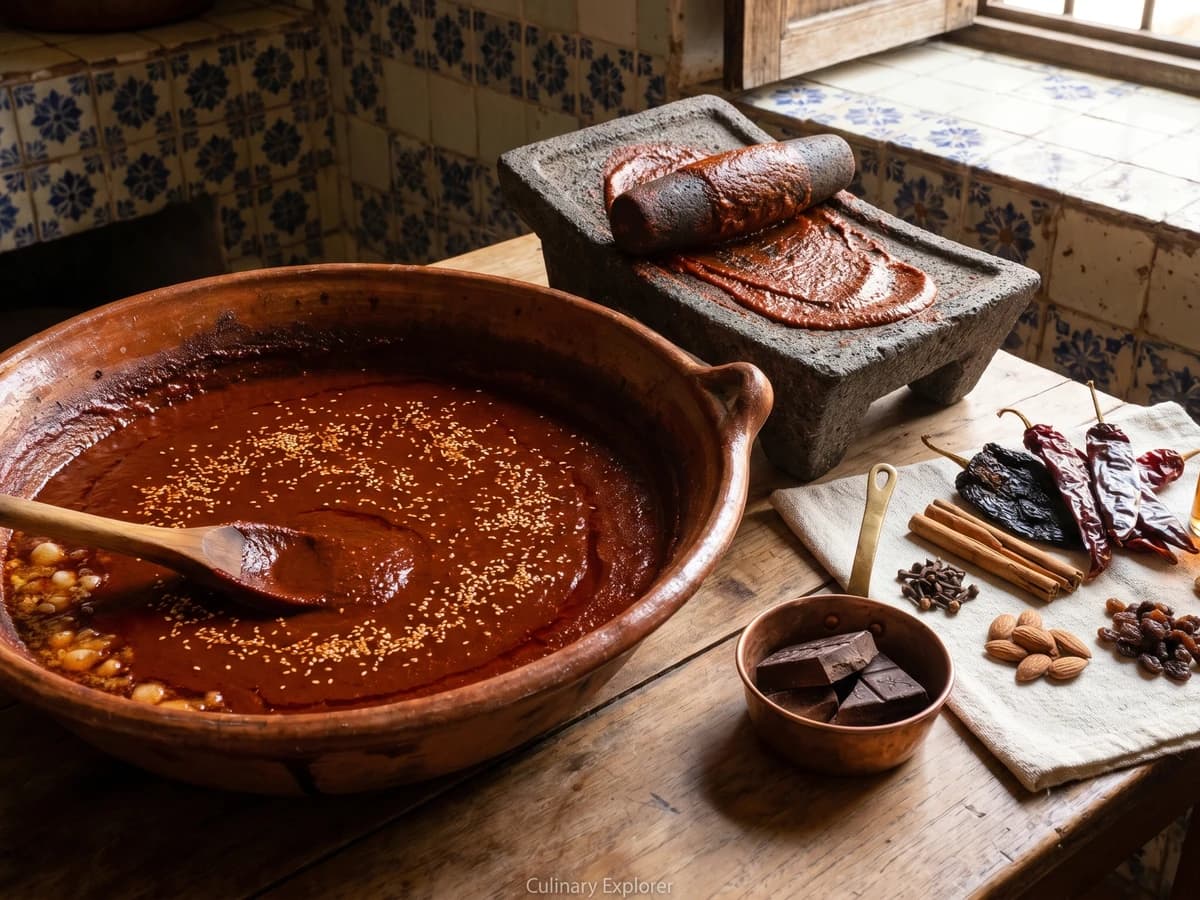
Zacatecas' wedding-table adobo, built from toasted guajillo and ancho, piloncillo, sour orange, chocolate, canela, clavo, almonds, sesame, and lard.

Chef Lupita
Puebla's convent kitchens built this adobo with ancho, guajillo, jerez, almonds, raisins, clove, and lard, a baroque marinade that stains pork loin and finishes as the sauce.