
Chef Lupita
Aceite de Chiltepin Bajacaliforniano
Baja California's wild chiltepin steeped in olive oil with garlic, orejon, and lime peel, until the oil turns ruby-amber and carries the slow, sneaky burn of the desert coast.
A cooking platform built around craft, culture, and the stories behind what we eat.
Created by
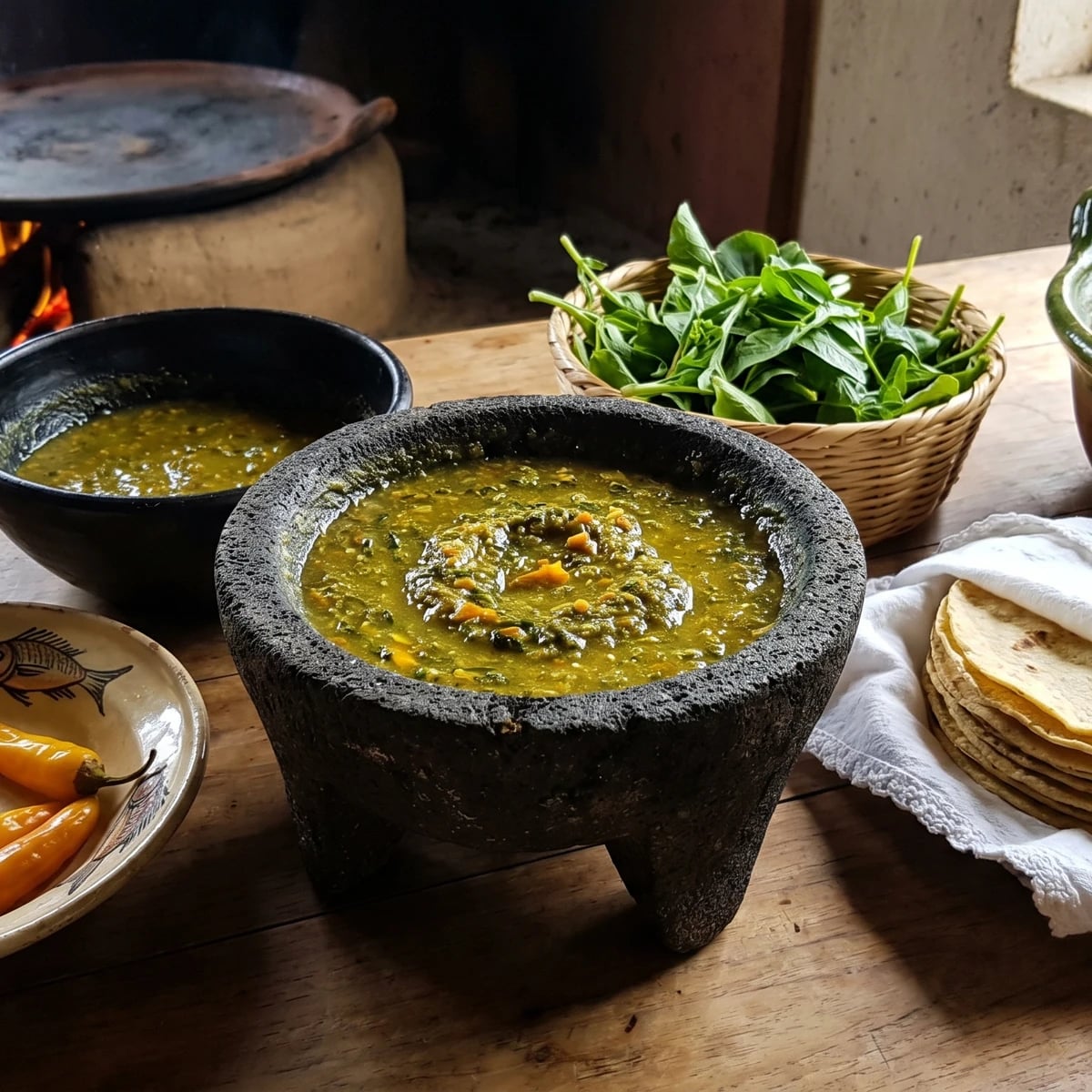
Michoacán's Meseta P'urhépecha sauce of milpa quelites, roasted chile perón, tomatillo, and masa de maíz, ground in a molcajete and served over chicken, eggs, beans, or warm corundas.
Michoacán, the Meseta P'urhépecha around Lake Pátzcuaro and Uruapan, is where salsa atápakua de quelites belongs. Not a green sauce from Ciudad de México. Not a mole painted green. This is the sauce of the milpa: quintoniles, verdolagas, quelite cenizo, whatever the rain and the market gave you that morning.
The chile is chile perón, yellow-orange, floral, citrusy, black-seeded, grown around Uruapan and Pátzcuaro. Serrano can make heat, but it cannot make that perfume. Jalapeño is even farther away. If you cannot find chile perón, say honestly that you are making a compromise, not an upgrade.
The binder is masa de maíz. Fresh nixtamalized masa loosened with water, stirred into the ground salsa until it thickens like a green atole. No pepita as thickener. No almonds. No bread. Atápakua is not mole, and it is not pipián. The women in P'urhépecha kitchens perfected this over leña, grinding in molcajete, cooking in barro, watching the spoon tell them when the corn had done its work.
I learned this version near Pátzcuaro from a señora who served it in black Capula clay next to chicken, beans, and tortillas wrapped in a Meseta servilleta. My mother from Jalisco did not have it in her notebook, so I wrote it in mine with the note she would have understood: masa first, greens last. Saber cocinar es saber vivir.
Atápakua is a P'urhépecha sauce-stew from Michoacán's lake and highland communities, built from three older systems of the region: milpa greens, nixtamalized corn, and grinding stone. In 2010 UNESCO inscribed Traditional Mexican Cuisine as Intangible Cultural Heritage using the Michoacán paradigm, especially P'urhépecha community foodways, because practices such as milpa agriculture, nixtamalization, molcajete or metate grinding, and cooking over leña remain continuous. Unlike mole or pipián, atápakua is thickened with masa de maíz; seeds, nuts, bread, and chocolate do not define its structure.
Quantity
1 pound
preferably quintoniles, verdolagas, and quelite cenizo, washed well, thick stems removed, roughly chopped
Quantity
8 ounces
husked and rinsed
Quantity
2
stemmed, black seeds left in for more heat or removed for less heat
Quantity
1
quartered
Quantity
2
unpeeled
Quantity
1/2 cup
Quantity
2 cups, plus more as needed
divided
Quantity
2 sprigs
leaves stripped and chopped
Quantity
1 teaspoon, plus more to taste
Quantity
for serving
Quantity
for serving
| Ingredient | Quantity |
|---|---|
| mixed fresh quelitespreferably quintoniles, verdolagas, and quelite cenizo, washed well, thick stems removed, roughly chopped | 1 pound |
| tomatillos milperos or small tart tomatilloshusked and rinsed | 8 ounces |
| fresh chile perón amarillo or naranjastemmed, black seeds left in for more heat or removed for less heat | 2 |
| small white onionquartered | 1 |
| garlic clovesunpeeled | 2 |
| fresh masa de maíz nixtamalizado | 1/2 cup |
| warm water or light chicken brothdivided | 2 cups, plus more as needed |
| fresh epazoteleaves stripped and chopped | 2 sprigs |
| sal de grano or kosher salt | 1 teaspoon, plus more to taste |
| cooked chicken, fried eggs, beans, or warm corundas (optional) | for serving |
| hand-pressed corn tortillas (optional) | for serving |
Pick through the quelites one handful at a time. Remove thick stems, yellow leaves, and any tough pieces that will not soften in the sauce. Wash the greens in several changes of water until no grit remains at the bottom of the bowl. Quelites come from soil, not plastic bags. Respect that, then clean them properly.
Heat a dry comal over medium heat, or set it over leña if you have the setup. Roast the tomatillos, chile perón, onion, and unpeeled garlic, turning them as they blister. The tomatillos should turn olive green and soften until their juices threaten to leak. The chile perón skin should blister in patches, not burn black. That chile carries a floral, citrus heat. Burn it and you lose the reason you bought it.
Peel the roasted garlic. Put the sal de grano in the molcajete and grind the garlic into a paste first. Add the roasted onion and chile perón. Grind until the chile skin breaks down but remains visible in small flecks. Add the tomatillos last and crush them into a martajada sauce, rough and alive, not smooth like bottled salsa.
In a bowl, dissolve the fresh masa de maíz with 1 1/2 cups of the warm water or broth. Use your fingers or a whisk and work out the lumps. The liquid should pour like thin atole. This is the binder. Not pepita, not nuts, not bread. Masa. Así se hace y punto.
Pour the ground tomatillo and chile mixture into a clay cazuela with the remaining 1/2 cup water or broth. Set it over medium-low heat and stir with a wooden spoon for about 5 minutes, until the raw sharpness of the tomatillo softens and the color deepens slightly. Clay holds heat, so be patient. If you are using a metal pan, keep the heat lower than you think.
Stir the masa liquid once more, then pour it slowly into the cazuela while stirring constantly. The sauce will thicken after 3 or 4 minutes. Keep stirring along the bottom so the corn does not catch and scorch. Simmer for 8 minutes, adding a splash of water or broth if it becomes too tight. The finished body should coat the spoon like a loose green atole, not sit in the pot like dough.
Fold in the chopped quelites and the epazote. Simmer gently for 4 to 6 minutes, just until the greens collapse into the sauce and stay green. Verdolagas turn silky. Quintoniles soften. If you boil the pot hard, the masa can scorch and the greens turn dull. Watch the cazuela. The señora who taught me this would tap the spoon on the side when a student looked away.
Taste for salt and let the atápakua rest 5 minutes off the heat. Spoon it over shredded chicken, fried eggs, beans, corundas, or uchepos. Serve it family-style in the molcajete or in black Capula clay, with warm hand-pressed corn tortillas. Do not add crema to make it pretty. La cocina no es decoración, es trabajo.
1 serving (about 190g)
Culinary guides, cultural storytelling, and the editorial depth that makes cooking meaningful.
Discover Culinary Explorer
Chef Lupita
Baja California's wild chiltepin steeped in olive oil with garlic, orejon, and lime peel, until the oil turns ruby-amber and carries the slow, sneaky burn of the desert coast.

Chef Lupita
Puebla's Lenten convent adobo, a brick-red vinegar chile paste of ancho, guajillo, garlic, oregano, and comino made to dress fish for the meatless calendar.

Chef Lupita
Zacatecas' wedding-table adobo, built from toasted guajillo and ancho, piloncillo, sour orange, chocolate, canela, clavo, almonds, sesame, and lard.

Chef Lupita
Puebla's convent kitchens built this adobo with ancho, guajillo, jerez, almonds, raisins, clove, and lard, a baroque marinade that stains pork loin and finishes as the sauce.