Chef Lupita
Aceite de Chiltepin Bajacaliforniano
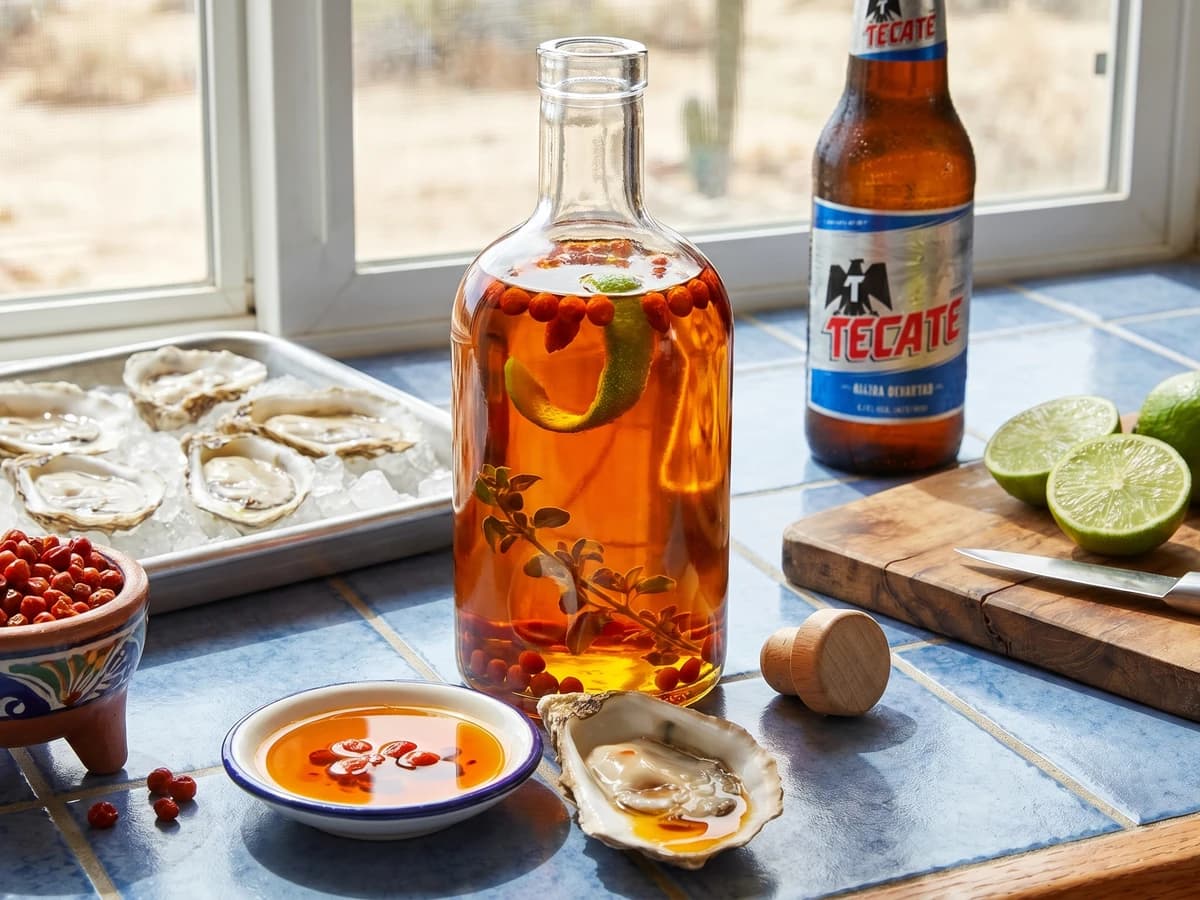
Baja California's wild chiltepin steeped in olive oil with garlic, orejon, and lime peel, until the oil turns ruby-amber and carries the slow, sneaky burn of the desert coast.
A cooking platform built around craft, culture, and the stories behind what we eat.
Created by
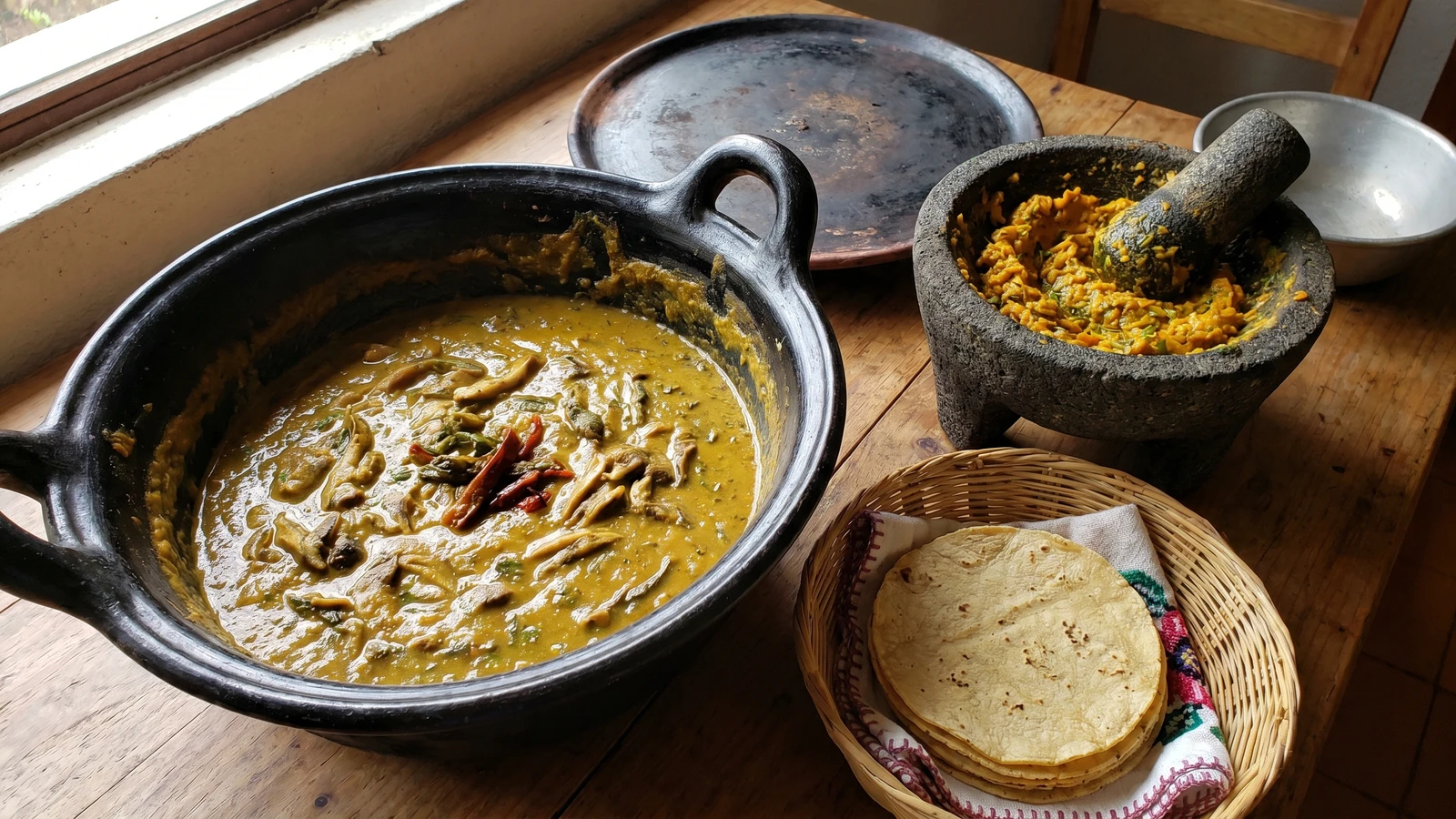
Michoacán's Meseta P'urhépecha gives this atápakua its wild mushrooms, floral chile perón, and masa-thickened body, a rainy-season sauce for pescado, chayote, eggs, or warm tortillas.
Michoacán, the Meseta P'urhépecha, rainy season. That is where this atápakua lives. In the markets around Pátzcuaro, Uruapan, Paracho, and Cherán, the terekua arrive in little piles when the monte has had enough water. You cook this when the mushrooms are there. If the market has no wild mushrooms, don't pretend. Cook what the land is giving you today.
Atápakua is a P'urhépecha preparation from Michoacán, older than the Spanish kitchen, built on maize as both food and thickener. The 2010 UNESCO recognition of Traditional Mexican Cuisine cited Michoacán's community cooking system, including the continuity of nixtamalized corn, wood-fire cooking, and women-led knowledge transmission. Unlike mole, atápakua is thickened with masa de maíz, not nuts, seeds, bread, or chocolate, and that distinction matters.
Quantity
1 pound
cleaned with a damp cloth and torn into bite-size pieces
Quantity
3
yellow-orange, firm, stems removed after roasting
Quantity
1 large white tomato or 3 medium tomatillos
husked and rinsed if using tomatillos
Quantity
2
whole
Quantity
1/2 medium
left unpeeled for roasting
Quantity
3
left unpeeled for roasting
Quantity
2 tablespoons
Quantity
4 cups
Quantity
1/2 cup
or 1/3 cup masa harina mixed with 1/2 cup warm water
Quantity
2 large sprigs
Quantity
1 teaspoon, plus more to taste
Quantity
1/2 cup
Quantity
for serving
warmed
| Ingredient | Quantity |
|---|---|
| wild terekua mushrooms or mixed wild mushrooms from Michoacáncleaned with a damp cloth and torn into bite-size pieces | 1 pound |
| fresh chile perónyellow-orange, firm, stems removed after roasting | 3 |
| white tomato or tomatilloshusked and rinsed if using tomatillos | 1 large white tomato or 3 medium tomatillos |
| Roma tomatoeswhole | 2 |
| white onionleft unpeeled for roasting | 1/2 medium |
| garlic clovesleft unpeeled for roasting | 3 |
| manteca de cerdo | 2 tablespoons |
| light vegetable broth, mushroom broth, or water | 4 cups |
| fresh masa de maíz nixtamalizadoor 1/3 cup masa harina mixed with 1/2 cup warm water | 1/2 cup |
| fresh epazote | 2 large sprigs |
| coarse sea salt | 1 teaspoon, plus more to taste |
| tender quelites or verdolagas (optional) | 1/2 cup |
| hand-pressed corn tortillas (optional)warmed | for serving |
Brush the terekua with a clean damp cloth and trim only the hard ends. Do not soak them. Wild mushrooms drink water like gossip and then refuse to brown. Tear them by hand into uneven pieces so the sauce has body.
Heat a comal over medium heat, or set it over leña if you have that kitchen. Roast the chile perón, white tomato or tomatillos, Roma tomatoes, onion, and garlic until blistered in spots and softened. Turn them often. The chile perón should wrinkle and smell floral, almost citrusy. That perfume is the Meseta speaking.
Peel the garlic and onion. Stem the chile perón. Grind the roasted chile, garlic, onion, tomatoes, and tomatillos in a volcanic stone molcajete with the sea salt until martajada, coarse and alive, with little skins of chile still visible. A blender works for a larger batch, but it makes the texture smoother and duller. The molcajete is the proper vessel. Así se hace y punto.
Melt the manteca de cerdo in a wide clay cazuela over medium heat. Add the torn mushrooms and cook until they release their liquid, the liquid cooks away, and the edges begin to brown. Listen for the pan to change from wet bubbling to a soft sizzle. That is when the mushroom flavor concentrates. La manteca es el sabor, and here it carries the forest into the sauce.
Add the ground chile and tomato mixture to the mushrooms. It will sputter. Stir with a wooden spoon and cook for 6 to 8 minutes, until the color deepens and the raw edge of the tomato is gone. This is atápakua, not mole. Do not add nuts, seeds, bread, chocolate, or plantain. The body comes from corn.
Pour in 3 1/2 cups of the broth or water and scrape the bottom of the cazuela. Add the epazote sprigs and bring to a steady simmer. Cook for 12 minutes so the mushrooms season the liquid and the epazote gives its sharp green backbone. Taste before adding more salt. Mushrooms vary, especially wild ones.
Whisk the fresh masa with the remaining 1/2 cup broth until smooth. Pour it slowly into the cazuela while stirring constantly. Simmer for 10 to 15 minutes, stirring often, until the sauce thickens enough to nap a spoon and coat a piece of fish or chayote without running off. Masa thickens as it cooks, not the second it hits the pot. Give it time.
Remove the epazote stems. Fold in the quelites or verdolagas if using and cook just until tender. Taste for salt. Serve the atápakua warm in the cazuela with tortillas, or spoon it over pescado blanco from Pátzcuaro, boiled chayote, roasted squash, or eggs. Recetas probadas y garantizadas.
1 serving (about 235g)
Culinary guides, cultural storytelling, and the editorial depth that makes cooking meaningful.
Discover Culinary ExplorerChef Lupita
Baja California's wild chiltepin steeped in olive oil with garlic, orejon, and lime peel, until the oil turns ruby-amber and carries the slow, sneaky burn of the desert coast.

Chef Lupita
Puebla's Lenten convent adobo, a brick-red vinegar chile paste of ancho, guajillo, garlic, oregano, and comino made to dress fish for the meatless calendar.
Chef Lupita
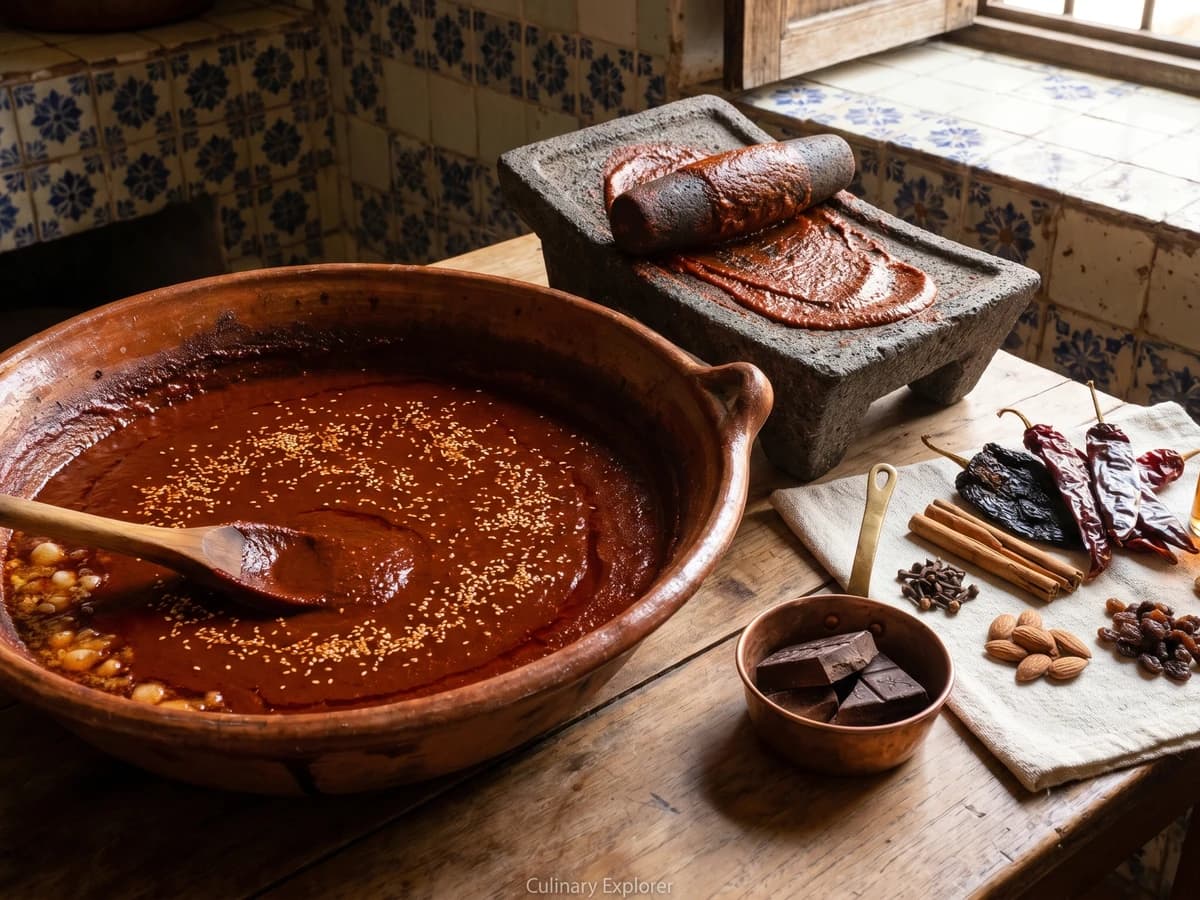
Zacatecas' wedding-table adobo, built from toasted guajillo and ancho, piloncillo, sour orange, chocolate, canela, clavo, almonds, sesame, and lard.

Chef Lupita
Puebla's convent kitchens built this adobo with ancho, guajillo, jerez, almonds, raisins, clove, and lard, a baroque marinade that stains pork loin and finishes as the sauce.