Chef Zohra
Bakoula (بقولة)
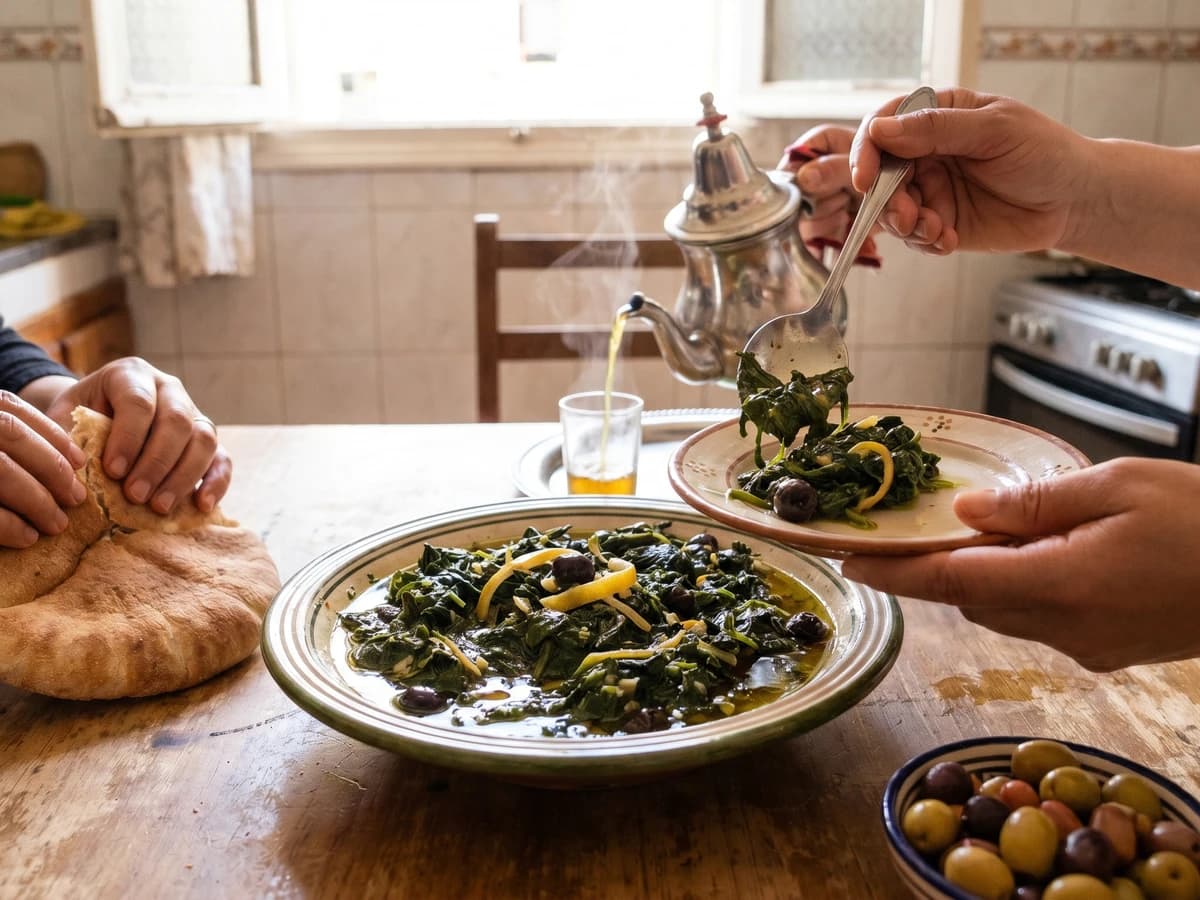
Mallow greens cooked soft and dark with garlic, cumin, preserved lemon, and olives, the Moroccan cooked salad that tastes of spring rain and a loaf of khobz shared warm.
A cooking platform built around craft, culture, and the stories behind what we eat.
Created by
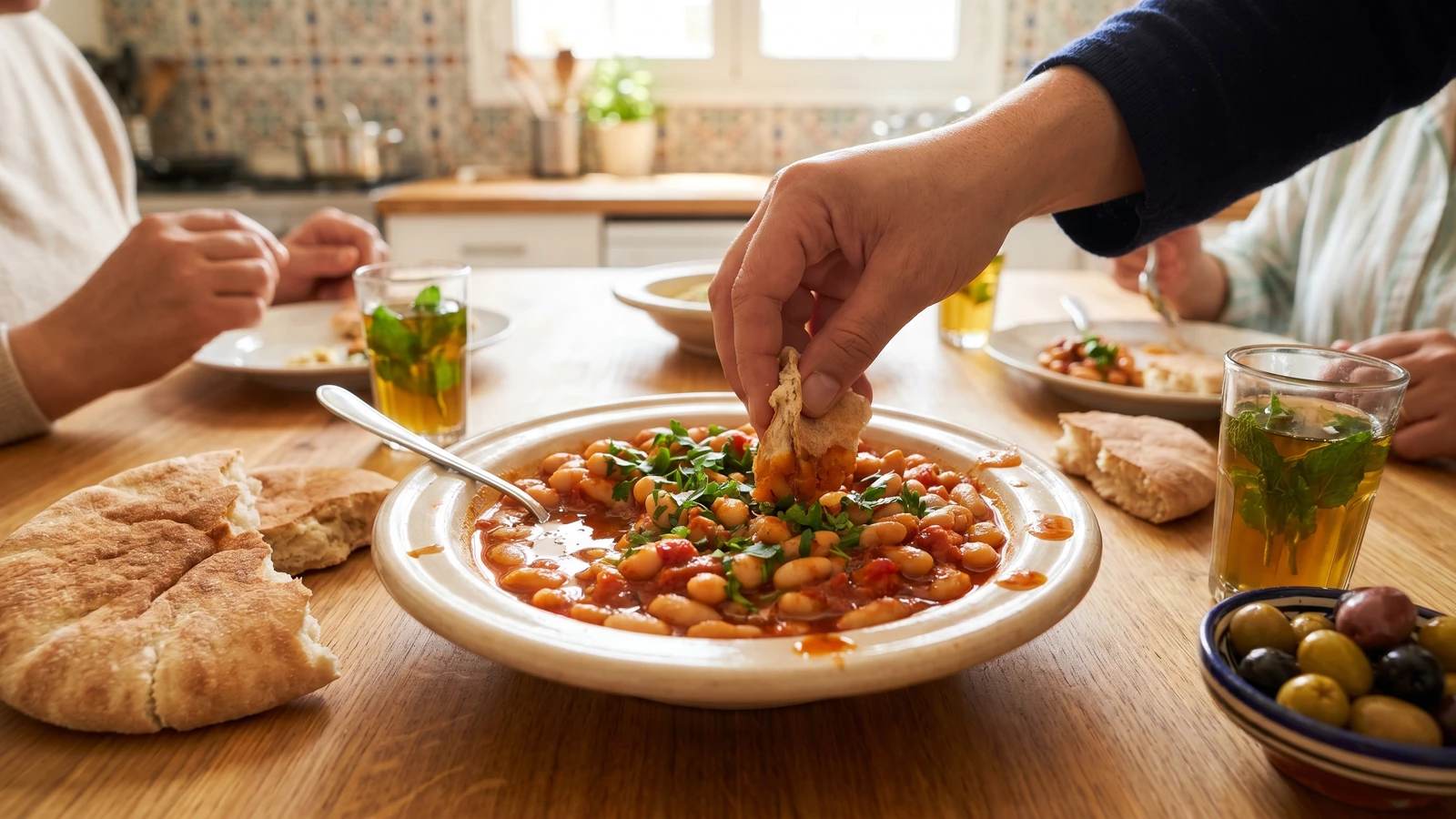
Tender white beans drink a warm chermoula of garlic, cumin, paprika, coriander, and tomato, then rest until the oil shines on them. Eat it cool, with khobz and room for one more hand.
The beans are ready when they stop resisting the spoon but still hold their shape. That is the whole care of loubia in salad form: not chalky, not broken into paste, but tender enough to drink the chermoula while they're still warm.
You cook them first with patience, then you wake the garlic, cumin, paprika, and tomato in olive oil just until the smell rises. Warm beans take seasoning better than cold ones. This is why the marinade goes on before the bowl goes to rest, so each bean carries the sauce inside and not only on its skin.
Salade de loubia belongs to the spread of small Moroccan salads, the plates that arrive before the main dish and somehow become the reason everyone tears more bread. It's budget food, yes, but never careless. Make it ahead, serve it cool, and put the bowl in the center. Une table, c'est une porte qu'on laisse ouverte, a table is a door you leave open.
Loubia, the white bean, became common in Morocco after New World beans moved through Atlantic and Mediterranean trade in the 16th and 17th centuries, then settled into city and home cooking from the north to the east. The tomato-and-spice treatment is a later layer, tied to the spread of tomatoes in North African kitchens after the Columbian exchange rather than to medieval Andalusi cooking. Recipes vary by region and household, some serving loubia as a hot stew and others as a cool salad in the kemia spread, one small proof that there are des cuisines marocaines, not one fixed Moroccan cuisine.
Quantity
300g
soaked overnight
Quantity
1
Quantity
1 small
halved
Quantity
3
finely grated
Quantity
3 tbsp
Quantity
2
grated, or 200g canned crushed tomato
Quantity
1 tbsp
Quantity
1 1/2 tsp
Quantity
1 tsp
Quantity
1/4 tsp
Quantity
1/2 tsp, plus more for the bean water
Quantity
2 tbsp
chopped
Quantity
2 tbsp
chopped
Quantity
1 tbsp, to taste
Quantity
to taste
Quantity
for finishing
| Ingredient | Quantity |
|---|---|
| dried white beanssoaked overnight | 300g |
| bay leaf | 1 |
| onionhalved | 1 small |
| garlic clovesfinely grated | 3 |
| extra-virgin olive oil | 3 tbsp |
| ripe tomatoesgrated, or 200g canned crushed tomato | 2 |
| tomato paste | 1 tbsp |
| ground cumin | 1 1/2 tsp |
| sweet paprika | 1 tsp |
| cayenne pepper (optional) | 1/4 tsp |
| fine sea salt | 1/2 tsp, plus more for the bean water |
| fresh corianderchopped | 2 tbsp |
| flat-leaf parsleychopped | 2 tbsp |
| lemon juice or mild vinegar | 1 tbsp, to taste |
| freshly ground black pepper | to taste |
| extra olive oil (optional) | for finishing |
Rinse the dried white beans, cover them with plenty of cold water, and leave them overnight. They should swell and lose their wrinkled look. Drain them before cooking, because the soaking water has done its work and you don't need to carry it into the pot.
Put the soaked beans in a pot with fresh water to cover by 5 cm, the bay leaf, and the halved onion. Bring to a gentle simmer and cook until the beans are tender all the way through, 60 to 75 minutes depending on their age. Salt them in the last 15 minutes. Taste a bean, don't trust the clock; old beans make liars of clocks.
While the beans cook, warm the olive oil in a wide pan over medium-low heat. Add the grated garlic and stir just until it smells sweet, not brown. Add the grated tomato, tomato paste, cumin, paprika, cayenne if you're using it, salt, and black pepper. Cook 8 to 10 minutes, until the tomato thickens and the oil begins to show at the edges.
Drain the beans, saving a small cup of their cooking liquid. Discard the onion and bay leaf. Add the warm beans to the pan with the chermoula and fold gently so you don't crush them. If the sauce feels tight, add a spoon or two of bean liquid. Warm beans drink the seasoning, and that is why you don't wait until they're cold.
Take the pan off the heat and stir in the coriander, parsley, and lemon juice or vinegar. Taste for salt and acid. La balance est dans les yeux, and here also in the mouth: the salad should taste rounded, garlicky, and bright enough to make you reach for bread.
Let the loubia rest at least 1 hour, or chill it for later and bring it back toward room temperature before serving. Spoon it into a shallow bowl, gloss it with a little olive oil, and set it out with khobz. It is eaten cool, not cold from the back of the refrigerator.
1 serving (about 150g)
Culinary guides, cultural storytelling, and the editorial depth that makes cooking meaningful.
Discover Culinary ExplorerChef Zohra
Mallow greens cooked soft and dark with garlic, cumin, preserved lemon, and olives, the Moroccan cooked salad that tastes of spring rain and a loaf of khobz shared warm.

Chef Zohra
Potatoes simmered until tender, then turned while warm through chermoula, garlic, cumin, paprika, coriander, olive oil, and preserved lemon. This is a weeknight Moroccan salad that still opens the table.

Chef Zohra
Fresh fava beans cooked until tender, then folded warm into chermoula of garlic, cumin, paprika, coriander, and preserved lemon. Spring food for a shared bowl, carried to the table with bread.

Chef Zohra
Fine-grated carrot dressed with orange juice, a little sugar, orange-flower water, and cinnamon. Khizou bel limoun is the fresh raw counterpoint that wakes up a Moroccan table.