
Chef Margarida
Cenouras à Algarvia
The marinated carrots of the Algarve, where garlic, paprika, and good azeite transform a humble root into something you'll make every week. Proof that the south knows how to treat vegetables.
A cooking platform built around craft, culture, and the stories behind what we eat.
Created by
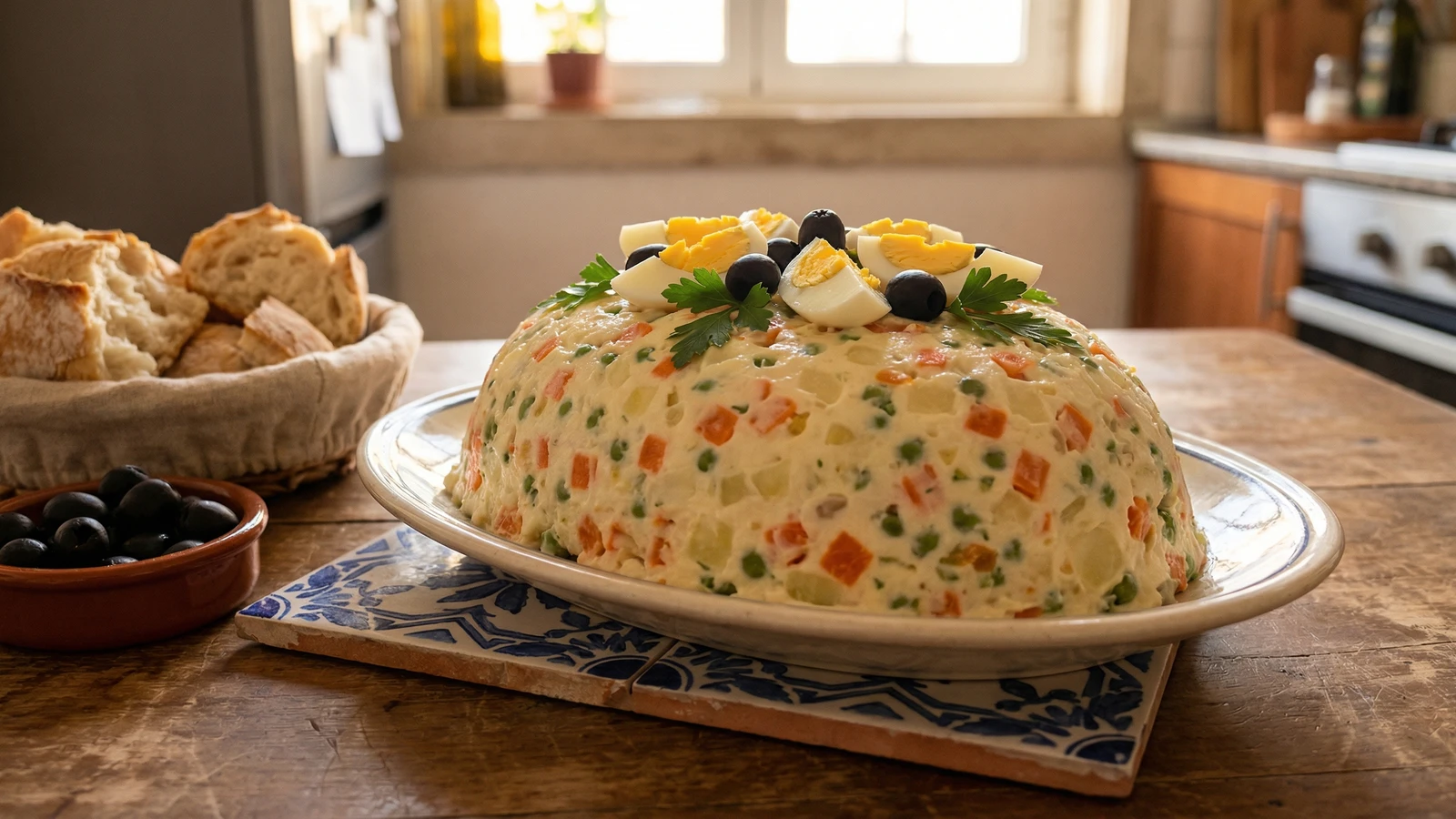
The potato salad that appears at every Portuguese table, from tasca counters to Sunday lunches. Humble vegetables, creamy mayonnaise, and the quiet genius of making something everyone fights over.
Every Portuguese grandmother makes salada russa. Every single one. And if you ask her for the recipe, she'll wave her hand and say "um bocadinho disto, um bocadinho daquilo." A little of this, a little of that. No measurements. Just memory and instinct.
This isn't Russian food anymore, whatever it once was. This is ours now. It sits in every tasca display case, spooned onto plates beside fried fish and cold beer. It appears at birthday parties, at beach picnics packed in glass containers, at Christmas Eve dinner next to the bacalhau. It's the dish nobody thinks about until it's missing, and then everyone asks where it is.
Avó Leonor made hers with homemade mayonnaise, whisked by hand in her yellow ceramic bowl until her arm ached. She'd dice everything so small you could barely tell what was what. "Assim come-se melhor," she'd say. It eats better this way. The vegetables should melt together, not announce themselves separately.
The secret, if there is one, is restraint. Don't overdress it. The mayonnaise should bind, not drown. And for the love of all that's good, don't add things that don't belong. I've seen versions with ham, with tuna, with apple. That's not salada russa. That's something else. Separar as águas.
Salada russa arrived in Portugal in the late 19th century, likely through French culinary influence rather than directly from Russia. The original Olivier salad, created in Moscow in the 1860s, was a luxurious dish with game and caviar. By the time it reached Portuguese tables, it had transformed into something humbler: potatoes, carrots, peas, and whatever the home cook had on hand. Today it's so thoroughly Portuguese that most people have forgotten it ever came from anywhere else.
Quantity
750g
peeled
Quantity
300g
peeled
Quantity
200g
Quantity
4 large
Quantity
250g
Quantity
2 tablespoons
Quantity
1 tablespoon
Quantity
1 teaspoon
Quantity
to taste
Quantity
to taste
Quantity
for garnish
finely chopped
Quantity
2
sliced, for garnish
Quantity
for garnish
| Ingredient | Quantity |
|---|---|
| waxy potatoespeeled | 750g |
| carrotspeeled | 300g |
| frozen peas | 200g |
| eggs | 4 large |
| mayonnaise | 250g |
| extra virgin olive oil | 2 tablespoons |
| white wine vinegar | 1 tablespoon |
| Dijon mustard | 1 teaspoon |
| fine sea salt | to taste |
| white pepper | to taste |
| fresh parsleyfinely chopped | for garnish |
| hard-boiled eggssliced, for garnish | 2 |
| black olives (optional) | for garnish |
This is the step everyone wants to skip, and it's the step that matters most. Cook each vegetable separately in well-salted water. The potatoes need about 15 minutes until just tender. The carrots need about 12 minutes. The peas need only 3 minutes. Each vegetable has its own timing. If you cook them together, something will be overcooked and something will be undercooked. Drain each one well and spread on a tray to cool.
Place the 4 eggs for the salad (plus the 2 for garnish, if using) in a single layer in a pot. Cover with cold water by 2 centimeters. Bring to a boil, then remove from heat, cover, and let sit for 10 minutes. Transfer to ice water immediately. This gives you fully cooked yolks without that grey-green ring. Peel when cool.
Cut the cooled potatoes, carrots, and peeled eggs into small dice, about 1 centimeter cubes. Uniform size matters here. You want every forkful to have a bit of everything. Avó Leonor would dice hers even smaller, almost to the point of mincing. That's the traditional way, but it takes patience. Do what suits you.
In a small bowl, whisk together the mayonnaise, olive oil, vinegar, and mustard until smooth. The olive oil loosens the mayonnaise slightly. The vinegar brightens everything. The mustard adds depth without announcing itself. Taste and adjust. This is your moment to get the balance right.
Place the diced potatoes, carrots, peas, and eggs in a large bowl. Season with salt and white pepper. White pepper because black pepper leaves specks that some people find unappealing in this pale salad. Add the dressing and fold gently with a rubber spatula. You're not stirring. You're folding. The potatoes want to break; don't let them. Add dressing gradually. You want the vegetables coated, not swimming.
Cover and refrigerate for at least 2 hours, or overnight. The flavors need time to come together, and the salad needs to firm up. Before serving, taste again and adjust seasoning. Transfer to a serving dish, smooth the top, and garnish with sliced hard-boiled eggs, parsley, and olives if you like. Serve cold, alongside fried fish, grilled sardines, or as part of any spread where good bread is present.
1 serving (about 230g)
Culinary guides, cultural storytelling, and the editorial depth that makes cooking meaningful.
Discover Culinary ExplorerChef Margarida
The marinated carrots of the Algarve, where garlic, paprika, and good azeite transform a humble root into something you'll make every week. Proof that the south knows how to treat vegetables.

Chef Margarida
The dish that taught me Lisbon's tascas were universities of flavor. Salt cod and chickpeas, roughly tossed, never fussed over. The name means 'half undone' because that's exactly how you make it.

Chef Margarida
Pig's ears braised until silky, then dressed in garlic, vinegar, and bright handfuls of coentros. Alentejo's disappearing bar snack that deserves a place at your table.

Chef Margarida
The name comes from the action: vigorous mixing with your fists until raw bacalhau, onion, and olive oil become something silky and unified. Punchy, raw, utterly Portuguese.