
Chef Juliana
Laranja em Gomos para Feijoada
You think cutting orange this way is fussy. It isn't. It's one knife, one bowl, and the reason feijoada tastes like home instead of just heavy.
A cooking platform built around craft, culture, and the stories behind what we eat.
Created by
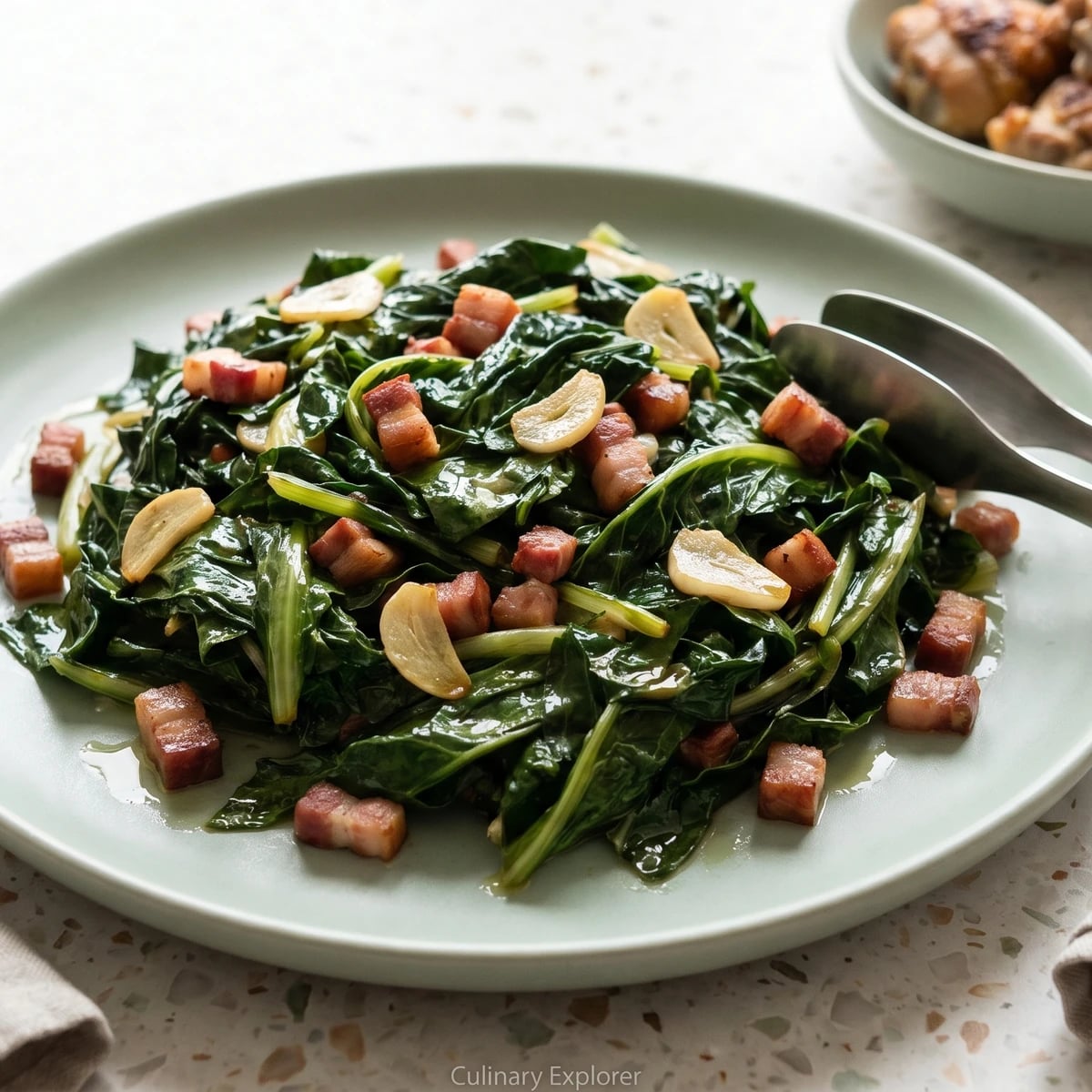
Bitter greens are not punishment. Hot bacon fat, garlic, and vinegar soften the bite of radici into the sharp, warm green a good everyday plate needs.
You see a pile of bitter greens and think, isso não é pra mim. I know. A gente learned to fear bitterness as if dinner had to be sweet, soft, and obedient. Nonsense. Bitterness is a flavor, not a defect, and it only needs someone to teach it how to behave.
In the Serra Gaúcha, this kind of warm radici salad sits beside galeto, polenta, rice, beans, meat, and all the other parts of the table that make people linger. At home, it does the same quieter job on a Tuesday pê-efe: arroz soltinho, feijão, something browned in the pan, and something green with enough character to wake the plate up.
The method is small and exact. Wash the greens well, dry them so they don't turn watery, pour hot bacon fat over them so they murcham just enough, then finish with vinegar while the pan is still warm. Heat softens the bitter edge. Vinegar cuts the fat. Garlic gives the whole thing a backbone. No packet, no powder, no little cube pretending to be flavor.
Cozinhar não é dom, é um aprendizado. Anota aí: when the leaves go glossy and relaxed but still keep a little chew, you've got it. That's salada de radici, desgourmetizada and doing its work.
Salada de radici belongs to the Italian-Brazilian cooking of the Serra Gaúcha in Rio Grande do Sul, where families and galeterias serve bitter chicory greens alongside galeto, polenta, massa, and wine-country table food. The name comes through the Italian dialects carried by immigrants who settled the region from the late nineteenth century, and in Brazil it usually points to green bitter chicory rather than the round red radicchio many people know from elsewhere. The warm bacon-and-vinegar dressing is practical home cooking: fat softens the greens, vinegar sharpens them, and the salad stands up to roasted chicken without disappearing.
Quantity
2 large bunches, about 10 cups
washed, dried, and torn into bite-size pieces
Quantity
150g
cut into small cubes
Quantity
2 tablespoons
use only if the bacon is lean
Quantity
3 cloves
thinly sliced
Quantity
1/4 cup
Quantity
1/2 teaspoon, plus more to taste
Quantity
1/4 teaspoon
| Ingredient | Quantity |
|---|---|
| radici, chicory, or escarolewashed, dried, and torn into bite-size pieces | 2 large bunches, about 10 cups |
| baconcut into small cubes | 150g |
| olive oil (optional)use only if the bacon is lean | 2 tablespoons |
| garlicthinly sliced | 3 cloves |
| white wine vinegar or apple cider vinegar | 1/4 cup |
| salt | 1/2 teaspoon, plus more to taste |
| freshly ground black pepper | 1/4 teaspoon |
Fill a big bowl with cold water, dunk the radici, and swish it with your hands. Lift the leaves out, leaving any grit behind, and repeat if the water looks dirty. Dry the leaves very well in a salad spinner or clean towel. Wet greens dilute the hot dressing, and then you get a puddle instead of a salad.
Put the bacon in a wide skillet over medium heat and cook, stirring now and then, until the cubes are browned and the fat has melted into the pan, about 6 to 8 minutes. You want crisp edges and a glossy layer of fat. If the pan looks dry because your bacon is lean, add the olive oil. That hot fat is the dressing, so don't rush it.
Lower the heat and add the sliced garlic to the bacon fat. Stir for 30 to 45 seconds, just until the garlic smells sweet and turns pale gold at the edges. Pull the pan off the heat before it browns hard. Burnt garlic is bitter in the wrong way, and this salad already has enough opinions.
Put the dried greens in a large heatproof bowl. Pour the hot bacon, garlic, and fat over the leaves and toss with tongs until the radici turns glossy, darker, and slightly relaxed, about 1 minute. Don't cook it into surrender. You want murchar, not collapse, because the salad should still bite back a little.
Return the skillet to low heat, add the vinegar, and scrape the bottom for 20 seconds to catch the browned bits. Pour this warm vinegar over the greens, add the salt and pepper, and toss again. Taste a leaf. It should be bitter, salty, smoky, and bright. If it tastes flat, add a pinch more salt or another spoon of vinegar.
Serve right away, while the leaves are glossy and warm. Put it beside galeto if that's your dinner, or beside rice, beans, and a simple steak or fried egg if it's Tuesday. This is the green part of the pê-efe doing real work, not decorating the plate.
1 serving (about 150g)
Culinary guides, cultural storytelling, and the editorial depth that makes cooking meaningful.
Discover Culinary Explorer
Chef Juliana
You think cutting orange this way is fussy. It isn't. It's one knife, one bowl, and the reason feijoada tastes like home instead of just heavy.

Chef Juliana
You don't need a family secret. You need potatoes cooked until tender, onion softened by vinegar, and a homemade mayo that holds the salad together without turning it into paste.

Chef Juliana
You don't need courage for salad, you need order: dry the leaves, salt the tomatoes, dress at the last minute. That's how the fresh corner of the pê-efe stays crisp.

Chef Juliana
You don't need mayo to make potatoes behave. Dress them warm with vinegar, onion, and bacon fat, and every slice turns sharp, glossy, and ready for the pê-efe.