Chef Takumi
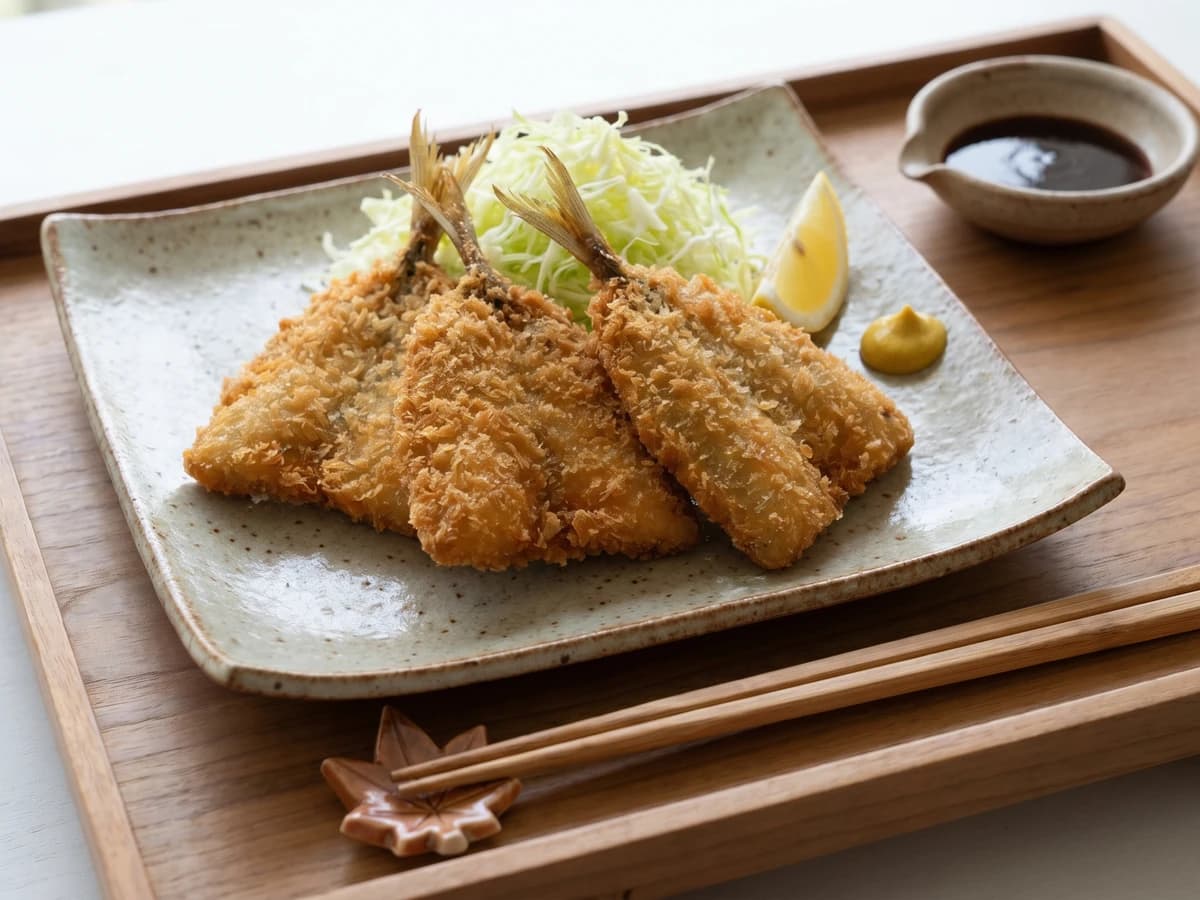
Aji Fry (アジフライ, panko-fried horse mackerel)
Aji fry is weeknight fish with no mystery: fresh horse mackerel opened cleanly, breaded lightly, and fried until the panko crackles while the flesh stays sweet.
A cooking platform built around craft, culture, and the stories behind what we eat.
Created by
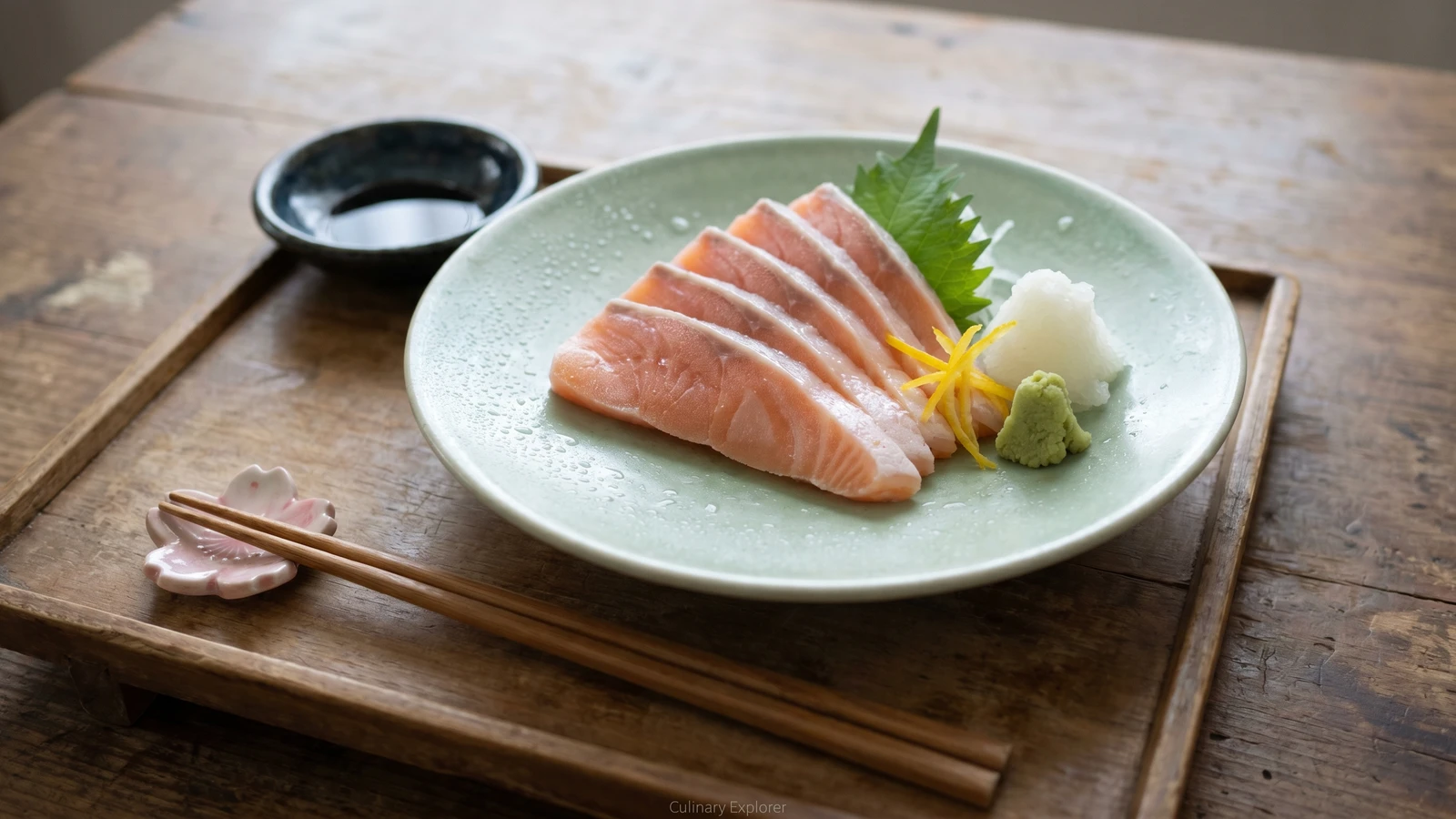
Ruibe asks for courage only once: buy salmon fit for raw eating, freeze it hard, then slice it while still icy so the clean fat melts slowly on the tongue.
Raw river salmon makes sensible cooks pause. Good. That pause is wisdom, not timidity. Sake no ruibe is not a dare and not a trick of seasoning. It is Hokkaido salmon frozen hard, sliced while still icy, and eaten before it loses its chill.
The one detail that decides it is the freezing. Traditional cold did two jobs at once: it preserved the fish and made raw salmon safer by killing parasites. In a modern kitchen, don't trust a warm-weather balcony or a cheerful little freezer that sighs every time you open it. Buy salmon sold for raw use, or use salmon that has been commercially frozen for parasite destruction. Sourcing first, always. The knife only protects what the fishmonger has already made possible.
Slice the salmon before it fully thaws. When the flesh is firm enough to resist the blade, you can cut clean faces without bruising, and each piece will soften slowly at the table. That is the pleasure of ruibe: cold at first, then sweet, then rich. Serve it simply with shōyu and wasabi, perhaps a little grated daikon to clear the palate. Nothing hidden. The fish tells you whether you chose well.
Ruibe is associated with the Ainu people of Hokkaido, where salmon was frozen outdoors in winter and eaten sliced while still partly frozen. The word is commonly traced to Ainu roots meaning food that melts, a plain description of how the fish changes as it warms in the mouth. In modern Hokkaido, ruibe remains a regional specialty, but safe preparation now depends on controlled freezing and careful raw-fish sourcing rather than weather alone.
Quantity
400g
skinless and pin-boned, commercially frozen or suitable for parasite-destruction freezing
Quantity
2 tablespoons
Quantity
1 teaspoon
freshly grated if possible
Quantity
1/2 cup
finely grated and lightly squeezed
Quantity
1 small piece
cut into fine threads
Quantity
a few
for lining the plate
| Ingredient | Quantity |
|---|---|
| raw-use salmon filletskinless and pin-boned, commercially frozen or suitable for parasite-destruction freezing | 400g |
| soy sauce | 2 tablespoons |
| wasabifreshly grated if possible | 1 teaspoon |
| daikonfinely grated and lightly squeezed | 1/2 cup |
| yuzu peel (optional)cut into fine threads | 1 small piece |
| shiso leaves (optional)for lining the plate | a few |
Buy salmon from a fishmonger you trust and say plainly that you will eat it raw. It should smell clean and cold, not fishy, with moist flesh and no dull edges. Ruibe depends on the fish before it depends on you, and no sauce will rescue tired salmon.
Pat the salmon dry, wrap it tightly in plastic, then seal it in a freezer bag with the air pressed out. Freeze until solid, at least overnight if the salmon was already commercially parasite-treated. If you are relying on freezing for safety, use only a freezer and timing that meet your local parasite-destruction standard.
Move the frozen salmon to the refrigerator for 10 to 15 minutes, just until the outside yields slightly but the center stays hard. This small rest keeps the knife from skidding while preserving the icy texture that makes ruibe what it is.
Use a long, very sharp sashimi knife, or your sharpest thin slicing knife. Draw the blade through the salmon in one clean pull to make slices about 3mm thick. Don't saw. A single pull leaves the cut face smooth, and with ruibe the cut is half the seasoning.
Set the slices in an odd-numbered grouping on chilled white or green-toned stoneware, slightly overlapping but never piled. Leave at least a third of the plate empty. The open space keeps the eye calm and helps the salmon stay cold.
Set out soy sauce, wasabi, grated daikon, and a little yuzu peel if you have it. Eat the ruibe while the center is still icy and the edges are beginning to soften. That brief melting is the dish, so don't make it wait for speeches.
1 serving (about 125g)
Culinary guides, cultural storytelling, and the editorial depth that makes cooking meaningful.
Discover Culinary ExplorerChef Takumi
Aji fry is weeknight fish with no mystery: fresh horse mackerel opened cleanly, breaded lightly, and fried until the panko crackles while the flesh stays sweet.
Chef Takumi
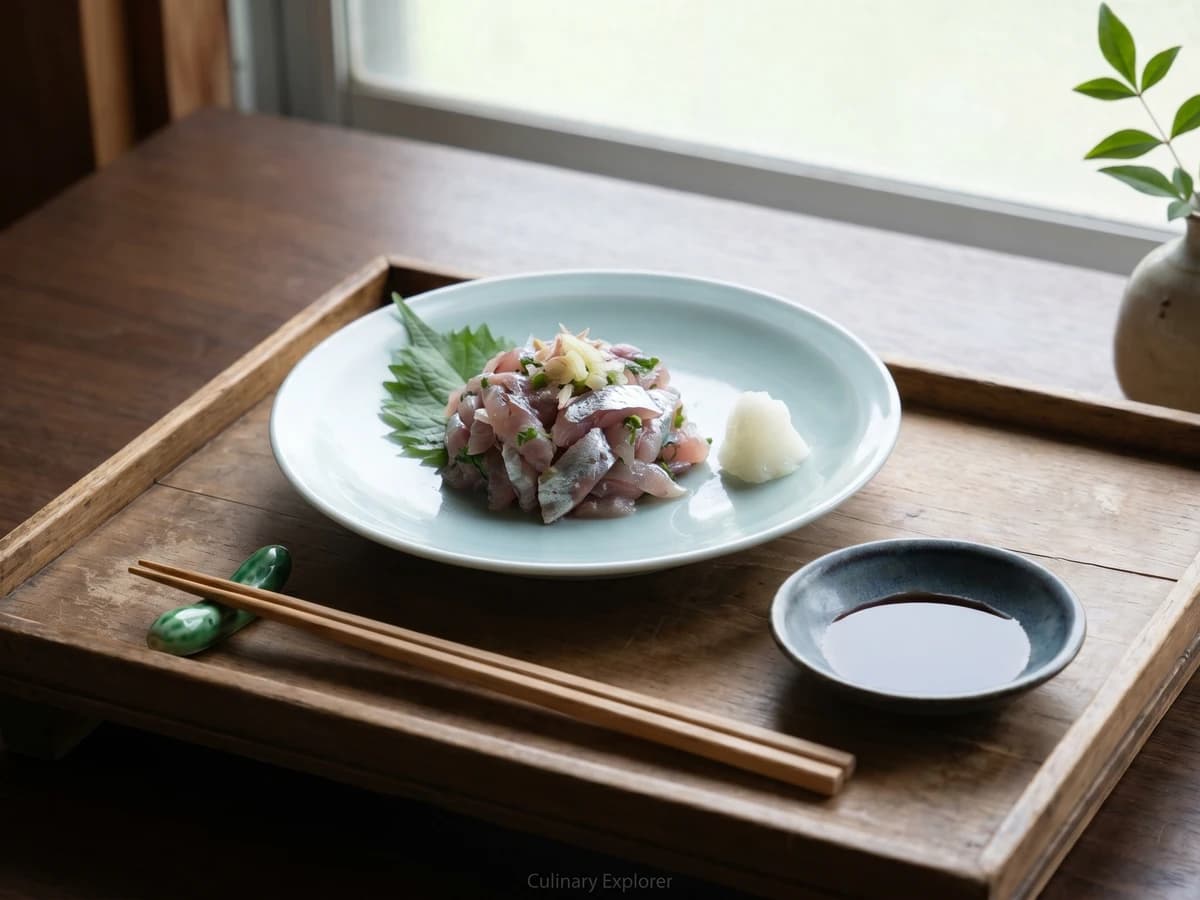
Summer horse mackerel, chopped just enough to catch ginger and scallion, becomes a cool, clean main dish with rice. The secret is fresh fish and a knife that does not bruise it.

Chef Takumi
Akashi-yaki is not sauced takoyaki. It is egg-rich batter, tender octopus, and clear dashi, cooked pale and soft so each ball can be dipped like a small custard dumpling.
Chef Takumi
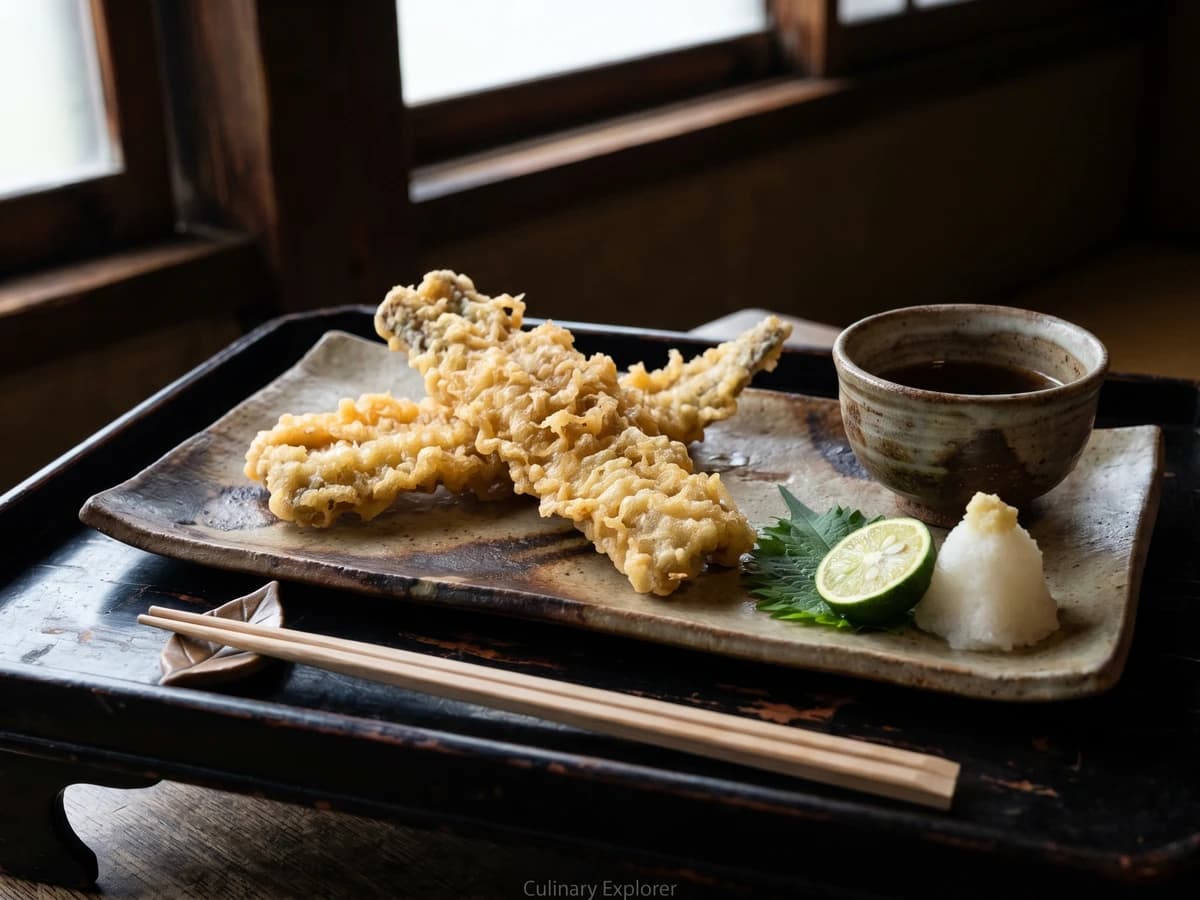
A whole anago looks like a test of nerve. It is mostly good sourcing, a dry skin, cold batter, and oil hot enough to leave the eel sweet under its lace.