
Chef Klaus
Allgäuer Krautkrapfen
The Allgäu pan dish that makes a meal from noodle dough, winter kraut, onion, and fat: brown the cut sides first, then cook gently so the rolls hold.
A cooking platform built around craft, culture, and the stories behind what we eat.
Created by
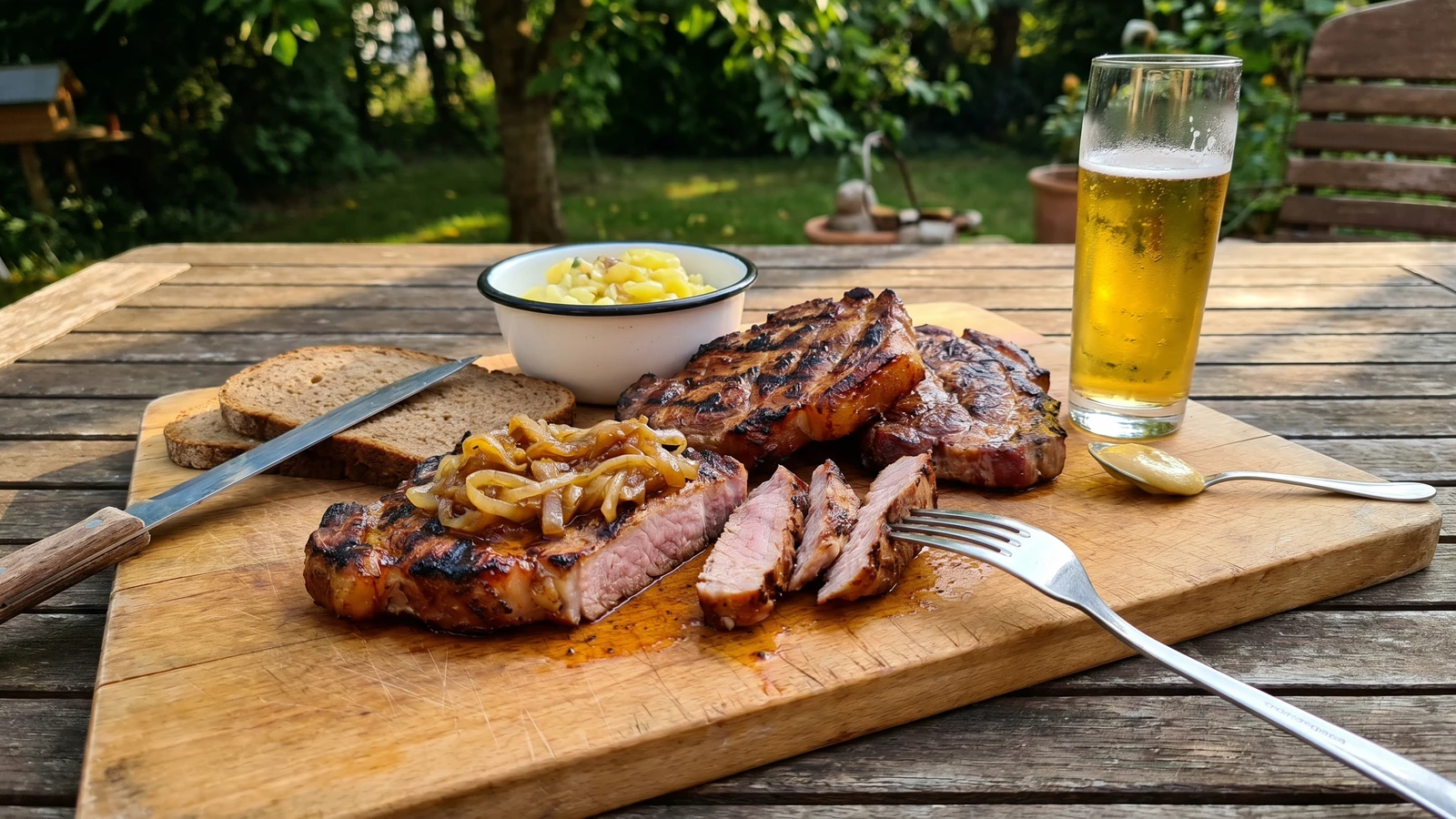
Saarland's swinging grill does one thing better than a hot grate: it lets pork neck take smoke slowly, so the fat renders before the edges darken.
Schwenkbraten belongs to Saarland first, then to every garden where someone has hung a round grate over beech embers and decided dinner should move a little. It's outdoor food, May through September if the weather behaves, but it sits on a celebration table as easily as a weeknight one. Pork neck, onions, mustard, paprika, pepper, time. No theatre. Das ist kein Bierzelt.
The argument starts quickly. In Saarland the Schwenker is both the grill and the person standing beside it, and the meat is usually pork neck because its seams of fat forgive the fire. In the Hunsrück and along the Mosel you'll find versions with wine, sharper vinegar, or more herbs; some cooks swear by beer in the marinade, some by none at all. I keep it Saarland: onion-heavy, mustard-led, smoked over beechwood.
The technique that decides the dish is heat, not the marinade. Runter mit der Temperatur. Build embers, not flames, and let the grate swing so no one spot burns before the fat inside the neck has time to soften and baste the meat. Grill it too hot and you get black onion, tight pork, and a lecture from anyone within smelling distance.
The onions from the marinade are not rubbish. Weggeworfen wird nichts. Shake them off the meat so they don't burn on the grate, then cook them in a pan at the edge until sweet and dark. Put them back on top when the pork rests, and now the larder has done its work.
Schwenkbraten is most closely tied to Saarland and the neighbouring Hunsrück, where the suspended round grill, the Schwenker, became a defining form of outdoor cooking in the coal and steel region during the 20th century. Beechwood mattered because it was local, steady-burning hardwood, and the swinging grate solved a practical problem: meat could cook over uneven embers without sitting over one fixed hot spot. The regional dispute is part of the dish's identity, with Saarland cooks keeping it pork-neck and onion-heavy while nearby Mosel and Hunsrück versions often pull wine, vinegar, or different herbs into the marinade.
Quantity
1.5kg
cut 2.5 to 3cm thick
Quantity
4 large
thinly sliced
Quantity
3
minced
Quantity
3 tablespoons
Quantity
2 tablespoons
Quantity
2 teaspoons
Quantity
1 teaspoon
Quantity
1 teaspoon
Quantity
2 teaspoons
Quantity
1 teaspoon
Quantity
1 teaspoon
lightly crushed
Quantity
2
Quantity
100ml
Quantity
as needed
for grilling
| Ingredient | Quantity |
|---|---|
| pork neck steakscut 2.5 to 3cm thick | 1.5kg |
| onionsthinly sliced | 4 large |
| garlic clovesminced | 3 |
| medium German mustard | 3 tablespoons |
| neutral oil | 2 tablespoons |
| sweet paprika | 2 teaspoons |
| hot paprika | 1 teaspoon |
| freshly ground black pepper | 1 teaspoon |
| fine salt | 2 teaspoons |
| dried marjoram | 1 teaspoon |
| caraway seedslightly crushed | 1 teaspoon |
| bay leaves | 2 |
| dry Riesling or pale lager (optional) | 100ml |
| beechwood charcoal or hardwood embersfor grilling | as needed |
Use pork neck cut into steaks about 2.5 to 3cm thick. Neck has fat running through it, not just around it, and that fat is what keeps the meat juicy while the outside takes smoke. A lean loin steak is the wrong bargain here; it dries before it tastes of the fire.
Mix the onions, garlic, mustard, oil, sweet paprika, hot paprika, pepper, salt, marjoram, caraway, and bay leaves in a wide bowl until the onions begin to soften and give off juice. Add the Riesling or lager if you want a looser marinade, but don't drown the meat. The onion juice and mustard need to cling to the pork, because contact is what seasons it overnight.
Rub the marinade into both sides of the steaks, layer them with the onions in a non-reactive dish, cover, and refrigerate for 12 to 24 hours. Turn the meat once if you remember. Das braucht seine Zeit: the salt seasons deep, the onion softens the surface, and the fat in the neck takes the paprika and mustard better when it has a night to sit.
Light beechwood charcoal or hardwood and let it burn down until the coals are glowing with a grey ash and no hard flames are licking the grate. Flames burn the onion sugars before the pork is cooked; embers give steady heat and smoke. If you're using a Schwenker, set the grate high enough that you can hold your hand near grill height for about four seconds.
Lift the pork from the marinade and scrape most of the onions back into the bowl. Leave a thin coating of seasoning on the meat, but don't send onion clumps onto the grate, because they blacken faster than the pork can render. Put the onions in a cast-iron pan at the cooler edge of the grill with a spoon of oil, where they can darken slowly instead of turning bitter.
Lay the steaks on the swinging grate and keep them moving gently over the embers, turning every few minutes, for 18 to 25 minutes depending on thickness. Runter mit der Temperatur. The pork neck should brown in patches, take a little smoke, and feel springy with a soft give; if it chars hard in the first five minutes, your fire is too fierce and the fat hasn't had time to render.
Move the pork to a board and rest it for 5 minutes while the onions finish at the edge of the fire. Resting lets the juices settle back through the meat instead of running onto the board at the first cut. Spoon the dark onions over the steaks and serve with potato salad, rye bread, mustard, and a cold glass of Saarland pils. Schön ist, was schmeckt.
1 serving (about 270g)
Culinary guides, cultural storytelling, and the editorial depth that makes cooking meaningful.
Discover Culinary ExplorerChef Klaus
The Allgäu pan dish that makes a meal from noodle dough, winter kraut, onion, and fat: brown the cut sides first, then cook gently so the rolls hold.

Chef Klaus
Swabian egg pasta turned toward the apple cellar: fresh Spätzle tossed with browned butter, tart apples, cinnamon, and enough restraint to stay supper, not cake.

Chef Klaus
Hesse's pork goulash belongs to Apfelwein country: shoulder, onions, and tart cider cooked low until the cheap cut turns soft and the sauce lands sweet-sour, not sour-sweet.

Chef Klaus
The old sweet supper that saves yesterday's loaf: stale bread drinks eggy milk, the pan stays moderate, and butter browns the outside only after the centre has set.