
Chef Lupita
Agua de Alfalfa
Ciudad de México's highland market agua fresca, fresh alfalfa blended with pineapple and lime until bright green, strained clean, and poured cold from the vitrolero.
A cooking platform built around craft, culture, and the stories behind what we eat.
Created by
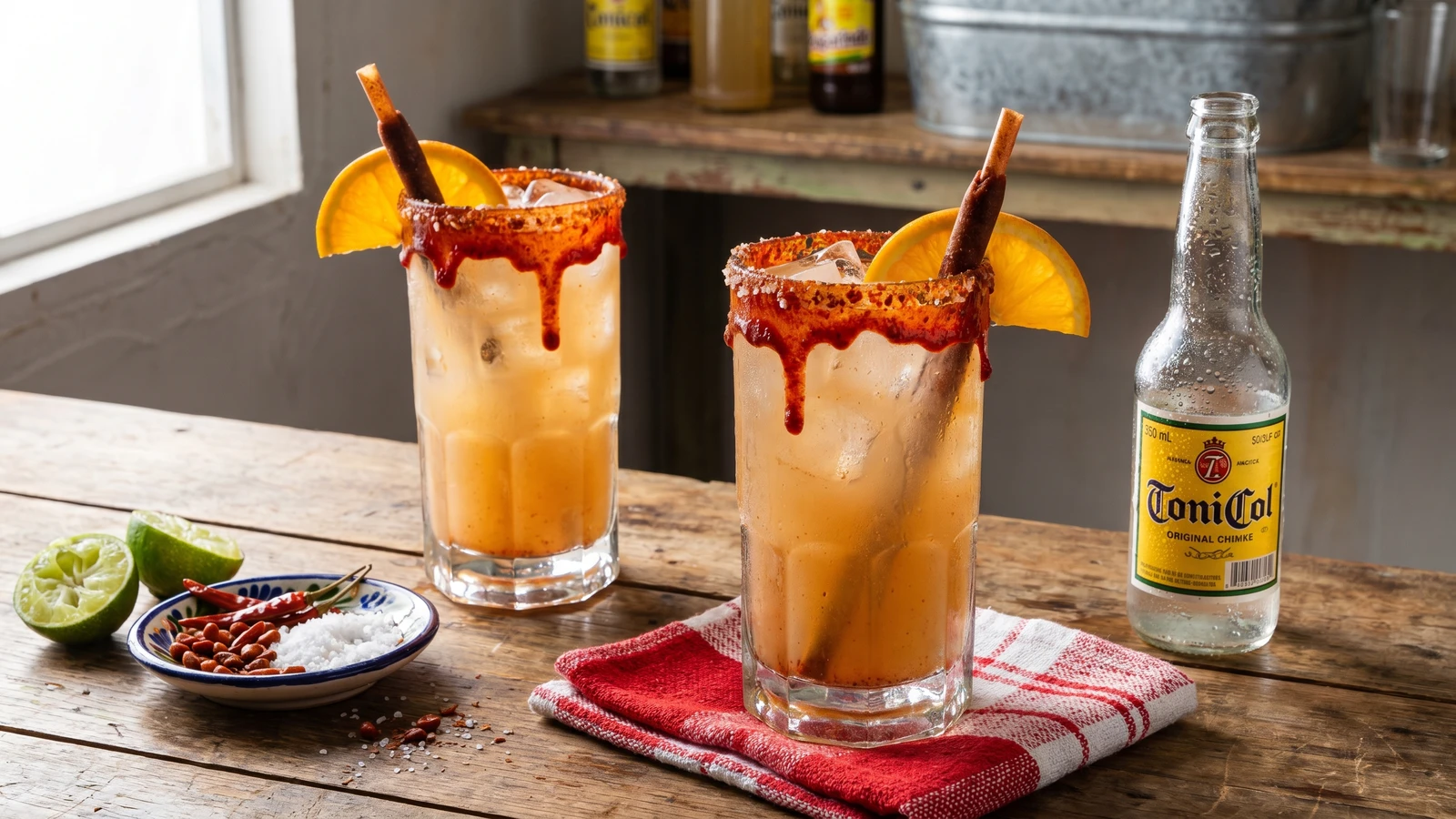
Sinaloa's beloved street mocktail, built on cold Tonicol vanilla soda, fresh orange, lime, and salt, rimmed in chamoy and Tajin with a tamarindo straw pushed into the ice.
This is from Sinaloa. From the Pacific coast, from the puestos along the Malecon de Mazatlan, from the abarroterias of Culiacan and Los Mochis where the Tonicol bottles sit in metal tubs of ice next to the door. La Rusa is the drink of a hot Sinaloan afternoon and it is built around one bottle that does not exist anywhere else: Tonicol, the vanilla soda made in El Rosario, Sinaloa, since 1947.
There is no substitute for Tonicol. People have tried. Cream soda is too sweet and tastes like cake. Vanilla Coke is wrong from the first sip. The Tonicol vanilla is softer, almost milky, with a faint salinity that the people of El Rosario will tell you comes from the well water they bottle it with. That vanilla is the spine of the drink. Remove it and you have orangeade with a chile rim. No me vengas con atajos.
The rest is honest northwest Mexico. Fresh orange juice, fresh lime, a real pinch of salt, a chamoy-Tajin rim sticky enough to leave fingerprints on the glass, a tamarindo pulparindo straw pushed down into the ice so every sip pulls a little sweet-sour-salt up through the soda. This is not a cocktail. It does not need to be. In Sinaloa, you give the Rusa to the kids at a quinceanera, to the tia who does not drink, to the man who is driving home after the carne asada. It is a mocktail because it was always a mocktail. The desert pours into the glass and you do not need anything else.
My mother never made a Rusa. She was from Jalisco and Jaliscienses drink tejuino. But I learned this drink in 2009 from a senora running a puesto outside the Mercado Pino Suarez in Mazatlan, who told me, mija, the secret is the salt, and the Tonicol must be cold enough to hurt your teeth. Cada estado, su propia cocina, and Sinaloa pours its sun and its sea and its sweet vanilla soda into a single tall glass.
Tonicol has been bottled by Embotelladora del Pacifico in El Rosario, Sinaloa, since 1947, and the formula, a vanilla soda with a faintly creamy finish, has remained essentially unchanged for nearly eight decades. The bottle is so identified with the state that Sinaloans abroad rank Tonicol alongside aguachile and chilorio as the flavors of home, and the company still distributes primarily within Sinaloa, Sonora, and Baja California Sur, making the soda functionally a regional secret. La Rusa itself, the combination of Tonicol with citrus, salt, and a chamoy-Tajin rim, emerged from the street mocktail culture of Sinaloan beach towns in the late 20th century, alongside the rise of preparada culture (beer cocktails like the chelada) that shaped how the entire northwest of Mexico drinks.
Quantity
2 bottles (355 ml each)
ice cold
Quantity
1 cup (about 3 oranges)
cold
Quantity
1/4 cup (about 4 Mexican limes)
Quantity
1/2 teaspoon, plus more to taste
Quantity
3 tablespoons, plus more for rimming
Quantity
2 tablespoons
for rimming
Quantity
1 tablespoon
for rimming
Quantity
plenty
Quantity
1
halved, for rimming and garnish
Quantity
2
for garnish
Quantity
2
for garnish
| Ingredient | Quantity |
|---|---|
| Tonicol vanilla sodaice cold | 2 bottles (355 ml each) |
| fresh orange juicecold | 1 cup (about 3 oranges) |
| fresh lime juice | 1/4 cup (about 4 Mexican limes) |
| fine sea salt | 1/2 teaspoon, plus more to taste |
| chamoy | 3 tablespoons, plus more for rimming |
| Tajin Clasicofor rimming | 2 tablespoons |
| coarse sea saltfor rimming | 1 tablespoon |
| ice cubes | plenty |
| limehalved, for rimming and garnish | 1 |
| tamarindo pulparindo straws or pulparindo candy sticksfor garnish | 2 |
| orange slicesfor garnish | 2 |
Put the Tonicol bottles, the orange juice, and the glasses in the freezer for fifteen minutes before you start. A Rusa lives or dies by how cold it is. If the Tonicol is warm, the vanilla turns syrupy and the drink goes flat by the second sip. In Mazatlan and Culiacan, the abarroteros keep the Tonicol on ice in a metal tub. Treat it the same way at home.
On a small flat plate, stir the Tajin together with the coarse sea salt. On a second plate, spread three tablespoons of chamoy in a thin even layer. Take a cold tall glass, rub a halved lime around the outside lip, then press the rim into the chamoy with a slow rolling motion. Let the chamoy coat about an inch down. Without shaking it off, press the chamoy-coated rim into the Tajin and salt. You want both, the sweet-sour chamoy and the chile-salt grit, clinging together. This is the rim of the Sinaloa coast: red, sticky, loud.
Fill each prepared glass three-quarters full with ice. Pour half a cup of cold fresh orange juice into each glass. Squeeze in two tablespoons of fresh lime juice per glass. Add a quarter teaspoon of fine sea salt to each. The salt is not optional. It pulls the orange forward, it answers the lime, and it makes the vanilla in the Tonicol taste like vanilla instead of sugar water. La sal es el puente, salt is the bridge.
Open the cold Tonicol bottles right at the glass. Pour slowly down the side of the glass to keep the carbonation alive. Fill to just below the chamoy rim. Stir once, gently, with a long spoon. Do not beat the bubbles out of it. The drink should look cloudy-cream where the orange meets the soda, with the red chamoy rim bleeding a little into the top inch of the liquid. That bleeding is the signature.
Slip an orange slice onto the rim of each glass. Push a pulparindo tamarindo straw or candy stick down into the ice as the drinker's straw, the way the puestos do it on the Malecon. Serve right away. A Rusa is built to be drunk in the next five minutes, not nursed. The condensation should already be running down the outside of the glass before it reaches the table. Saber cocinar es saber vivir, and in Sinaloa, saber beber tambien.
1 serving (about 550g)
Culinary guides, cultural storytelling, and the editorial depth that makes cooking meaningful.
Discover Culinary ExplorerChef Lupita
Ciudad de México's highland market agua fresca, fresh alfalfa blended with pineapple and lime until bright green, strained clean, and poured cold from the vitrolero.
Chef Lupita
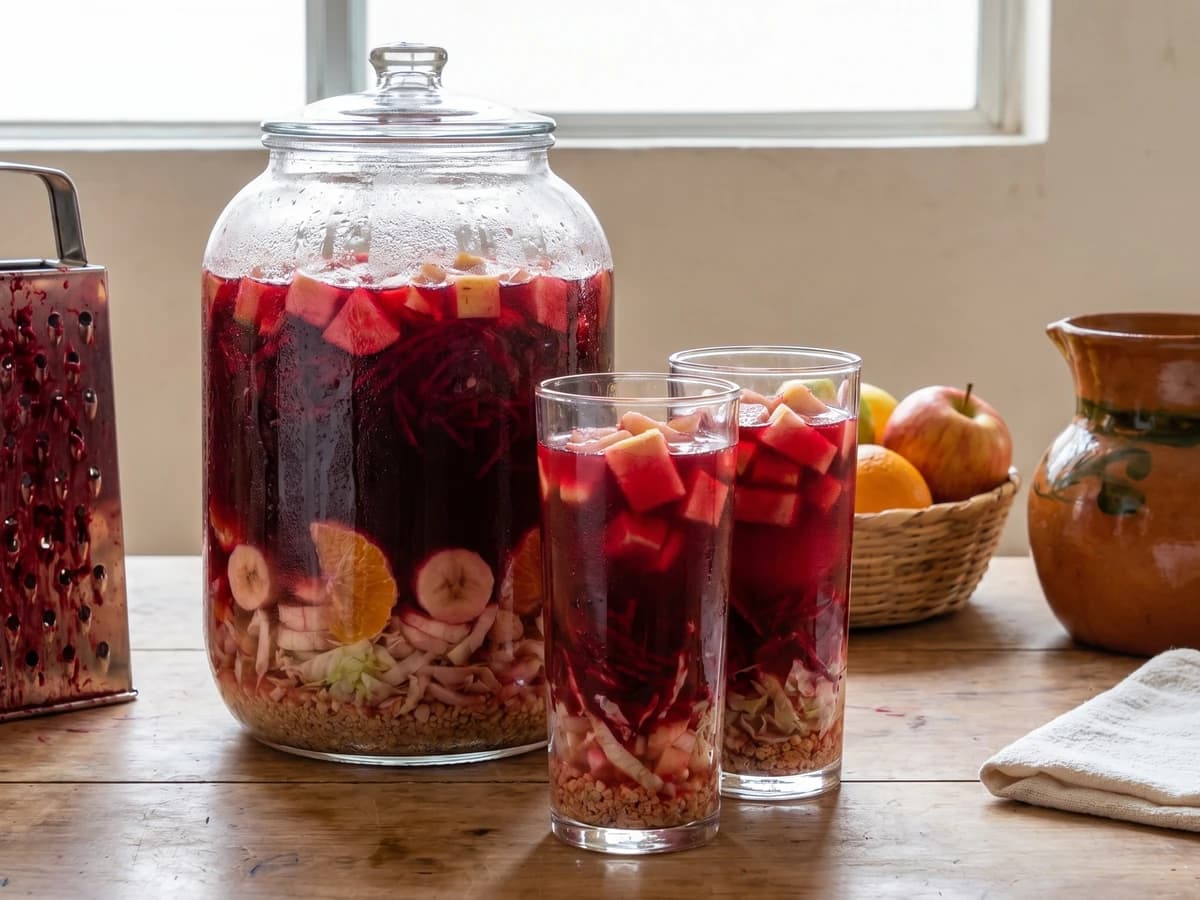
Aguascalientes' Lenten agua fresca, jewel-red from cooked beet and full of apple, banana, orange, lettuce, and ground peanuts, served cold when Holy Week meets the Feria de San Marcos.

Chef Lupita
Sonora and Sinaloa's creamy malted barley water, built on toasted cebada perla, Mexican canela, vanilla from Papantla, and evaporated milk. Pink-beige, rich, and served cold over heavy ice in a heavy glass tumbler. Liquid cookie comfort the northwest way.

Chef Lupita
Yucatán's everyday tonic of boiled chaya leaves blended with lima agria, sugar, and ice. The bright green jarra that sits on every Peninsula table from Mérida to Valladolid.