
Chef Klaus
Bethmännchen
Frankfurt's Advent marzipan ball is small, pale gold, and exacting: real almond paste, rosewater, three almond halves pressed on firmly, then a short bake for gloss.
A cooking platform built around craft, culture, and the stories behind what we eat.

Created by
A northern summer bowl of red currants, raspberries, and cherries, cooked only until they slump, thickened lightly, then served with real vanilla sauce, not packet pudding.
Rote Grütze belongs to the northern summer table, strongest in Schleswig-Holstein, Hamburg, Mecklenburg, and across the Danish line, where the same family shows up as rødgrød. I cook it when red currants are sharp, raspberries are soft, and sour cherries have enough bite to stop the bowl becoming jam. It can be dessert after Sunday lunch, or a weeknight bowl with Vanillesauce, vanilla custard sauce; the old Armeleuteessen, poor people's meal, still knows how to feed you.
The north wants tart currants and a loose spoonable set. Further south, many cooks lean harder on cherries, strawberries, and starch until it behaves like pudding. Im Norden anders, im Süden anders. I won't thicken it into a red wall. The fruit should move when the spoon goes in.
The decision is when the starch meets the pot. Stir potato starch into cold juice first, then boil it briefly until clear and glossy before the tender berries go in; dry starch thrown into hot fruit clumps, and long boiling turns raspberries to seed and dulls the red. Runter mit der Temperatur, fold the soft fruit through, then stop. Erst verstehen, dann kochen.
Vanillesauce is milk, yolks, and a vanilla pod. Not powder. Heat it only until it coats a spoon because egg thickens before a boil, and a boil gives you sweet scrambled egg. That is a punishment, not dessert.
Rote Grütze is recorded across northern Germany and Denmark in the 19th century, with the Danish name rødgrød and the German word Grütze pointing back to crushed grain or groats, the older thickeners used before refined starch became common in home kitchens. Cooks stretched the short berry season with sago, semolina, or grain meal, so the dish could serve as an Armeleuteessen, a poor people's meal, not only as a sweet finish. Schleswig-Holstein, Hamburg, Mecklenburg, and the Danish borderland still claim the tart, loose northern style, while inland versions often run sweeter, thicker, and heavier on cherry or strawberry.
Quantity
350g
stripped from stems
Quantity
300g
pitted
Quantity
250g
Quantity
100g
hulled and quartered
Quantity
250ml
Quantity
90g, plus more to taste
Quantity
1 strip
Quantity
1 tablespoon
Quantity
1 small pinch
Quantity
30g
Quantity
4 tablespoons
Quantity
400ml
Quantity
100ml
Quantity
1
split and scraped
Quantity
4 large
Quantity
50g
Quantity
1 teaspoon
Quantity
1 small pinch
| Ingredient | Quantity |
|---|---|
| red currantsstripped from stems | 350g |
| sour cherriespitted | 300g |
| raspberries | 250g |
| strawberrieshulled and quartered | 100g |
| unsweetened red currant juice or sour cherry juice | 250ml |
| sugar for the fruit | 90g, plus more to taste |
| lemon peel | 1 strip |
| lemon juice | 1 tablespoon |
| fine salt | 1 small pinch |
| potato starch or cornstarch for the fruit | 30g |
| cold water or cold juice | 4 tablespoons |
| whole milk | 400ml |
| cream | 100ml |
| vanilla podsplit and scraped | 1 |
| egg yolks | 4 large |
| sugar for the sauce | 50g |
| potato starch or cornstarch for the sauce | 1 teaspoon |
| fine salt for the sauce | 1 small pinch |
Rinse the currants and cherries quickly, then drain them well. Berries left sitting in water carry that water into the pot and weaken the set. Strip the currants with a fork, pit the cherries, and keep the raspberries and strawberries separate because soft fruit needs almost no cooking.
Put the currants, cherries, juice, sugar, lemon peel, lemon juice, and salt in a medium saucepan. Bring it to a gentle simmer and cook 5 to 6 minutes, until the currants burst and the cherries stain the liquid deep red. This draws the acid and juice into the pot before the starch sets it, so the Grütze tastes of fruit, not sweet paste.
Stir the potato starch with the cold water until smooth, then pull out the lemon peel and stir the slurry into the simmering fruit. Starch must be wetted cold because hot liquid seals the outside at once and leaves dry lumps inside. Simmer 30 to 60 seconds, just until the liquid turns clear and glossy, then stop; a hard boil breaks the set and dulls the fruit.
Take the pan off the heat and fold in the raspberries and strawberries with a wide spoon. The heat already in the pot softens them enough, and boiling them hard turns raspberries to seeds and strawberries to dull jam. Runter mit der Temperatur. The berries should still know their own names.
Spoon the fruit into a serving bowl and let it cool for 20 minutes, then cover and chill at least 2 hours. The starch finishes setting as it cools; judge it hot and you'll add too much thickener. Serve it cold, or let it come back to a gentle room temperature if you want the old whole-meal feeling with sauce or milk.
Put the milk, cream, vanilla seeds, vanilla pod, and half the sugar in a small saucepan. Warm it until small bubbles gather at the edge, then take it off the heat and let it stand 10 minutes. The fat carries the vanilla, and the resting time pulls flavour from the pod without boiling the milk flat.
Whisk the yolks with the remaining sugar, the teaspoon of starch, and the salt until smooth. Pour the hot milk in slowly while whisking, because the yolks need to warm before they thicken or they scramble. Return everything to low heat and stir until the sauce coats a spoon, 82 to 84C if you use a thermometer. Do not boil it; egg thickens before a boil, and after that it tightens into sweet scrambled egg. Nicht aus dem Glas.
Spoon the Rote Grütze into bowls and pour the Vanillesauce over at the table, warm, cool, or cold as you like it. The point is the contrast: sharp red fruit against soft vanilla. Würzen, Fett, Salz zum Schluss does its work here too, the small pinch of salt makes the sauce taste like vanilla instead of sugar.
1 serving (about 325g)
Culinary guides, cultural storytelling, and the editorial depth that makes cooking meaningful.
Discover Culinary ExplorerChef Klaus
Frankfurt's Advent marzipan ball is small, pale gold, and exacting: real almond paste, rosewater, three almond halves pressed on firmly, then a short bake for gloss.
Chef Klaus
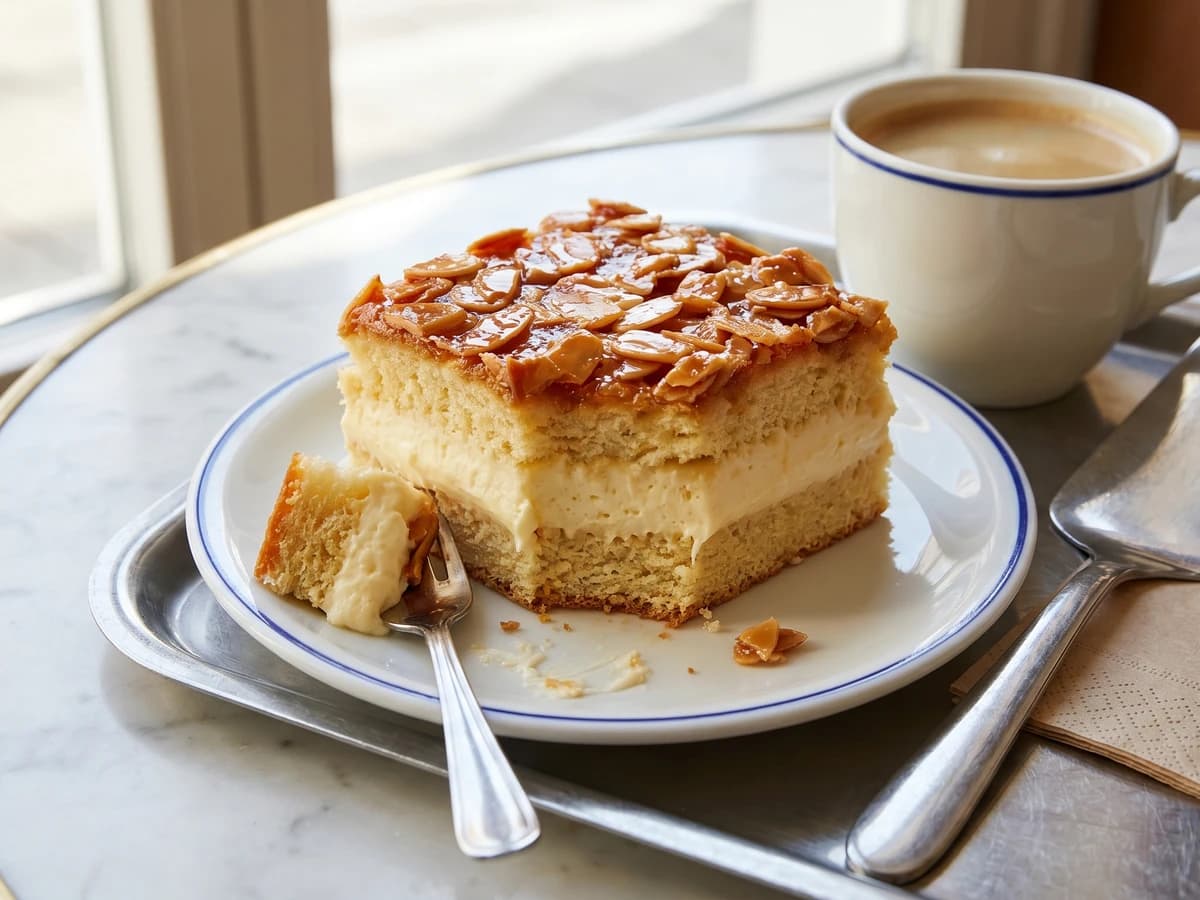
Bienenstich works when the almond top caramelises without burning and the yeast cake cools before the cream goes in. Rush either one and the bee has stung you.

Chef Klaus
North Germany's Freud-und-Leid-Kuchen, the cake for joy and sorrow both: a yeast sheet pressed full of cold butter, sugar, and almonds until the top turns crisp.
Chef Klaus
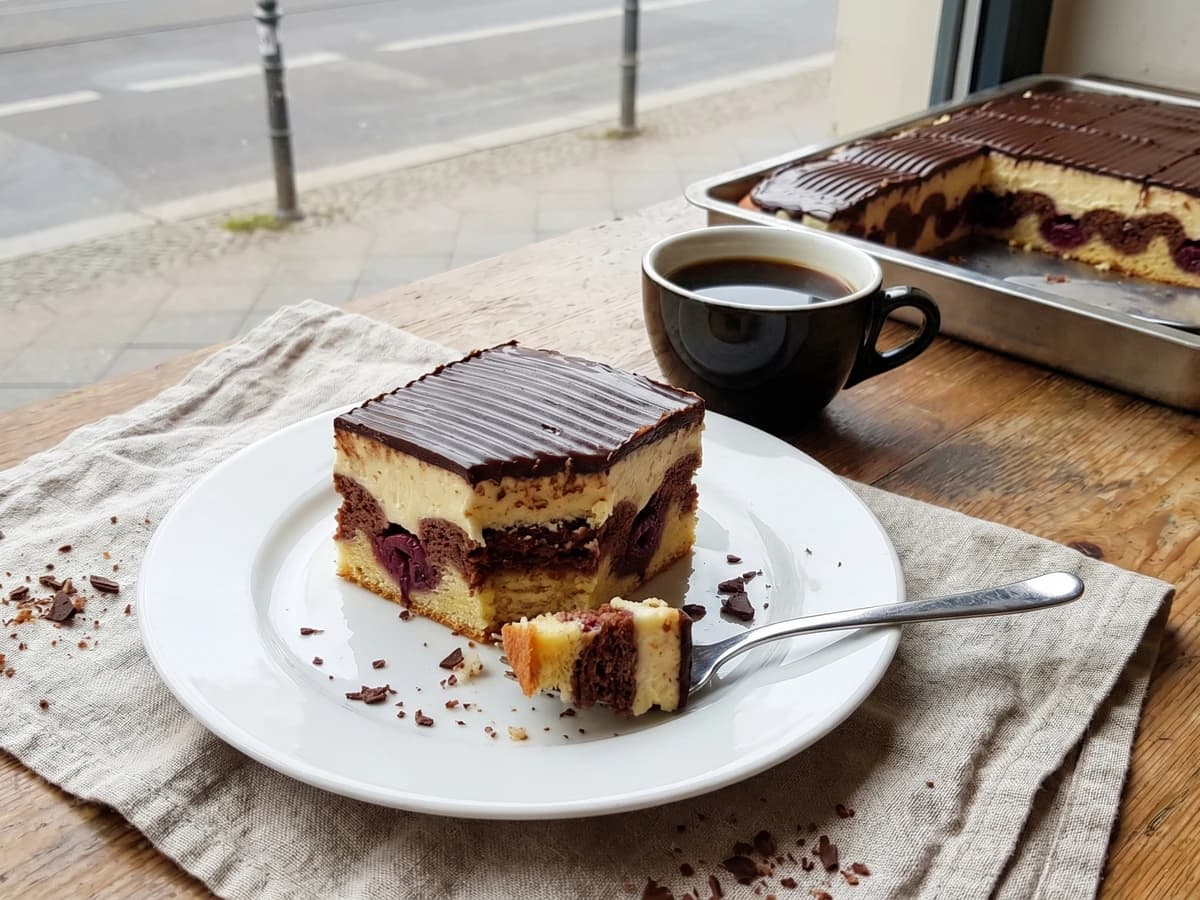
A German coffee-table cake built in layers: pale and cocoa batter, sour cherries sinking into the wave, cool buttercream, and dark chocolate combed like the Danube.