
Chef Lupita
Agua de Alfalfa
Ciudad de México's highland market agua fresca, fresh alfalfa blended with pineapple and lime until bright green, strained clean, and poured cold from the vitrolero.
A cooking platform built around craft, culture, and the stories behind what we eat.
Created by
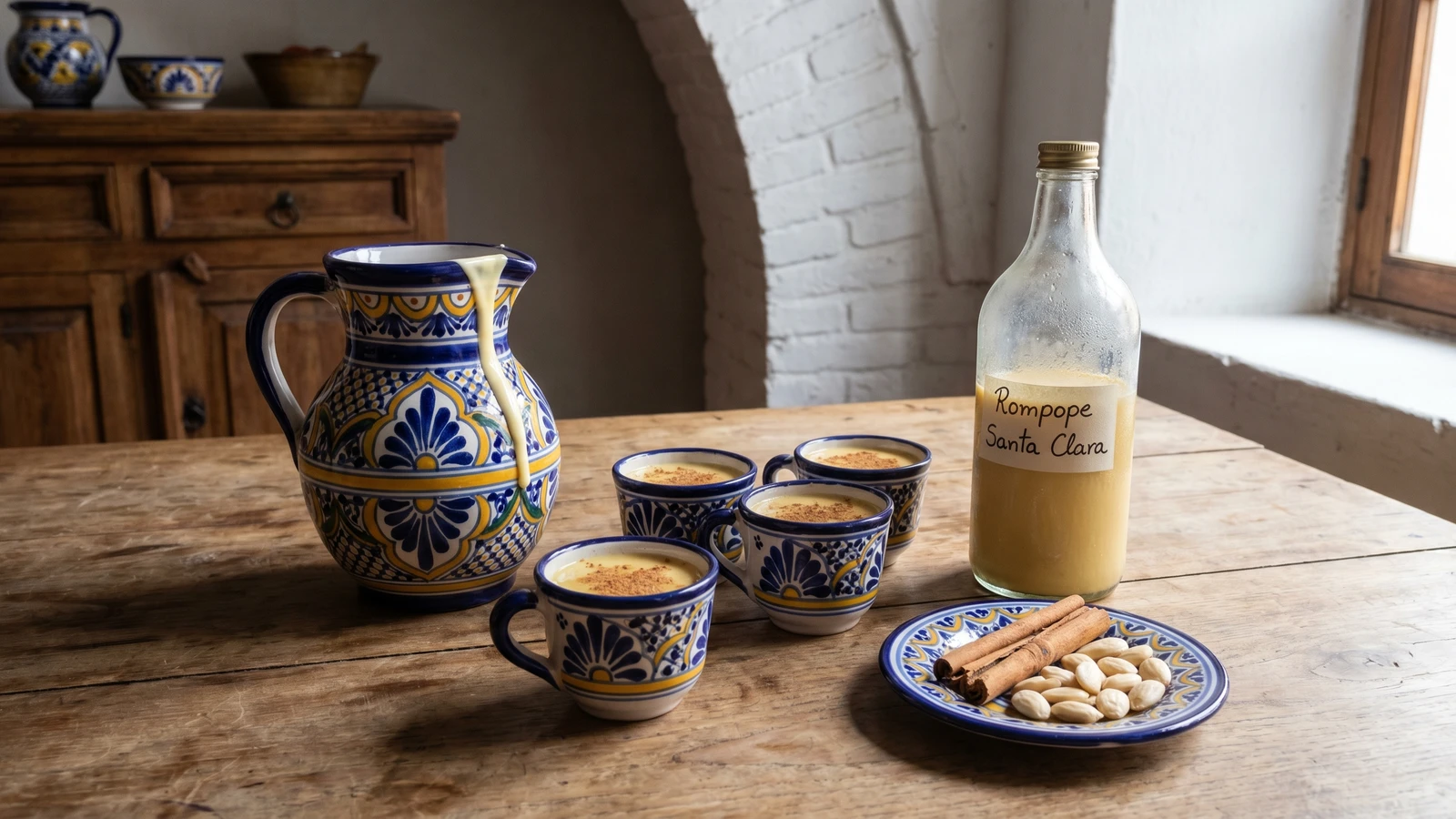
Puebla's Santa Clara rompope is a thick convent drink of milk, egg yolks, almonds, canela, vanilla, and aguardiente de caña, made ahead for the Christmas table.
Puebla owns this rompope, and the address is the Convento de Santa Clara. Not a generic holiday eggnog. Puebla. The old convent city of talavera, camotes, mole poblano, and kitchens where nuns turned milk, egg yolks, almonds, canela, and sugar into something both practical and elegant.
The defining ingredient here is not chile because not all Mexican food needs chile to prove it is Mexican. The body comes from yolks and almendras. The perfume comes from canela, the soft Mexican cinnamon that smells warmer and less sharp than cassia. The bite comes from aguardiente de caña, the sugarcane spirit that belongs to the colonial pantry. No me vengas con vodka.
I learned my first rompope in Puebla from a woman whose aunt sold bottles near the convent sweets shops. She told me the trick was patience: simmer the milk slowly, temper the yolks without fear, strain everything, and let the bottle rest overnight. My mother wrote something similar in her notebook: "low fire, clean bottle, no hurry." She was right.
Serve it cold in small talavera cups, cobalt blue and yellow if you have them, with the bottle sweating slightly from the refrigerator. This is Christmas table food, yes, but it is also household economy: milk preserved with sugar, yolks made luxurious, aguardiente doing its quiet work. Saber cocinar es saber vivir.
Rompope is documented in Puebla's convent tradition, especially with the Clarisas of the Convento de Santa Clara, where egg-rich sweets and milk preparations became part of the city's colonial food economy. The drink developed from Spanish convent custards and liqueurs adapted to New Spain with local sugarcane aguardiente, Mexican canela, and the almond techniques common in convent kitchens. By the 19th century, Puebla's convent sweets shops had made rompope a recognizable holiday bottle, tied to Santa Clara as clearly as mole poblano is tied to Puebla's broader convent mythology.
Quantity
1/2 cup
Quantity
1/2 cup
for soaking the almonds
Quantity
6 cups
Quantity
1 1/4 cups
Quantity
2
Quantity
1/4 teaspoon
Quantity
10
Quantity
1 tablespoon
Quantity
1/2 cup, plus up to 1/4 cup more to taste
Quantity
pinch
| Ingredient | Quantity |
|---|---|
| blanched almonds | 1/2 cup |
| warm waterfor soaking the almonds | 1/2 cup |
| whole milk | 6 cups |
| granulated sugar | 1 1/4 cups |
| Mexican cinnamon sticks (canela) | 2 |
| baking soda | 1/4 teaspoon |
| large egg yolks | 10 |
| pure Mexican vanilla extract | 1 tablespoon |
| aguardiente de caña | 1/2 cup, plus up to 1/4 cup more to taste |
| fine sea salt | pinch |
Put the blanched almonds in a small bowl with the warm water and let them soften for 20 minutes. This is not decoration. The almonds give Santa Clara rompope its body and quiet sweetness. Drain them, keeping 2 tablespoons of the soaking water.
Blend the drained almonds with the reserved soaking water until you have a smooth white paste. Scrape the blender well. If you leave the almonds coarse, the rompope will drink gritty, and the Clarisas of Puebla did not spend their lives perfecting a gritty custard.
Combine the milk, sugar, canela, baking soda, almond paste, and salt in a heavy pot. Set over medium-low heat and stir until the sugar dissolves. Bring it only to a gentle simmer, then lower the heat and cook 20 minutes, stirring often, until the milk smells of canela and almond and has reduced slightly.
Whisk the egg yolks in a large bowl until smooth and a little lighter in color. Slowly ladle in 1 cup of the hot milk while whisking constantly. Do not dump hot milk into yolks unless you want sweet scrambled eggs. Tempering teaches the yolks to accept heat.
Pour the tempered yolks back into the pot through a fine-mesh strainer. Cook over low heat, stirring constantly with a wooden spoon, until the mixture thickens enough to coat the spoon, 8 to 12 minutes. Do not let it boil. Boiling breaks the custard and gives you curds. Low heat is discipline.
Remove the pot from the heat. Pull out the canela sticks and strain the rompope into a clean bowl or pitcher. Stir in the vanilla. Let it cool until just barely warm, stirring now and then so a skin does not form.
Stir in 1/2 cup aguardiente de caña once the custard has cooled. Taste it. Add up to 1/4 cup more if you want a stronger convent table drink. Do not use vodka. Do not use añejo tequila. Rum will make a drink, yes, but it will not taste like the colonial sugarcane spirit that belongs here.
Pour into clean glass bottles or jars, seal, and refrigerate at least 12 hours before serving. Shake well before pouring. Serve cold in small talavera cups or hand-blown glasses. This is rich. A small cup is enough. Así se hace y punto.
1 serving (about 150g)
Culinary guides, cultural storytelling, and the editorial depth that makes cooking meaningful.
Discover Culinary ExplorerChef Lupita
Ciudad de México's highland market agua fresca, fresh alfalfa blended with pineapple and lime until bright green, strained clean, and poured cold from the vitrolero.
Chef Lupita
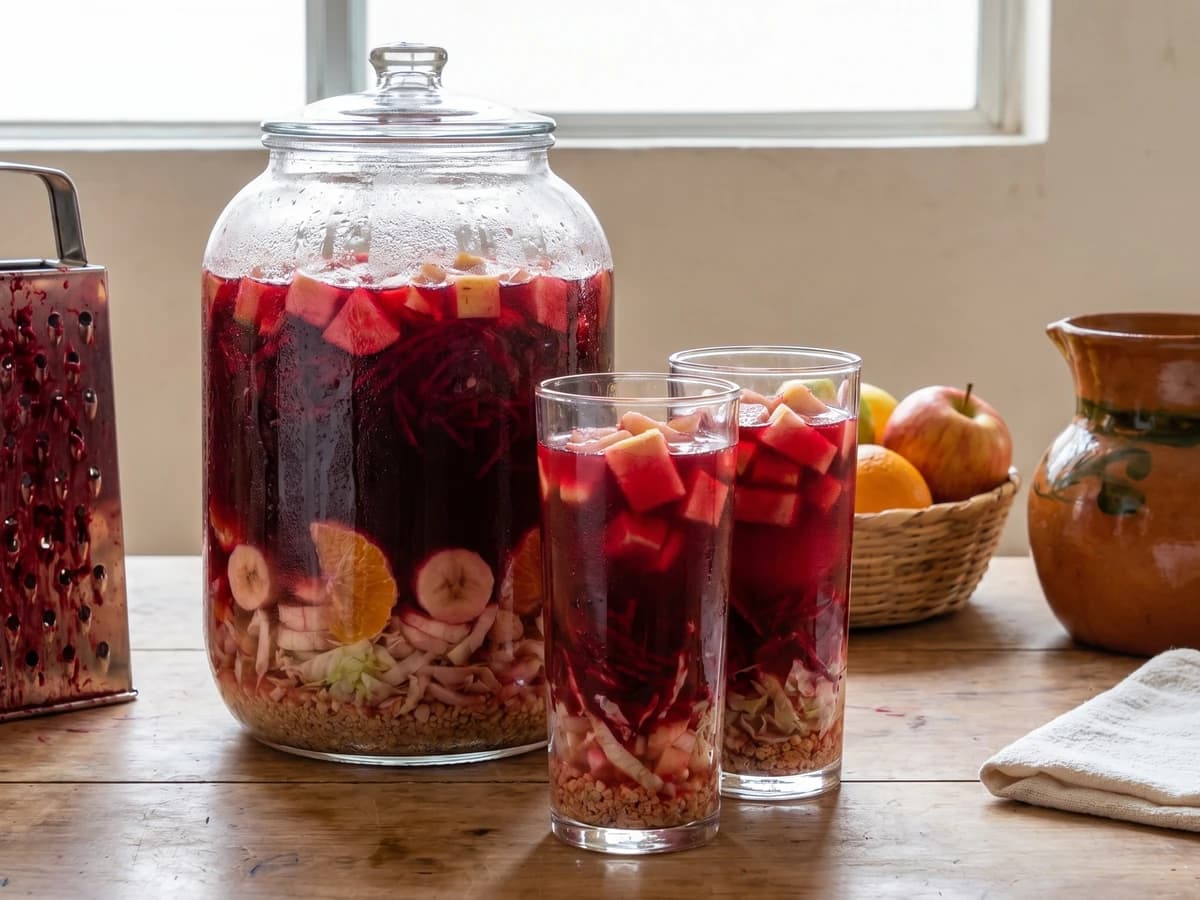
Aguascalientes' Lenten agua fresca, jewel-red from cooked beet and full of apple, banana, orange, lettuce, and ground peanuts, served cold when Holy Week meets the Feria de San Marcos.

Chef Lupita
Sonora and Sinaloa's creamy malted barley water, built on toasted cebada perla, Mexican canela, vanilla from Papantla, and evaporated milk. Pink-beige, rich, and served cold over heavy ice in a heavy glass tumbler. Liquid cookie comfort the northwest way.

Chef Lupita
Yucatán's everyday tonic of boiled chaya leaves blended with lima agria, sugar, and ice. The bright green jarra that sits on every Peninsula table from Mérida to Valladolid.