
Chef Ally
Buttermilk Panna Cotta with Strawberry Consommé
A quivering, tangy panna cotta made with real buttermilk, crowned with a crystal-clear consommé that captures the essence of peak-season strawberries in every ruby spoonful.
A cooking platform built around craft, culture, and the stories behind what we eat.
Created by
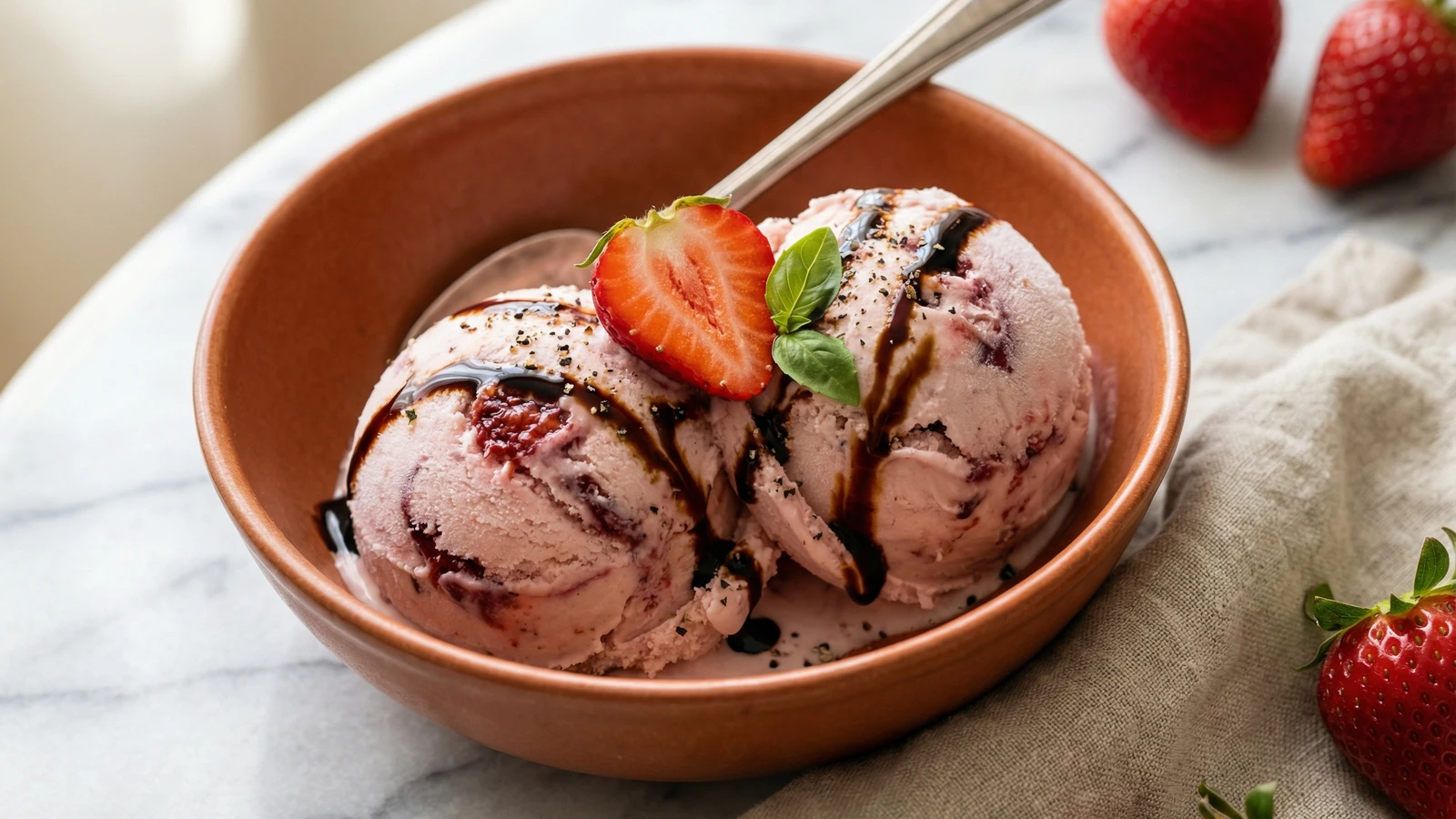
Sun-ripened strawberries roasted until jammy and concentrated, folded into velvety custard with ribbons of aged balsamic. This is the frozen dessert that makes guests ask for your secrets.
California taught America something important about strawberries. The growers around Watsonville and Oxnard proved that when you start with fruit picked at its peak, you don't need to mask it with sugar and artificial flavoring. You honor it. Roasting concentrates everything good about a strawberry: the perfume intensifies, the natural sugars caramelize at the edges, and what emerges from your oven bears no resemblance to the pale supermarket specimens most people endure.
The balsamic here isn't a gimmick. Italians have understood for centuries that aged vinegar and ripe fruit create something greater than either alone. The acidity cuts the cream's richness. The grape must's sweetness amplifies the berry's own sugar. Together they create a frozen dessert sophisticated enough for your fanciest dinner party yet simple enough to make on a Tuesday because life is short and you deserve good ice cream.
I've served this at countless summer gatherings, from casual backyard barbecues to more formal affairs. It works everywhere because it speaks honestly. No artificial colors. No stabilizers. Just fruit, cream, eggs, and time. The technique borrows from French custard making, the ingredient philosophy comes straight from California's farm stands, and the result belongs on every American summer table.
Quantity
1 pound
hulled and quartered
Quantity
3 tablespoons
Quantity
2 cups
Quantity
1 cup
Quantity
6
Quantity
3/4 cup
Quantity
1/4 teaspoon
Quantity
1 teaspoon
Quantity
3 tablespoons
Quantity
for serving
| Ingredient | Quantity |
|---|---|
| fresh strawberrieshulled and quartered | 1 pound |
| granulated sugar for roasting | 3 tablespoons |
| heavy cream | 2 cups |
| whole milk | 1 cup |
| large egg yolks | 6 |
| granulated sugar for custard | 3/4 cup |
| fine sea salt | 1/4 teaspoon |
| pure vanilla extract | 1 teaspoon |
| aged balsamic vinegar | 3 tablespoons |
| freshly cracked black pepper (optional) | for serving |
Preheat your oven to 375°F. Spread the quartered strawberries in a single layer on a rimmed baking sheet. Sprinkle with 3 tablespoons sugar and toss gently to coat. Roast for 25 to 30 minutes, stirring once halfway through, until the berries have collapsed, their juices have thickened into a syrupy glaze, and the edges show spots of deep caramelization. The kitchen will smell intensely of strawberry jam. Remove and let cool completely.
Fill a large bowl with ice and cold water. Set a medium metal bowl inside it and place a fine-mesh strainer over that bowl. This setup will stop your custard from cooking the moment it leaves the heat. Have it ready before you start the custard. Rescue equipment belongs in place before you need rescuing.
Combine the heavy cream and milk in a medium saucepan over medium heat. Warm until steam rises from the surface and small bubbles form around the edges, about 5 minutes. Do not let it boil. Remove from heat.
In a separate bowl, whisk the egg yolks with 3/4 cup sugar and the salt until pale and slightly thickened, about 2 minutes of steady whisking. The mixture should fall in ribbons when you lift the whisk. Slowly drizzle about one cup of the hot cream mixture into the yolks while whisking constantly. This tempers the eggs, raising their temperature gradually so they don't scramble. Pour the tempered yolk mixture back into the saucepan with the remaining cream.
Return the saucepan to medium-low heat. Stir constantly with a wooden spoon or heatproof spatula, reaching into the corners and across the bottom where the mixture tends to cook fastest. After 6 to 8 minutes, the custard will thicken noticeably. Test by drawing your finger across the back of the coated spoon. If the line holds without the custard running back together, you've reached nappe. An instant-read thermometer should register 170°F to 175°F. Do not exceed 180°F or the eggs will curdle.
Immediately pour the custard through the fine-mesh strainer into the bowl set over ice. This catches any bits of cooked egg and halts the cooking process. Stir the custard occasionally as it cools. Once it reaches room temperature, stir in the vanilla extract. Press plastic wrap directly onto the surface to prevent a skin from forming. Refrigerate for at least 4 hours or overnight. Cold custard churns into better ice cream.
While the custard chills, crush half of the roasted strawberries with a fork until mostly smooth but still retaining some texture. Fold in 2 tablespoons of the aged balsamic vinegar. Reserve the remaining whole roasted berries and the remaining tablespoon of balsamic separately. Refrigerate everything.
Pour the chilled custard into your ice cream maker and churn according to the manufacturer's instructions, usually 20 to 25 minutes. The ice cream is ready when it holds soft peaks and has the texture of thick soft-serve. It will still appear slightly loose but will firm up during freezing.
Transfer about one-third of the churned ice cream to a freezer-safe container. Dollop half of the crushed strawberry-balsamic mixture over it and use a knife to swirl gently, no more than two or three strokes. Add another third of the ice cream, the remaining crushed mixture, and swirl again. Top with the final layer of ice cream. Scatter the reserved whole roasted berries across the top and drizzle with the remaining tablespoon of balsamic. One final gentle swirl with the knife. The goal is distinct ribbons, not homogenous pink ice cream.
Press plastic wrap directly onto the surface, seal with a lid, and freeze for at least 4 hours or until firm. The ice cream keeps well for up to 2 weeks, though the texture is best within the first week. Let it soften at room temperature for 5 to 10 minutes before scooping for the creamiest texture.
Scoop into chilled bowls or cones. For the full experience, finish each serving with an additional drizzle of aged balsamic and, if you trust me, a few cracks of fresh black pepper. The pepper is optional but transformative, adding a subtle heat that makes the fruit sing louder.
1 serving (about 150g)
Culinary guides, cultural storytelling, and the editorial depth that makes cooking meaningful.
Discover Culinary ExplorerChef Ally
A quivering, tangy panna cotta made with real buttermilk, crowned with a crystal-clear consommé that captures the essence of peak-season strawberries in every ruby spoonful.

Chef Ally
A lighter, tangier cheesecake built on fresh chèvre from a farm you trust, crowned with roasted figs that split and caramelize, finished with honey that tastes of the flowers it came from.

Chef Ally
A billowy, tangy mousse that lets the season speak for itself, piled high with whatever berries looked most alive at the market this morning.

Chef Ally
A tender, golden cake fragrant with almonds and local honey, crowned with slices of perfectly ripe stone fruit that sink into the batter and emerge jammy, caramelized, and impossibly sweet.