
Chef Lupita
Almendrados Conventuales Poblanos
Puebla's convent almond cookies, made from blanched almonds, sugar syrup, egg yolks, canela, and patient hands, the kind of sweet that belongs beside coffee in talavera, not in a plastic bakery box.
A cooking platform built around craft, culture, and the stories behind what we eat.
Created by
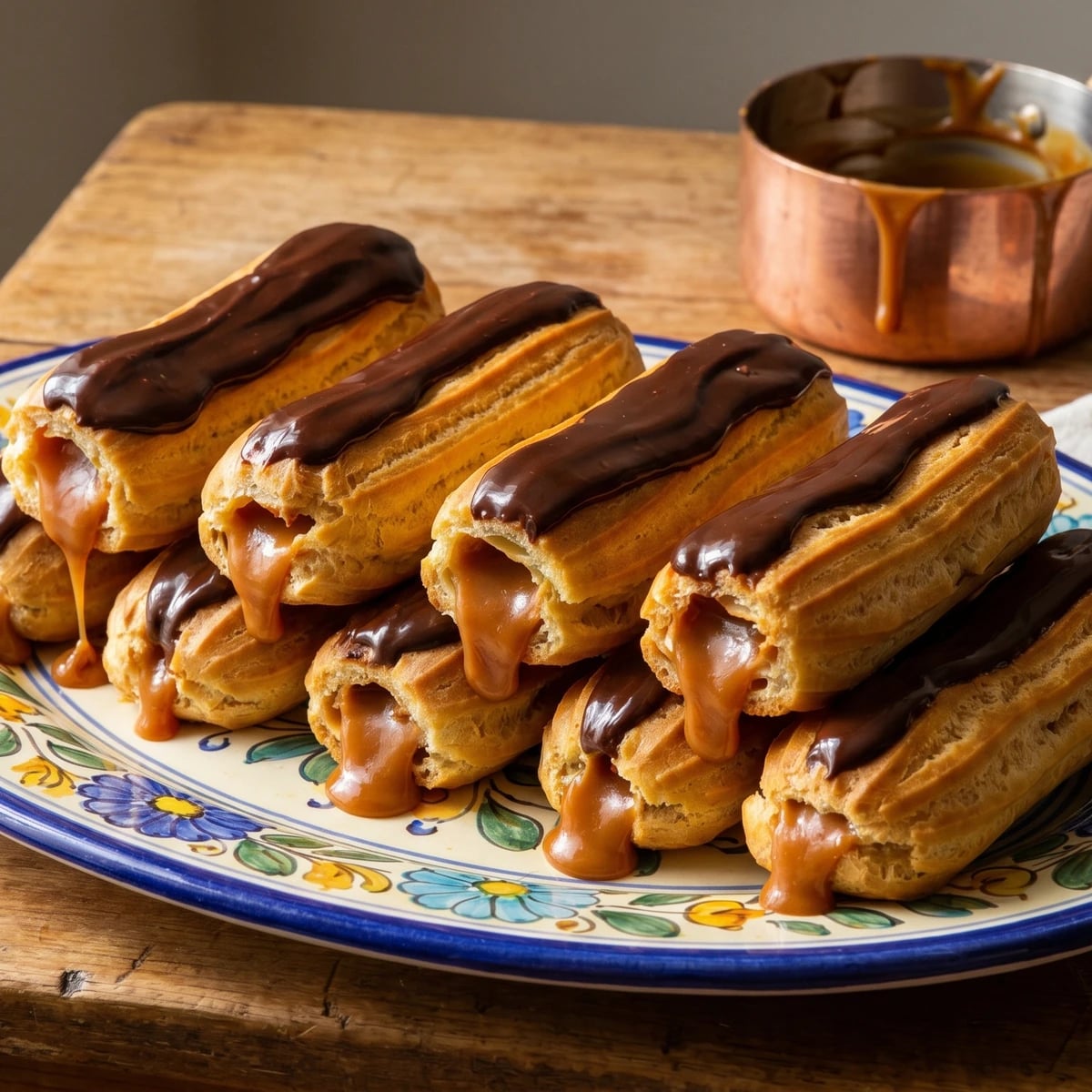
Guanajuato's relampagos take a French bakery shell and make it answer to Celaya cajeta: goat's-milk caramel, dark chocolate glaze, and choux baked until crisp.
Guanajuato, the Bajio, is where this version earns its name. Relampagos came through the French bakery fashion that settled into Mexican panaderias, but the cajeta belongs to Celaya. Goat's milk, copper pot, patient stirring. That is the flavor that makes these relampagos Mexican, not just pastry with a Spanish name.
The shell is pasta choux, and it asks for discipline. Butter, water, flour, eggs. You cook the flour in the pot until it pulls from the sides, then beat in the eggs one by one until the dough shines and falls from the spoon in a thick ribbon. No me vengas con atajos. If the dough is too wet, the shells collapse. If the oven is too timid, they never puff.
I first wrote this formula after visiting a cajeta maker outside Celaya, where the copper cazos were dark from years of milk and sugar bubbling down into that burnt, deep sweetness. The women stirring those pots know patience in their wrists. Fill the relampagos generously, glaze them dark, and set them on a painted majolica platter from Dolores Hidalgo. Cada estado, su propia cocina.
Relampagos are Mexico's adaptation of the French eclair, a choux pastry that entered urban Mexican bakeries during the 19th century and became especially fashionable during the Porfiriato, when French-style panaderias multiplied in Mexico City and Puebla. Cajeta is strongly identified with Celaya, Guanajuato, where goat's milk caramel became a regional industry by the 19th century because goats thrived in the Bajio's dry grazing country. During Mexico's War of Independence, cajeta traveled well in small wooden boxes, which helped make Celaya's version nationally known.
Quantity
1 cup
Quantity
8 tablespoons
cut into pieces
Quantity
1 tablespoon
Quantity
1/2 teaspoon
Quantity
1 cup
Quantity
4
at room temperature
Quantity
1
beaten with 1 teaspoon water, for egg wash
Quantity
1 1/2 cups
preferably goat's-milk cajeta
Quantity
1/2 cup
Quantity
6 ounces
finely chopped
Quantity
1 tablespoon
Quantity
1/4 teaspoon
| Ingredient | Quantity |
|---|---|
| water | 1 cup |
| unsalted buttercut into pieces | 8 tablespoons |
| granulated sugar | 1 tablespoon |
| fine sea salt | 1/2 teaspoon |
| all-purpose flour | 1 cup |
| large eggsat room temperature | 4 |
| large eggbeaten with 1 teaspoon water, for egg wash | 1 |
| cajeta de Celayapreferably goat's-milk cajeta | 1 1/2 cups |
| heavy cream | 1/2 cup |
| Mexican dark chocolate or bittersweet chocolatefinely chopped | 6 ounces |
| unsalted butter, for the glaze | 1 tablespoon |
| fine sea salt, for the glaze | 1/4 teaspoon |
Heat the oven to 425F. Line two baking sheets with parchment. Draw twelve 4-inch guide lines on the underside of the parchment if you want straight relampagos. A panaderia works by repetition and control, not guessing.
Combine the water, butter, sugar, and salt in a medium saucepan. Bring to a full boil over medium heat. Add the flour all at once and stir hard with a wooden spoon until the dough gathers into one mass and leaves a thin film on the bottom of the pot, about 2 minutes. That cooking matters. Raw flour makes heavy shells.
Transfer the hot dough to a mixing bowl and let it cool for 5 minutes. Beat in the eggs one at a time, mixing fully after each addition. The dough will look broken before it comes back together. Keep going. It should finish glossy, thick, and able to fall from the spoon in a slow V shape.
Spoon the dough into a piping bag fitted with a large plain tip. Pipe twelve thick 4-inch logs, leaving space between them. Brush lightly with egg wash and smooth any pointed ends with a damp fingertip. Do not flatten them. The oven needs height to lift.
Bake for 15 minutes at 425F, then reduce the oven to 350F without opening the door. Bake 22 to 28 minutes more, until the shells are deep golden, firm, and light when lifted. Turn off the oven, crack the door, and let them sit inside for 10 minutes. This dries the centers so they do not collapse.
Move the shells to a rack. When cool enough to handle, make two small holes in the bottom of each shell with a paring knife or skewer. Let them cool completely before filling. Warm pastry melts cajeta into a mess. Patience is cheaper than starting over.
Stir the cajeta until smooth. If it is too stiff to pipe, warm it gently in a bowl set over hot water for a minute or two. Pipe cajeta into each shell from the bottom holes until the pastry feels full in your hand. Do not be stingy. The filling is the point.
Heat the cream just until small bubbles form at the edge of the pan. Pour it over the chopped chocolate, butter, and salt. Let it sit for 2 minutes, then stir until smooth and dark. The glaze should coat the spoon and fall slowly. If it runs like water, wait. Chocolate needs a moment to thicken.
Dip the top of each filled relampago into the chocolate glaze, letting the excess drip back into the bowl. Set on a rack until the chocolate loses its wet shine and settles into a smooth coat. Serve the same day for the crispest shell, or chill if you want the cajeta firmer. Recetas probadas y garantizadas.
1 serving (about 110g)
Culinary guides, cultural storytelling, and the editorial depth that makes cooking meaningful.
Discover Culinary Explorer
Chef Lupita
Puebla's convent almond cookies, made from blanched almonds, sugar syrup, egg yolks, canela, and patient hands, the kind of sweet that belongs beside coffee in talavera, not in a plastic bakery box.

Chef Lupita
Ciudad de Mexico's panaderia banderillas are long sticks of hojaldre pressed with sugar, baked until amber, and finished with a hard glaze for coffee at the kitchen table.

Chef Lupita
Mérida's pale egg-yolk-and-vanilla kisses, tiny cookies built on eight yolks and a perfume of orange blossom, sandwiched with guava paste and dusted heavy with powdered sugar.

Chef Lupita
Hidalgo's bisquet de nata carries Pachuca's mining history into the breakfast table: a Cornish-style bread softened by Mexican nata, split warm and eaten with café de olla.