Culinary Explorer
A cooking platform built around craft, culture, and the stories behind what we eat.
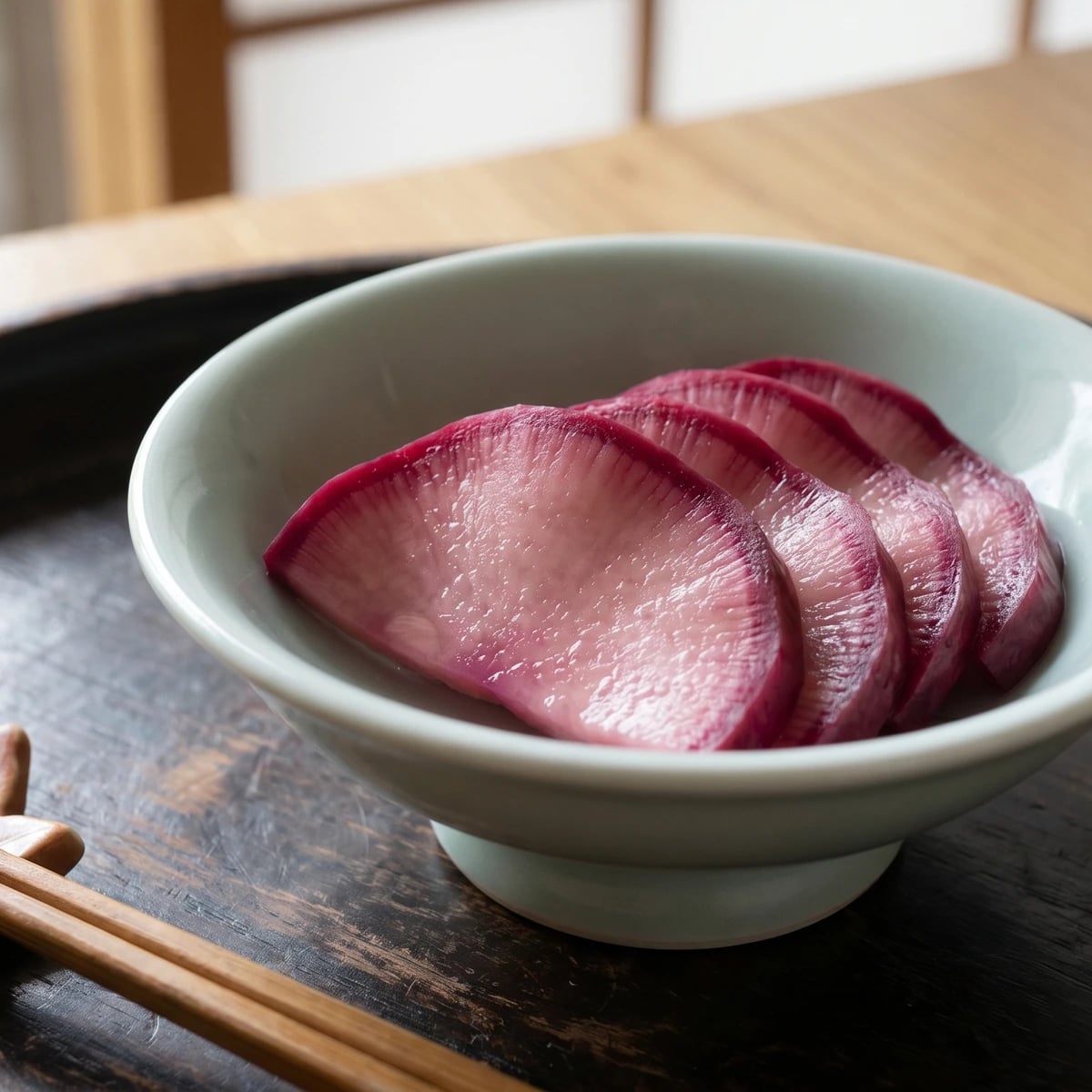
Red Turnip Pickle (赤かぶ漬け, Akakabuzuke)
Created by Chef Takumi
A winter pickle of salt, vinegar, and patience: red turnip skin gives its color slowly, turning the flesh bright and clean without dye, trickery, or fuss.
A red turnip looks as if it has already done half the work. The skin carries the color, the flesh holds the crunch, and winter gives it the sweetness that makes pickling worth doing. This is shun, the ingredient at its prime, and for akakabuzuke it matters more than clever hands.
The method is plain. Salt first, vinegar and sugar second. Salt pulls out water and firms the turnip, so the slices keep their bite instead of turning limp in the jar. Then the sweet vinegar moves in slowly, and the red skin bleeds its color through the white flesh. No dye. No heavy seasoning. Nothing hidden.
The one detail that decides the dish is thickness. Cut too thick and the pickle stays hard at the center; cut too thin and it loses the small snap that makes tsukemono useful beside rice. Aim for half-moons about 3 millimeters thick, enough body to crunch, thin enough to color cleanly.
On the table, this is not a large dish. A few magenta slices in a small bowl can wake a whole meal, especially beside rice, miso soup, and something simmered. Leave it room. Pickles are small, but they speak sharply.
Ingredients
small red turnips
Quantity
1kg
scrubbed clean, greens trimmed to 1cm
fine sea salt
Quantity
30g
rice vinegar
Quantity
1/2 cup
| Ingredient | Quantity |
|---|---|
| small red turnipsscrubbed clean, greens trimmed to 1cm | 1kg |
| fine sea salt | 30g |
| rice vinegar | 1/2 cup |
Where cooking meets culture.
Culinary guides, cultural storytelling, and the editorial depth that makes cooking meaningful.
Discover Culinary Explorer