Chef Lupita
Aceite de Chiltepin Bajacaliforniano
Baja California's wild chiltepin steeped in olive oil with garlic, orejon, and lime peel, until the oil turns ruby-amber and carries the slow, sneaky burn of the desert coast.
A cooking platform built around craft, culture, and the stories behind what we eat.

Created by
The wedding paste of the Istmo de Tehuantepec, where Zapotec cooks grind toasted chiles with cinnamon, cloves, raisins, pineapple, and pan resobado bread for the ceremonial beef estofado that anchors a Oaxacan wedding feast.
This recado does not come from Oaxaca city. It comes from the Istmo de Tehuantepec, which is its own world inside Oaxaca state. The Zapotec women of Juchitan, Tehuantepec, and Salina Cruz, the same women who run the markets and the velas and the household economies of the entire region, keep this paste on the shelf in glass jars, ready for the wedding that announces every fall and spring on the social calendar of the Istmo.
This is wedding food. Estofado de bodas. The bride's family cooks it for the groom's family on the day of the rezo. The beef simmers for hours in the recado until the meat falls apart and the sauce turns the color of dark amber. What carries the ceremony is the paste itself, not the meat. Get the paste right and the rest of the dish does what it has always done.
The pan resobado is the ingredient that tells you this comes from the Istmo and nowhere else. It is the yellow, egg-and-lard enriched bread of Tehuantepec, kneaded over and over (resobado, re-kneaded) until it carries enough body to thicken a wedding-scale pot of stew. Outside the Istmo, almost nobody knows what it is. Inside the Istmo, no estofado de bodas exists without it. Pair the bread with chile ancho, chile costeño rojo, chile guajillo, fresh pineapple from the tierra caliente, raisins, canela mexicana, clavo, and pimienta gorda, and you have the recado the Zapotec abuelas have been grinding on metates for generations.
My mother never made this. She was from Jalisco. The recipe in my notebook came from Na Berta, an octogenaria from Juchitan who walked me through the paste in her cocina de humo over two afternoons in 2014. She told me the proportions by feel and corrected me twice when I weighed things instead of looking at them. I weighed them anyway. You can blame me for that. Cada estado, su propia cocina, and within Oaxaca, the Istmo has its own.
The estofado tradition of the Istmo de Tehuantepec emerged from the convergence of pre-Columbian Zapotec sauce-making, which used native chiles ground on metate, with the Spanish enriched-bread tradition (pan resobado) and the spices that arrived through the Manila galleon trade at Acapulco beginning in the 16th century. Cinnamon, cloves, and black pepper traveled across the Pacific from Asia and were absorbed into the cooking of the Istmo earlier and more deeply than into many other Mexican regional cuisines, partly because the Camino Real to the Gulf passed directly through Tehuantepec. The matriarchal Zapotec social structure of the Istmo, in which women control the markets, the household economy, and the ritual calendar of the velas, is the reason these wedding recados were preserved in such fierce detail; the recipes pass mother to daughter as a form of inheritance that no man has ever been allowed to interrupt.
Quantity
6
stemmed and seeded
Quantity
4
stemmed and seeded
Quantity
3
stemmed and seeded
Quantity
1, about 4 inches
Quantity
8
Quantity
10
Quantity
4
Quantity
1/2 teaspoon
Quantity
1
cloves separated and peeled
Quantity
1 medium
quartered
Quantity
1/2 cup
Quantity
1 cup
cut into 1-inch chunks
Quantity
4 ounces (about 2 packed cups)
torn into rough pieces
Quantity
1/4 cup
Quantity
1/4 cup
skin on
Quantity
3 tablespoons
Quantity
3 tablespoons, divided
Quantity
2 teaspoons, plus more to taste
| Ingredient | Quantity |
|---|---|
| dried chile anchostemmed and seeded | 6 |
| dried chile costeño rojostemmed and seeded | 4 |
| dried chile guajillostemmed and seeded | 3 |
| cinnamon stick (canela mexicana) | 1, about 4 inches |
| whole cloves | 8 |
| black peppercorns | 10 |
| allspice berries (pimienta gorda) | 4 |
| cumin seeds | 1/2 teaspoon |
| head of garliccloves separated and peeled | 1 |
| white onionquartered | 1 medium |
| raisins | 1/2 cup |
| fresh pineapplecut into 1-inch chunks | 1 cup |
| pan resobadotorn into rough pieces | 4 ounces (about 2 packed cups) |
| raw sesame seeds | 1/4 cup |
| whole raw almondsskin on | 1/4 cup |
| pineapple vinegar (vinagre de piña casero) | 3 tablespoons |
| pork lard (manteca de cerdo) | 3 tablespoons, divided |
| sea salt | 2 teaspoons, plus more to taste |
Heat a dry comal or heavy cast iron skillet over medium. Toast the ancho, costeño rojo, and guajillo chiles separately, about 20 to 30 seconds per side. The skin should puff and the kitchen should smell like the chile vendors at the Mercado 20 de Noviembre. Pull each one off the comal the moment it shifts from raw and dusty to alive and fragrant. Burned chile is bitter chile and there is no fixing it later. Move the toasted chiles to a heatproof bowl as you go.
Cover the toasted chiles with hot tap water, not boiling. Boiling water cooks the skin and pulls bitterness into the soak. Press a small plate on top to keep them submerged. Let them soften for 25 minutes while you work on the rest of the recado.
On the same comal, toast the cinnamon stick, cloves, peppercorns, allspice, and cumin together over medium-low heat for two minutes, shaking the pan, until the spices release their aroma. Move them to a small bowl. Toast the sesame seeds until golden, about two minutes, watching closely. They go from pale to gold to burned in seconds. Toast the almonds last, about three minutes, until the skins darken and the nuts smell like roasted nuts and not raw ones.
Place the garlic cloves and onion quarters directly on the comal. Let them blacken in patches, turning every minute or two, for about eight minutes total. The onion should soften and develop dark scorch marks. The garlic should turn from white to a deep amber with black freckles. This dry-charring on the comal is how Zapotec cooks build the smoky base of every serious recado. No oil, no oven, just the hot iron and patience.
In a heavy skillet, melt 1 tablespoon of the lard over medium heat. Add the torn pan resobado and toast it in the lard, stirring, until the bread turns deep gold and absorbs the fat, about four minutes. Move the bread to a plate. Add the pineapple chunks to the same skillet and let them caramelize on each side, about two minutes per side, until the edges turn dark and the sugars concentrate. La manteca es el sabor and this is where the recado earns its weight.
Grind the toasted whole spices in a spice grinder or molcajete to a fine powder. The cinnamon will resist. Keep grinding until it surrenders. Combine the ground spices with the charred garlic and onion, the toasted sesame and almonds, the raisins, the toasted pan resobado, and the caramelized pineapple in a high-powered blender.
Drain the soaked chiles, reserving the soaking liquid. Add the chiles to the blender along with the pineapple vinegar, the salt, and 1 cup of the chile soaking liquid. Blend on high for two full minutes, stopping to scrape the sides, until the paste is completely smooth. Add a little more soaking liquid only if the blender struggles. The recado should be thick enough to hold a line drawn through it with a spoon. Pass the paste through a medium-mesh strainer, pressing on the solids with a wooden spoon. Discard whatever skin and grit remains in the strainer.
Heat the remaining 2 tablespoons of lard in a wide cazuela or heavy skillet over medium heat until the fat shimmers. Pour in the strained paste. It will sputter aggressively, so stand back. Stir constantly with a wooden spoon for eight to ten minutes. The paste will deepen from rust to mahogany and the lard will start to bead at the edges of the cazuela. That fat separation is your signal. The recado is finished. Taste for salt and adjust. It should taste concentrated, slightly sweet from the pineapple and raisins, dark from the spices, and assertive from the chile. Asi se hace y punto.
1 serving (about 45g)
Culinary guides, cultural storytelling, and the editorial depth that makes cooking meaningful.
Discover Culinary ExplorerChef Lupita
Baja California's wild chiltepin steeped in olive oil with garlic, orejon, and lime peel, until the oil turns ruby-amber and carries the slow, sneaky burn of the desert coast.

Chef Lupita
Puebla's Lenten convent adobo, a brick-red vinegar chile paste of ancho, guajillo, garlic, oregano, and comino made to dress fish for the meatless calendar.
Chef Lupita
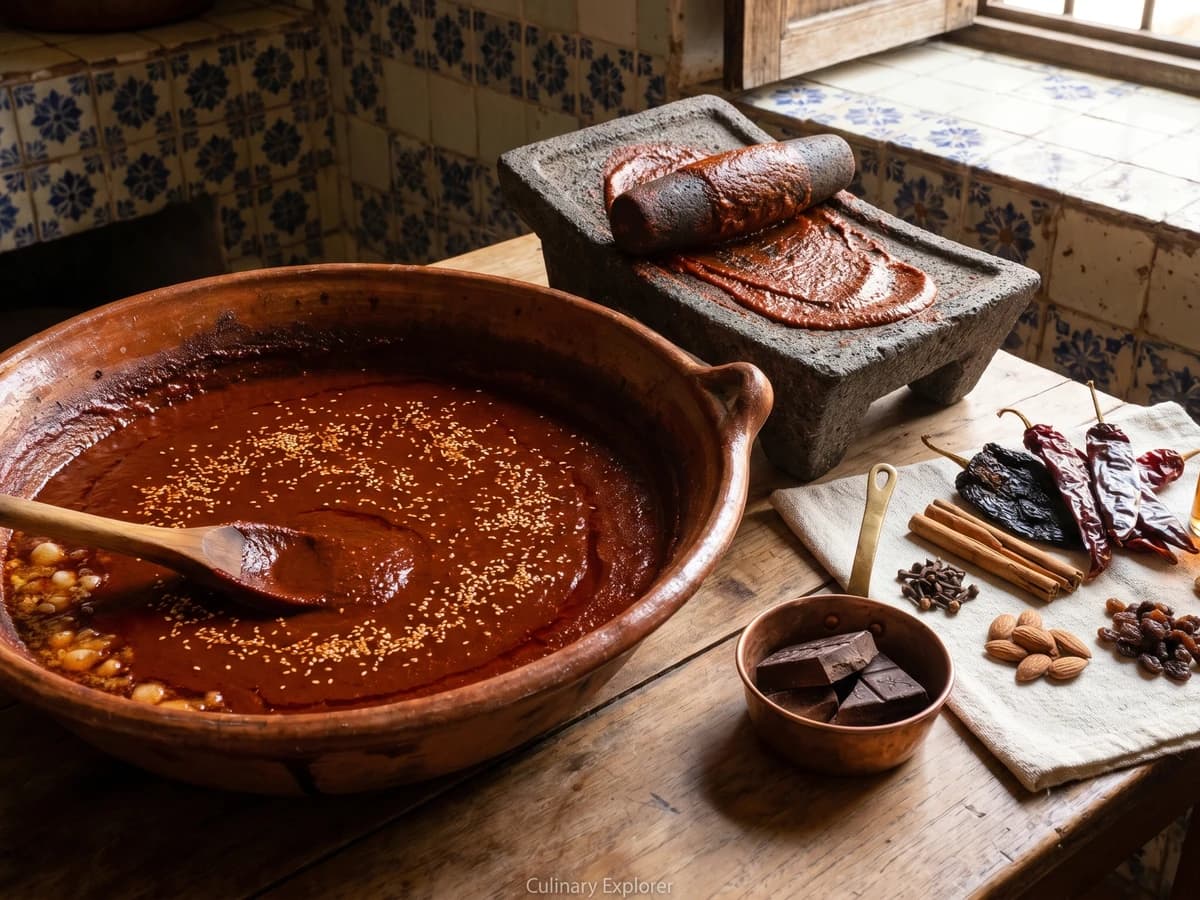
Zacatecas' wedding-table adobo, built from toasted guajillo and ancho, piloncillo, sour orange, chocolate, canela, clavo, almonds, sesame, and lard.

Chef Lupita
Puebla's convent kitchens built this adobo with ancho, guajillo, jerez, almonds, raisins, clove, and lard, a baroque marinade that stains pork loin and finishes as the sauce.