Chef Lupita
Aceite de Chiltepin Bajacaliforniano
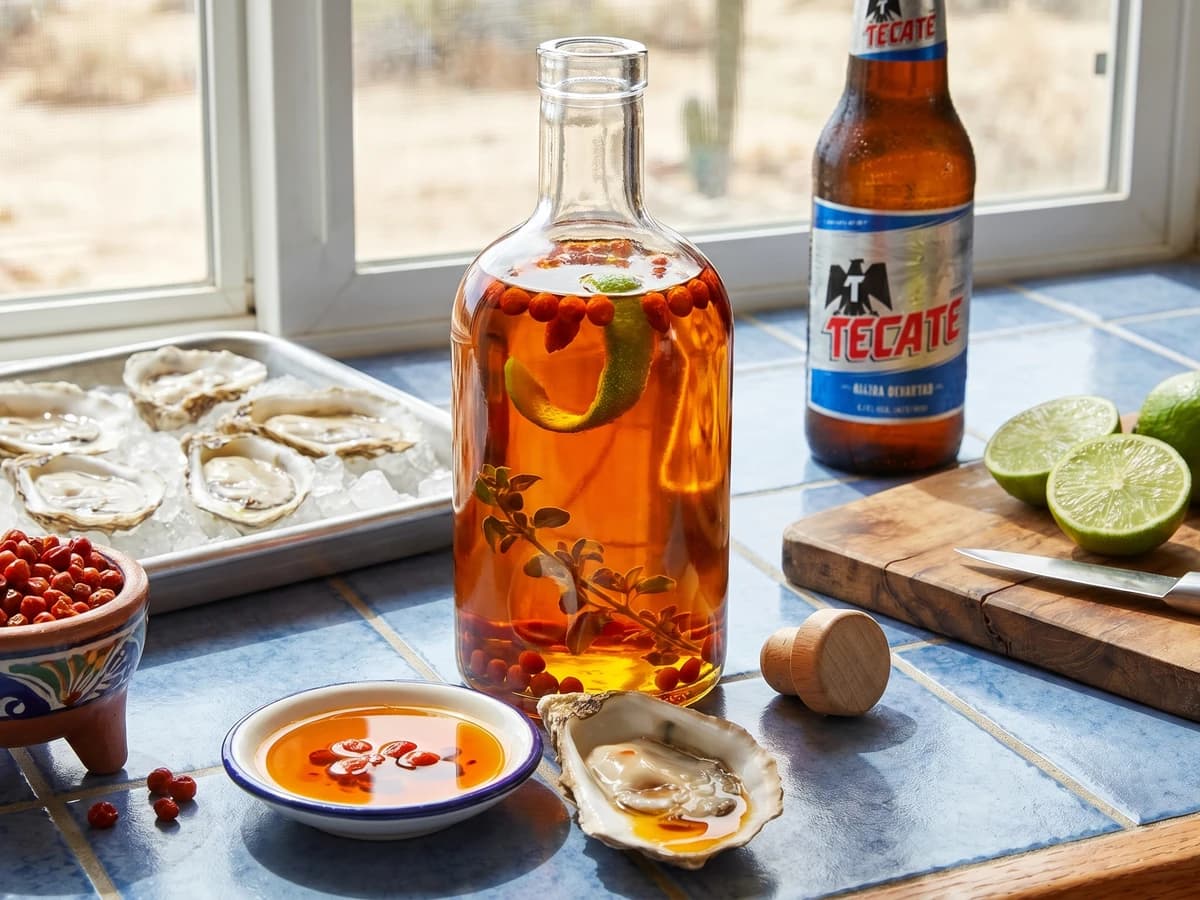
Baja California's wild chiltepin steeped in olive oil with garlic, orejon, and lime peel, until the oil turns ruby-amber and carries the slow, sneaky burn of the desert coast.
A cooking platform built around craft, culture, and the stories behind what we eat.
Created by
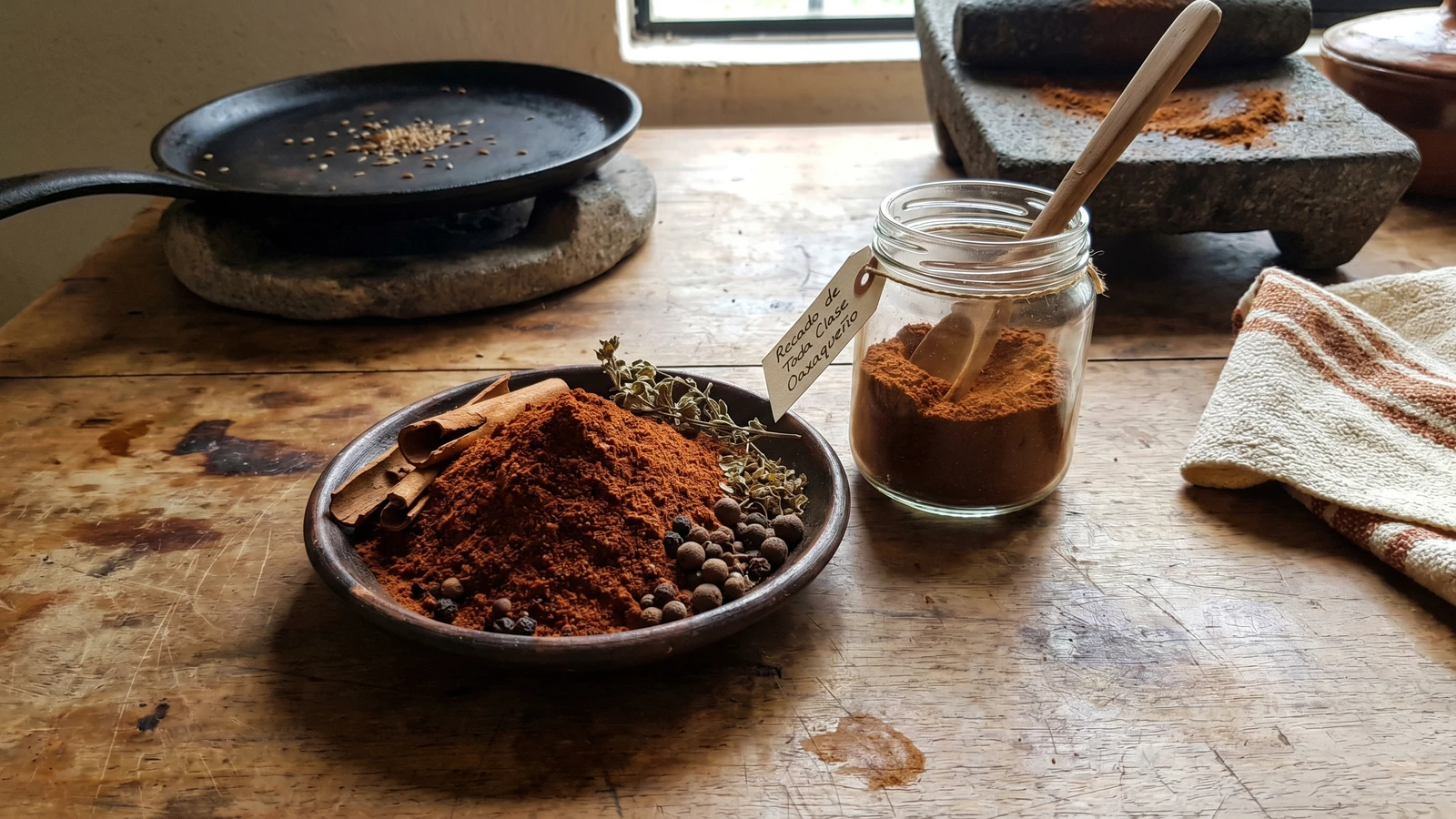
Oaxaca's foundational dry spice base, canela, peppercorns, cloves, allspice, and oregano de monte, toasted on the comal and ground fine. The hidden DNA inside the seven moles and a dozen adobos.
This is Oaxacan. Not Yucatecan. The recados of Yucatan are wet pastes built on achiote and sour orange. The recado de toda clase from Oaxaca is dry: a ground spice base of canela, peppercorns, cloves, allspice, and oregano de monte, toasted on a comal and stored in a glass jar on the cook's shelf. It is the seasoning that lives behind the seven moles, the adobos, the guisados, the meats braised in clay. You do not eat it on its own. You build with it.
Diana Kennedy documented this base in the senoras' kitchens of the Valles Centrales decades ago, and the cooks she sat with had been making it the same way for generations before that. The proportions shift slightly from house to house, more clove here, more oregano there, but the structure is constant. Every Oaxacan kitchen has a small jar of it within arm's reach of the comal. When the cook starts a mole amarillo or an adobo for pollo, she does not start from zero. She starts from the recado.
The oregano makes the difference. Oaxacan oregano de monte is not the Mediterranean oregano you find in supermarkets. It is wilder, more resinous, with notes of pine and earth. If you cannot get it, use Mexican oregano. If you cannot get Mexican oregano, do not make this recipe yet. Go to a Mexican grocery, find what you need, and come back. Si no conoces el mercado, no conoces la cocina.
My mother kept three jars on her shelf: a recado for moles, a polvo for adobos, and one she labeled simply 'Oaxaca' that she had brought back from a trip to Tlacolula in 1979. She used it sparingly, a teaspoon at a time, like medicine. When the jar emptied she made another batch from her notes and labeled it the same way. That is what this powder is. A pantry inheritance. La cocina no es decoracion, es trabajo.
The Spanish word 'recado' derives from the verb 'recadar,' to gather or arrange, and in colonial New Spain it described any prepared seasoning a cook kept on hand. Oaxaca's dry recados evolved from the convergence of pre-Columbian dry-toasting traditions practiced by Zapotec and Mixtec cooks with the spice cargo that arrived through the Manila galleon trade between 1565 and 1815, which brought Asian cinnamon, cloves, and black pepper to the port of Acapulco and inland to Oaxaca's markets. Diana Kennedy's documentation of the recado de toda clase in her 1972 work on Oaxacan cooking helped establish that the state's celebrated moles were not improvised compositions but built on a small repertoire of standardized dry bases, a fact local cooks had always known but the wider culinary world had overlooked.
Quantity
2 sticks (about 6 inches total)
broken into small pieces
Quantity
2 tablespoons
Quantity
1 tablespoon
Quantity
1 teaspoon
Quantity
1 teaspoon
Quantity
3 tablespoons
Mexican oregano is acceptable if Oaxacan is unavailable
Quantity
1 teaspoon
Quantity
1 teaspoon
Quantity
2
preferably hoja de laurel mexicano, crumbled
| Ingredient | Quantity |
|---|---|
| canela mexicana (true Ceylon cinnamon)broken into small pieces | 2 sticks (about 6 inches total) |
| whole black peppercorns | 2 tablespoons |
| whole allspice berries (pimienta gorda) | 1 tablespoon |
| whole cloves | 1 teaspoon |
| cumin seeds | 1 teaspoon |
| dried Oaxacan oregano (oregano de monte)Mexican oregano is acceptable if Oaxacan is unavailable | 3 tablespoons |
| dried thyme | 1 teaspoon |
| dried marjoram | 1 teaspoon |
| dried bay leavespreferably hoja de laurel mexicano, crumbled | 2 |
Set a dry cast iron comal or heavy skillet over medium-low heat. Let it warm for three or four minutes. The pan needs to be evenly hot, not screaming. Spices burn faster than chiles and there is no recovering a burnt clove. If you can hold your palm two inches above the surface for four seconds, you are ready.
Add the broken canela, peppercorns, allspice, cloves, and cumin to the dry comal. Toast for two to three minutes, shaking the pan constantly so nothing sits still. The cumin will darken first and start to dance. The peppercorns will pop quietly. The kitchen will smell like the spice stalls at Mercado 20 de Noviembre, sweet, sharp, woody, all at once. That smell is the oils releasing. The moment you have it, slide the spices off the comal onto a plate to stop the cooking.
Lower the heat. Add the oregano, thyme, marjoram, and crumbled bay to the comal. Herbs are delicate and burn in seconds. Toast for 30 to 45 seconds, shaking the whole time, until they release their aroma and turn a shade darker. Tip them out onto the plate with the spices the moment they smell awake. Asi se hace y punto.
Spread everything in a single layer on the plate and let it cool to room temperature. This takes about ten minutes. Grinding warm spices traps steam in the powder and the recado will turn pasty and lose its bloom. Patience now saves the whole batch.
Transfer the cooled spices and herbs to a metate, a molcajete, or a clean electric spice grinder. If you use a metate, work in small passes, the canela will resist and your wrists will know it. If you use a grinder, pulse in two batches so the blade does not heat the spices. Grind until the recado is a fine, even powder. No visible chunks of clove or peppercorn. Pass it through a fine-mesh sieve and regrind anything that does not go through.
Funnel the recado into a clean glass jar with a tight lid. Let it rest for at least 24 hours before using. The flavors marry in the dark and the powder settles into itself. Store in a cool dark cupboard, never above the stove. Recetas probadas y garantizadas, but only if you store it like a Oaxacan cook would.
1 serving (about 2g)
Culinary guides, cultural storytelling, and the editorial depth that makes cooking meaningful.
Discover Culinary ExplorerChef Lupita
Baja California's wild chiltepin steeped in olive oil with garlic, orejon, and lime peel, until the oil turns ruby-amber and carries the slow, sneaky burn of the desert coast.

Chef Lupita
Puebla's Lenten convent adobo, a brick-red vinegar chile paste of ancho, guajillo, garlic, oregano, and comino made to dress fish for the meatless calendar.
Chef Lupita
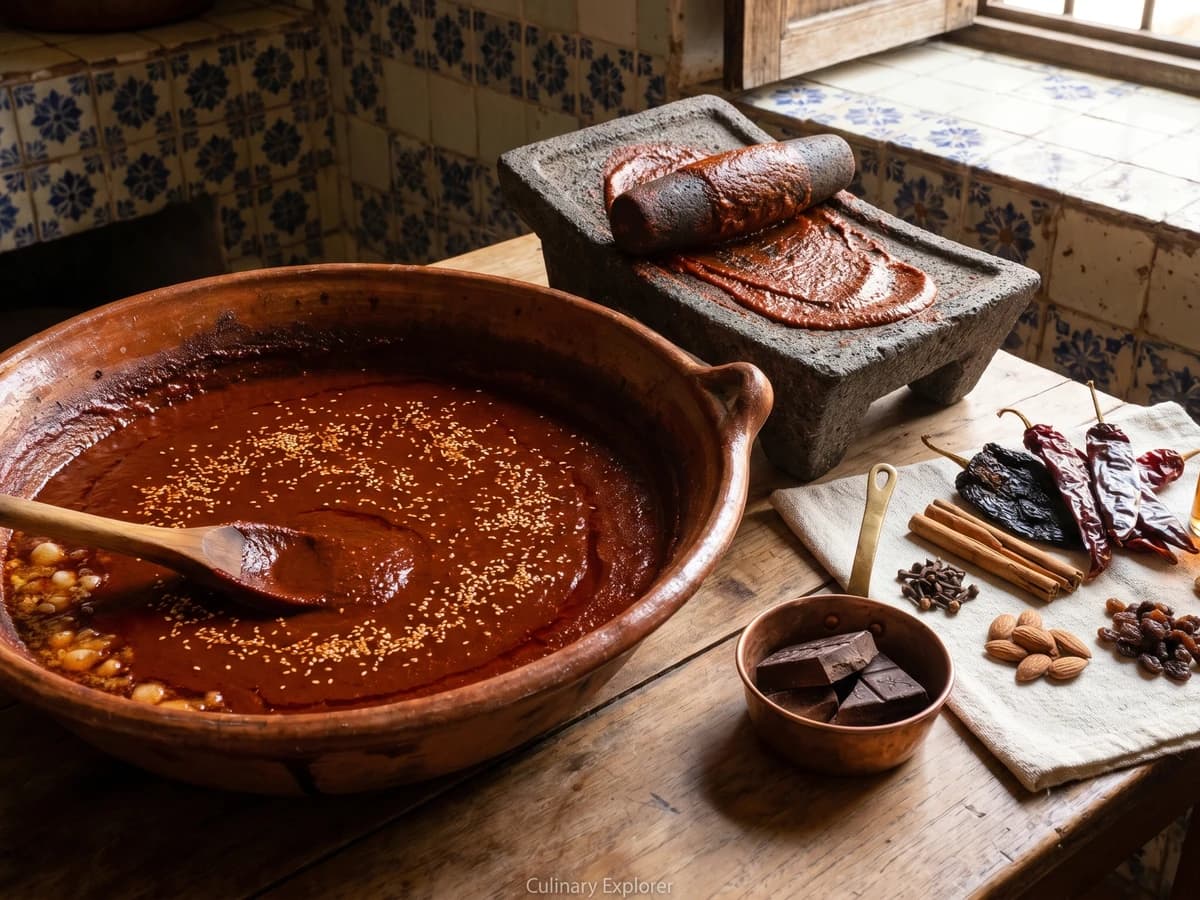
Zacatecas' wedding-table adobo, built from toasted guajillo and ancho, piloncillo, sour orange, chocolate, canela, clavo, almonds, sesame, and lard.

Chef Lupita
Puebla's convent kitchens built this adobo with ancho, guajillo, jerez, almonds, raisins, clove, and lard, a baroque marinade that stains pork loin and finishes as the sauce.