Culinary Explorer
A cooking platform built around craft, culture, and the stories behind what we eat.
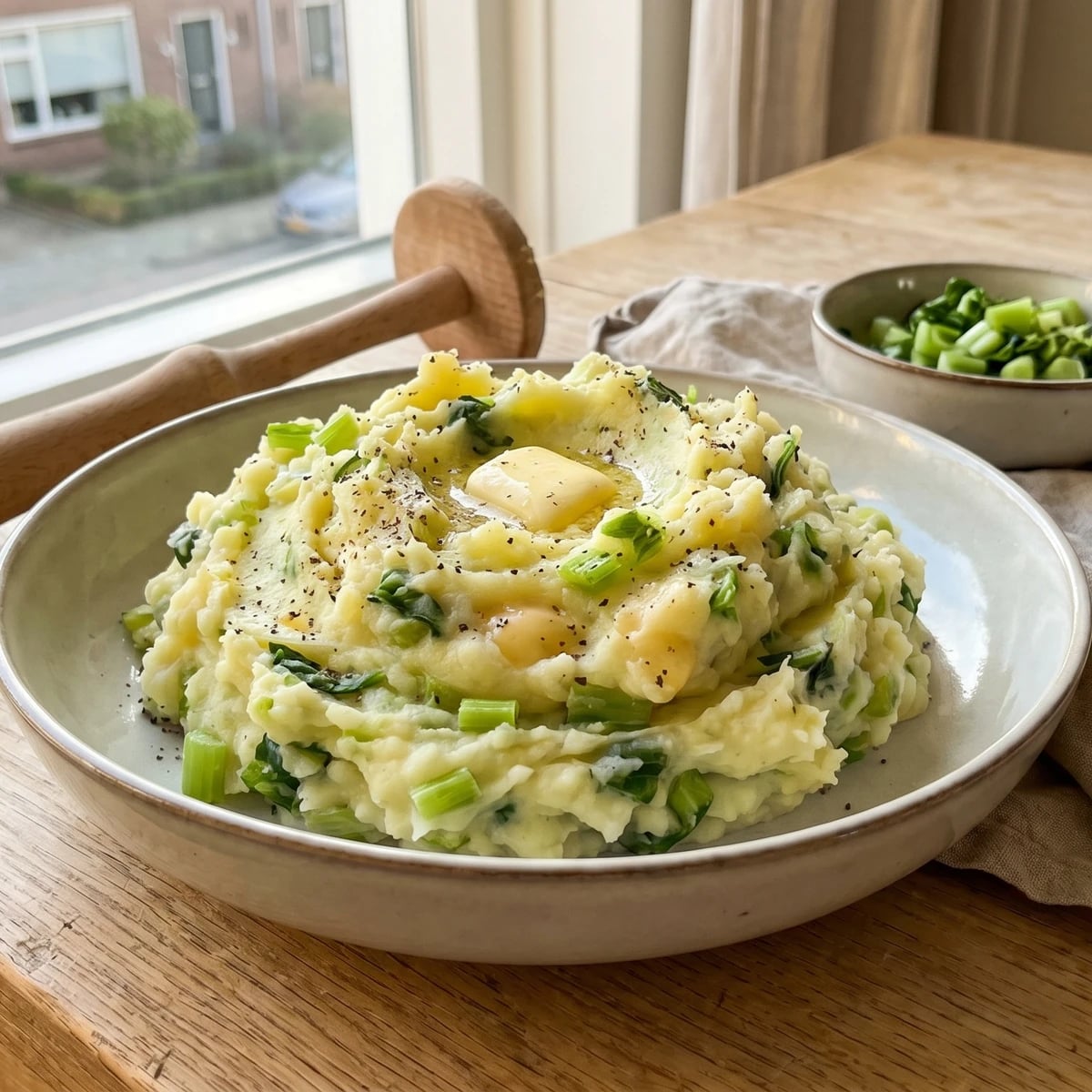
Raapstelenstamppot
Created by Chef Joost
The lightest member of the stamppot family: young turnip stems stirred raw through hot potato, a spring allotment supper that tastes like the garden woke first.
The first stamppot of spring does not arrive wearing the heavy coat of winter. It comes from the volkstuin, the allotment garden, with soil still clinging to the roots and the leaves too young to know bitterness. Raapstelen are literally turnip stems: raap, turnip, and stelen, stems. The name already tells you this is peasant precision, not poetry, though I have always suspected the Dutch hide their poetry where only hungry people will find it.
But let me tell you a secret. Stamppot is not one dish. It is a method, a whole Dutch grammar of potato and season. In winter it takes kale, sauerkraut, carrot, onion, anything that can stare down the cold. In spring, it softens. Raapstelen are peppery and grassy, almost radish-like, and you don't boil them to death. You let the hot potatoes do the wilting. That is the whole trick.
Stampen means to mash or pound, and pot is simply the pot, so stamppot is the mashed pot. No mystery there, which is exactly why people underestimate it. Hou het altijd simpel, always keep it simple: floury potatoes, a little butter, warm milk, mustard if your table likes a sharper edge, and the greens folded in at the end so they keep their bite. A dish without its story is half a meal, and this one tells you the Dutch kitchen was never only about surviving winter. It knew how to notice the first green thing.
Ingredients
floury potatoes
Quantity
1 kg
peeled and cut into even chunks
fresh raapstelen (turnip greens)
Quantity
300g
washed, roots trimmed, chopped
whole milk
Quantity
150ml
warmed
| Ingredient | Quantity |
|---|---|
| floury potatoespeeled and cut into even chunks | 1 kg |
| fresh raapstelen (turnip greens)washed, roots trimmed, chopped | 300g |
| whole milkwarmed | 150ml |
Where cooking meets culture.
Culinary guides, cultural storytelling, and the editorial depth that makes cooking meaningful.
Discover Culinary Explorer