Culinary Explorer

A cooking platform built around craft, culture, and the stories behind what we eat.
Discover Culinary Explorer
Quibebe de Moranga

Quibebe de Moranga

Created by

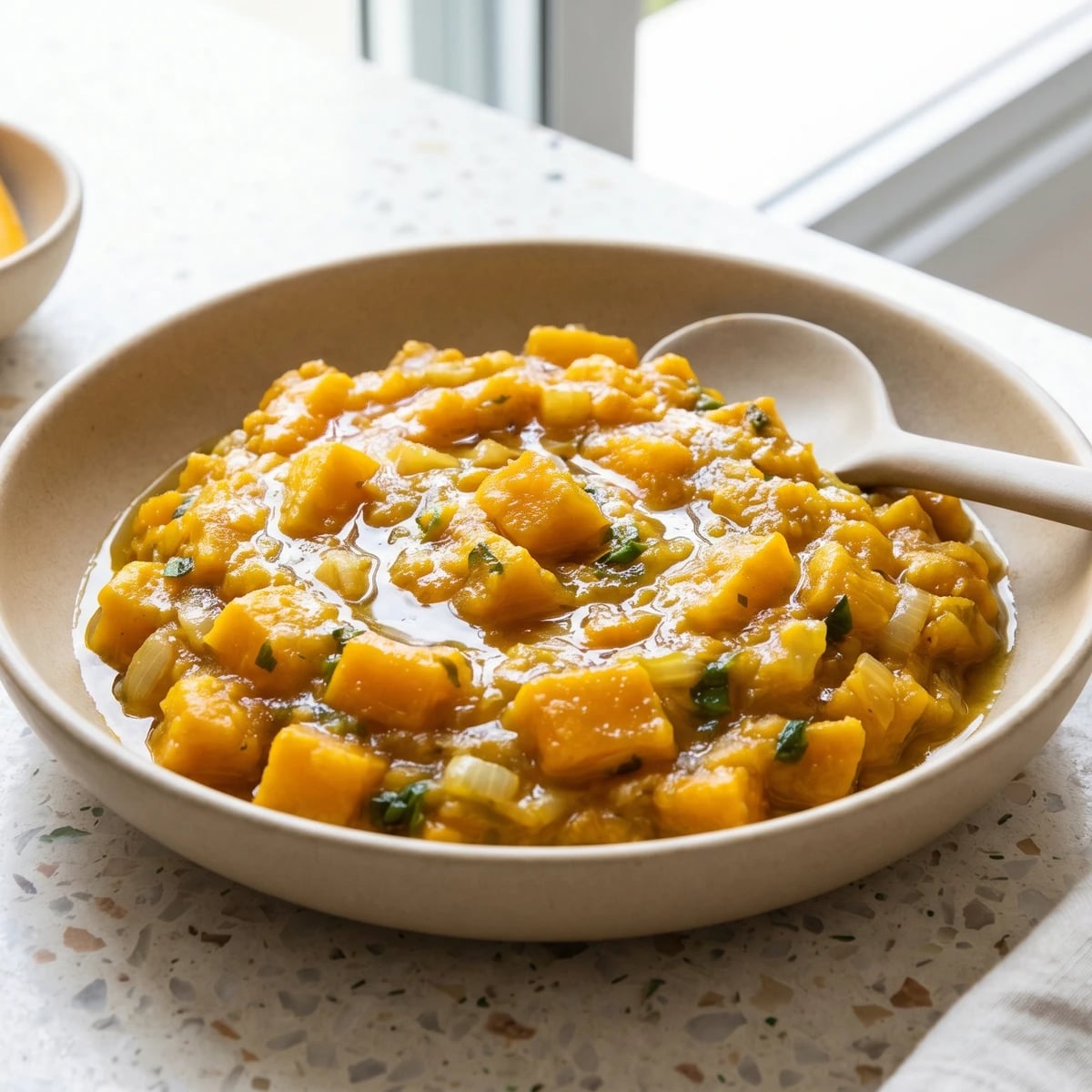
You think pumpkin mash sounds like baby food. Wrong pot, wrong method. With a real refogado and patience, moranga turns silky, savory, and strong enough for rice, beans, greens, and a roast.

Side Dishes
Brazilian
Comfort Food
Budget Friendly
Weeknight
15 min
Active Time
30 min cook45 min total
Yield4 to 6 servings

You see a pan of orange mash and the little voice starts: 'isso não é pra mim.' Either you think pumpkin is baby food, or you think it needs sugar, cinnamon, and somebody else's confidence. Nonsense. Cozinhar não é dom, é um aprendizado, and this one is almost embarrassingly teachable.

I learned late enough to know the fear. I also know the relief of a cheap vegetable doing serious work on a Tuesday plate. Quibebe is how a gente takes moranga, which can be watery and shy if you boil it badly, and teaches it manners with onion, garlic, good fat, salt, and time. Not a packet. Not a cube. Comida de verdade.

The method is simple because the reasons are clear. Cut the squash small so it cooks evenly. Let the onion murchar before the garlic goes in, because burnt garlic turns bitter and bosses the whole pan around. Use only a little water, cover until the cubes collapse, then uncover and cook the wetness away until the spoon leaves a trail. That's the difference between dinner and orange soup pretending to help.

Put it beside arroz soltinho, feijão with a creamy caldo, a piece of roasted meat or a fried egg, and couve. There it is, the pê-efe doing its quiet job. Sweet, savory, cheap, bright. A side dish that solves dinner without making a speech.

The word quibebe comes from Kimbundu kibebe, one of many African-language traces in the everyday Portuguese of Brazilian kitchens. In Brazil it became a savory squash mash or stew with regional versions, and in southern home cooking, especially around Rio Grande do Sul, it is often served beside roasted meats, rice, beans, and greens. The surprising part is how practical it is: a watery vegetable is cooked past cubes into a thick side dish, so the plate gets sweetness and color without turning the meal into dessert.

The technique, the tradition, and the story behind every dish.

Discover Culinary Explorer

Ingredients

peeled moranga or cabotiá squash

Quantity

6 cups (about 900 g)

cut into 2 cm cubes

neutral oil, olive oil, or lard

Quantity

2 tablespoons

onion

Quantity

1 medium (about 1 cup)

finely chopped

garlic

Quantity

3 cloves

minced

salt

Quantity

1 teaspoon, plus more to taste

water

Quantity

1/2 cup, plus 2 to 4 tablespoons more if needed

black pepper (optional)

Quantity

1/4 teaspoon

cheiro-verde (parsley and scallions)

Quantity

2 tablespoons

chopped, divided

butter (optional)

Quantity

1 tablespoon

for finishing

Equipment Needed

  • Heavy 3-liter pot or deep skillet with a lid
  • Potato masher or sturdy wooden spoon
  • Vegetable peeler for hard squash

Instructions

  1. 1

    Cut the squash

    Set the squash on its flattest side and cut it into 2 cm cubes, about the size of a big grape. Keep the pieces close in size, because little ones melt while big ones stay stubborn in the middle, and then the pan cooks unevenly. If you're using pre-cut moranga, trim off any dry white edges and keep only the firm orange pieces.

    Pre-cut squash is a fair Tuesday shortcut. It costs more and loses freshness faster, so use it the day you buy it. Powdered soup mix is not the same thing, and no, it doesn't get to come in this pan.
  2. 2

    Build the refogado

    Warm the fat in a heavy pot or deep skillet over medium heat. Add the onion and a pinch of the salt and cook, stirring now and then, until it goes soft, shiny, and see-through, about 5 minutes. Add the garlic and cook for 1 minute, just until you smell it. Onion needs time to murchar and sweeten; garlic needs a short turn, because burnt garlic gets bitter and takes the whole pot with it.

  3. 3

    Coat the moranga

    Add the squash cubes and the rest of the salt. Stir for 3 to 4 minutes, until the orange deepens a little and the cubes look shiny with the refogado. This small step matters: fat carries the onion and garlic flavor over the squash, and salt starts pulling out just enough moisture so the pan begins to cook from the vegetable itself.

  4. 4

    Cook until collapsing

    Pour in 1/2 cup water, scrape the bottom, and cover the pot. Drop the heat to medium-low and cook for 15 to 20 minutes, stirring once or twice, until a cube crushes easily against the side of the pan. If the bottom goes dry before the squash softens, add water 1 tablespoon at a time. A little water helps the moranga collapse; too much turns it into soup and steals the ponto.

  5. 5

    Mash and dry

    Take off the lid and mash the squash with a potato masher or sturdy spoon, leaving a few soft pieces if you like texture. Cook uncovered for 5 to 8 minutes, stirring often, until the mash is thick and glossy and a spoon dragged through it leaves a clear trail before slowly closing. This is pegar ponto: you're cooking off excess water so the sweetness concentrates and the quibebe sits proudly on the plate instead of running into the rice.

    If your squash is very watery, keep cooking uncovered. Don't add flour to fake thickness; the cleanest thickener here is patience and evaporation.
  6. 6

    Finish bright

    Turn off the heat. Stir in the black pepper if using, the butter if using, and half the cheiro-verde. Taste for salt, then scatter the rest of the herbs on top. Herbs go in at the end because they stay green and fresh; cook them for twenty minutes and they turn dull, which is not a crime, just a waste. Serve with rice, beans, couve, and roast meat or a fried egg.

Chef Tips

  • Buy moranga or cabotiá that feels heavy for its size, with deep orange flesh and no wet spots. When it's in season it will be cheaper, sweeter, and not exhausted from traveling. Cook with the season and the season cooks for you.
  • Do not start with water. Start with onion and garlic in fat, because the refogado is the spine of the flavor. Water softens the squash, but it doesn't build dinner by itself.
  • The allowed shortcut is peeled, cut squash. The refused shortcut is a seasoning packet, soup powder, or anything trying to impersonate onion and garlic. A gente is cooking, not dissolving a lie.
  • Texture is yours to choose. Mash it smooth if you want it silky, or leave a few pieces if you like the spoon to find something. Just cook it until it holds its shape.

Advance Preparation

  • Peel and cube the squash up to 24 hours ahead. Keep it covered in the fridge so it doesn't dry out.
  • Cooked quibebe keeps for 4 days in the fridge. Reheat over low heat, stirring, with 1 to 2 tablespoons water only if it has tightened too much.
  • Freeze for up to 2 months in small containers. Thaw overnight in the fridge and reheat uncovered so extra water cooks away.

Frequently Asked Questions

Nutrition Information

1 serving (about 195g)

Calories
140 calories
Total Fat
8 g
Saturated Fat
2 g
Trans Fat
0 g
Unsaturated Fat
5 g
Cholesterol
5 mg
Sodium
470 mg
Total Carbohydrates
17 g
Dietary Fiber
3 g
Sugars
6 g
Protein
2 g

Note: Chef personas and recipes are created with AI assistance. Cook with care: follow safe food-handling practices, check doneness with a thermometer when needed, and adapt for allergies and your kitchen.

Where cooking meets culture.

Culinary guides, cultural storytelling, and the editorial depth that makes cooking meaningful.

Discover Culinary Explorer

More from Arroz de Carreteiro, Entrevero & Pampa Plates

Browse the full collection