Chef Thomas
Apple Charlotte
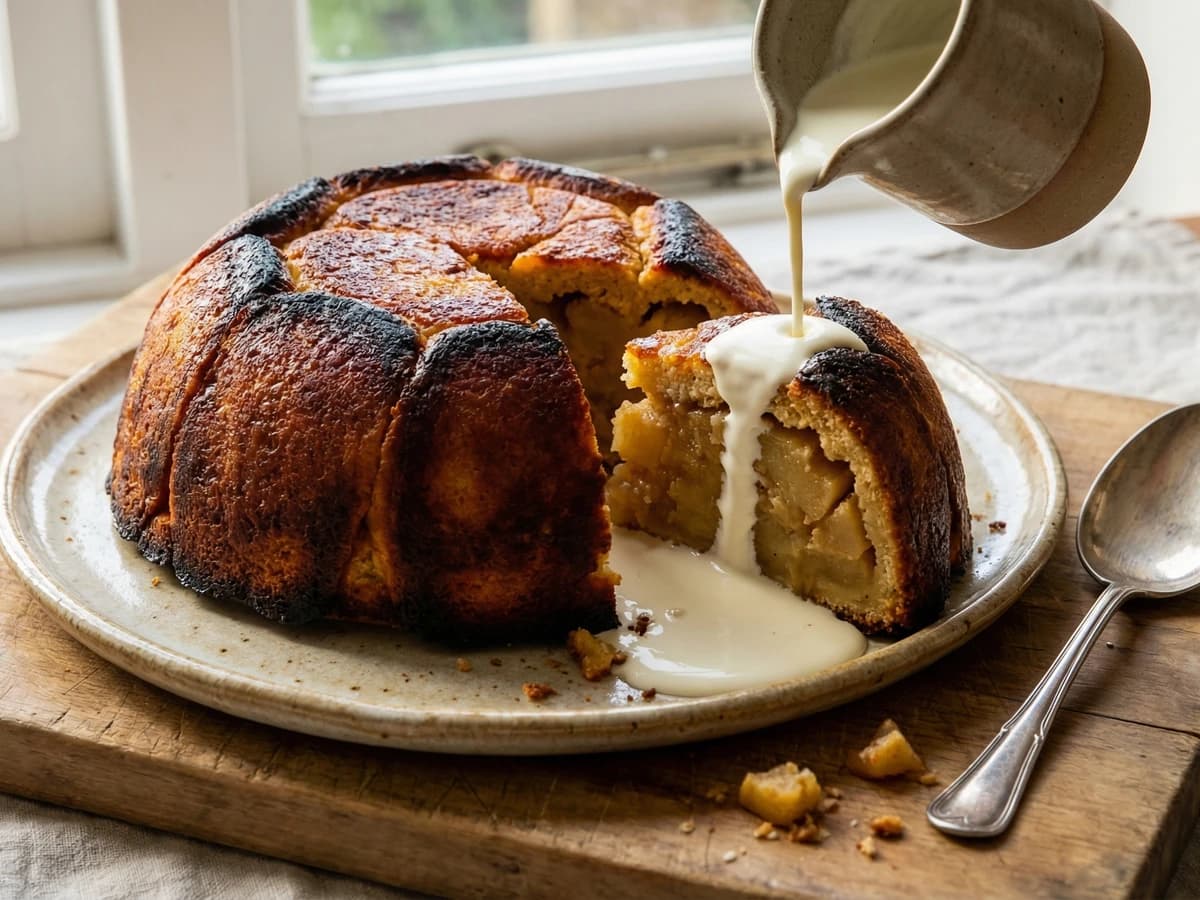
Buttered bread baked to a deep mahogany around a filling of spiced Bramley apples, turned out at the table in a small moment of drama, cold cream poured from a jug alongside.
A cooking platform built around craft, culture, and the stories behind what we eat.
Created by Chef Thomas
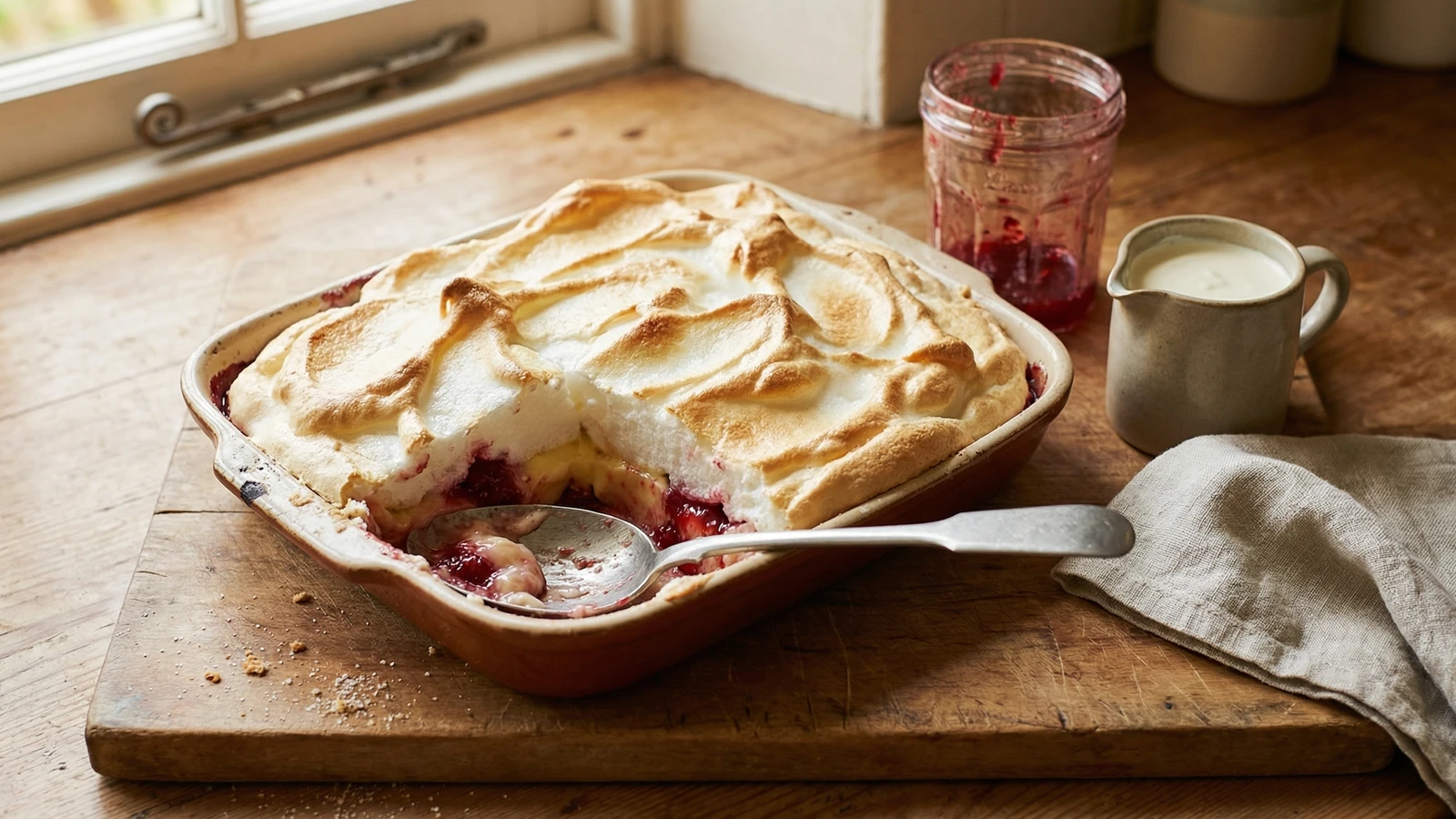
Lemon-scented breadcrumb custard baked until just set, spread with a jar of last summer's raspberry jam, and crowned with soft meringue taken back to the oven until the peaks turn pale gold.
There's a jar at the back of the cupboard that you put up in July, when the raspberries were almost embarrassing in their abundance. It's been sitting there quietly for months, waiting for a reason. On a cold evening in January or February, with the curtains drawn and nobody in any hurry, this is the reason.
Queen of Puddings is a pudding with three gentle layers and a sense of occasion. A lemon-scented custard set over soft breadcrumbs, a slick of raspberry jam, and a meringue baked until the peaks go pale gold and the valleys stay white. It's a Victorian thing, supposedly. I don't know if any queen actually ate one. What I do know is that it belongs to a certain kind of evening: cold outside, people around a table who have nowhere particular to get back to, the oven having done most of the work.
Don't be put off by the three stages. None of them is difficult. You're softening bread in warm milk, you're spreading jam on custard, you're whisking egg whites. A recipe is a conversation, not a contract, and this one is mostly about timing and patience. What you're making, really, is comfort in its most architectural form.
I wrote it down in the notebook years ago: 'Queen of Puddings. Sunday in January. Nobody spoke for five minutes.' That's the kind of silence you want after a pudding. Not awkward. Satisfied.
Quantity
600ml
Quantity
50g
Quantity
1
zested
Quantity
100g
from a good day-old loaf, crusts removed
Quantity
4
separated
Quantity
50g
Quantity
5 tablespoons
Quantity
100g
Quantity
pinch
Quantity
to serve
| Ingredient | Quantity |
|---|---|
| whole milk | 600ml |
| unsalted butter | 50g |
| unwaxed lemonzested | 1 |
| fresh white breadcrumbsfrom a good day-old loaf, crusts removed | 100g |
| large eggsseparated | 4 |
| golden caster sugar (for custard) | 50g |
| good raspberry jam | 5 tablespoons |
| golden caster sugar (for meringue) | 100g |
| fine sea salt | pinch |
| double cream (optional) | to serve |
Pour the milk into a heavy pan with the butter and the lemon zest. Warm it over a gentle heat until the butter has melted completely and the milk is hot but nowhere near boiling. You want it at the point where you can smell the lemon lifting from the pan and the butter has gone quietly into the milk. Take it off the heat.
Put the breadcrumbs in a large bowl and pour the warm lemony milk over the top. Stir once, then leave them alone for ten minutes. The bread will drink up most of the milk and settle into something soft and thick, like a very gentle porridge. It should smell like warm butter and lemon peel.
Whisk the egg yolks with the 50g of sugar and a pinch of salt until they lighten a shade. Stir them into the breadcrumb mixture gently, without beating any air in. You're making a loose custard, pale and fragrant, that will set around the bread as it bakes.
Heat the oven to 160C/140C fan. Butter a 1.2-litre baking dish generously and pour the breadcrumb mixture in. Slide it onto the middle shelf and bake for twenty-five to thirty minutes. You're looking for a custard that is just set: firm to a gentle press in the middle, no liquid wobble underneath, the top gone pale gold. Take it out and let it rest for a few minutes while you see to the jam.
Warm the raspberry jam in a small pan over a low heat until it loosens into something spoonable. If it's particularly stiff, a teaspoon of water helps. Spoon it gently over the baked custard and spread it to the edges with the back of a spoon. Go slowly. The custard underneath is delicate and you don't want to tear it. A few pale patches are fine; nobody's marking you.
In a spotlessly clean bowl, whisk the egg whites until they hold soft peaks that flop over when you lift the whisk. Begin adding the 100g of sugar a tablespoon at a time, whisking well between each addition. Keep going until the meringue is stiff, glossy, and holds firm peaks that stand up when you lift the whisk. Rub a little between your finger and thumb. If it feels gritty, keep whisking. Smooth is what you want.
Turn the oven down to 150C/130C fan. Spoon the meringue over the jam in generous, uneven heaps, swooping it into soft peaks with the back of the spoon. Don't flatten it. The peaks are the whole point, and they're what will catch the colour in the oven. Return the dish to the middle shelf and bake for fifteen to twenty minutes, until the peaks have gone pale gold and the valleys between them are still white. The meringue should feel set to the touch, not sticky. Serve warm, straight from the dish, with a jug of very cold double cream on the table for anyone who wants it.
1 serving (about 200g)
Culinary guides, cultural storytelling, and the editorial depth that makes cooking meaningful.
Discover Culinary ExplorerChef Thomas
Buttered bread baked to a deep mahogany around a filling of spiced Bramley apples, turned out at the table in a small moment of drama, cold cream poured from a jug alongside.

Chef Thomas
Whole Bramley apples cored and stuffed with butter, brown sugar and plump dried fruit, baked until they collapse and the kitchen fills with the smell of autumn getting on with itself.

Chef Thomas
A proper baked rice pudding, slow-cooked in whole milk with butter and nutmeg until the top sets into a freckled golden skin. The kind of pudding that makes January feel like less of a long haul.

Chef Thomas
Wild blackberries and Bramley apples collapsed together under a thick, sandy crumble, the pudding that makes September feel like it's worth staying in for.