
Chef Lupita
Aceite de Chiltepin Bajacaliforniano
Baja California's wild chiltepin steeped in olive oil with garlic, orejon, and lime peel, until the oil turns ruby-amber and carries the slow, sneaky burn of the desert coast.
A cooking platform built around craft, culture, and the stories behind what we eat.
Created by
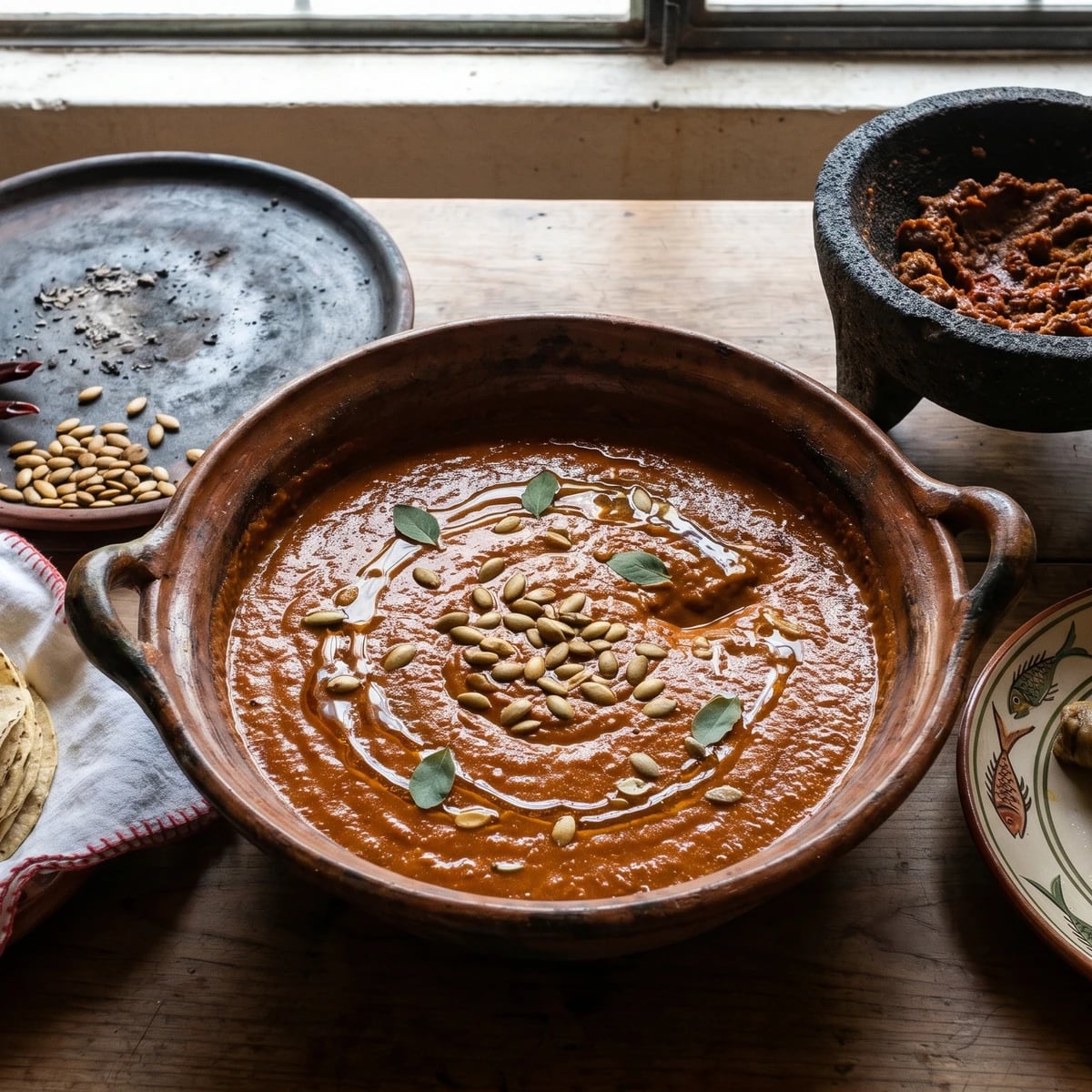
Michoacán's P'urhépecha atápakua, a masa-thickened pipián of toasted pepita, guajillo, and chile perón, cooked in clay until it grips chicken, pork, or kurucha the way Meseta cooks mean it.
Michoacán, especially the Meseta P'urhépecha and the Lake Pátzcuaro basin, is where this atápakua lives. Not in a restaurant sauce book. In clay cazuelas over leña, in kitchens around Pátzcuaro, Tzintzuntzan, Uruapan, and the market towns where the molcajete stays wet because it works all day.
People make the first mistake when they call it mole. No. Atápakua is its own P'urhépecha architecture: chile, masa de maíz, broth, and patient stirring until the sauce grips the spoon. The pepita in this pipián gives the toasted green flavor, but it is not the binder. The masa is. Forget that and the señora who taught me near Pátzcuaro would take the spoon from your hand.
Guajillo gives the red fruit and brick color. Chile perón gives the highland perfume, floral, citrus, thick-fleshed, with black seeds that tell you it belongs to Capsicum pubescens. This is the chile you see in yellow-orange piles near Uruapan and Pátzcuaro, growing in and around avocado country. Jalapeño and serrano are not the same chile. Use them only when the market leaves you no choice, and know what you lost.
My mother from Jalisco didn't make atápakua, and she would have told me to learn it from the women who own it. I did. Serve it over chicken, pork, or kurucha with hand-pressed corn tortillas and a Cocucho cazuela or Patamban green-glazed dish on the table. This is a 32-state cuisine. Cada estado, su propia cocina.
Atápakua is a P'urhépecha category of thick sauces and stews from Michoacán's Meseta and Lake Pátzcuaro basin, built around nixtamalized corn masa as the binder. Pepita-based pipianes predate the conquest, but this version is not mole: the pumpkin seed gives flavor while the masa gives body, a distinction preserved by traditional cooks in villages around Pátzcuaro, Uruapan, and Tzintzuntzan. In 2010 UNESCO inscribed Traditional Mexican Cuisine as Intangible Cultural Heritage using the Michoacán paradigm, citing the milpa, nixtamal, metate, molcajete, comal, and cooking over leña as living systems, not museum pieces.
Quantity
1 cup plus 2 tablespoons
Quantity
6
wiped clean, stemmed and seeded
Quantity
1
roasted, loose black patches rubbed off, black seeds removed for gentler heat
Quantity
2 medium
roasted
Quantity
1/2 medium
roasted
Quantity
3
unpeeled and roasted
Quantity
1/2 cup
Quantity
4 cups
Quantity
1 tablespoon
for chicken or pork versions; omit for kurucha
Quantity
1 small sprig
leaves picked; use 1 small sprig epazote only if nurite cannot be found
Quantity
1 1/2 teaspoons, plus more to taste
Quantity
for serving
Quantity
for serving
| Ingredient | Quantity |
|---|---|
| raw hulled pepita de calabaza | 1 cup plus 2 tablespoons |
| dried chile guajillowiped clean, stemmed and seeded | 6 |
| fresh yellow-orange chile perón (Capsicum pubescens)roasted, loose black patches rubbed off, black seeds removed for gentler heat | 1 |
| jitomates guaje (Roma tomatoes)roasted | 2 medium |
| white onionroasted | 1/2 medium |
| garlic clovesunpeeled and roasted | 3 |
| fresh nixtamalized masa de maíz | 1/2 cup |
| warm light broth from chicken, pork, or fish, or warm water | 4 cups |
| manteca de cerdo (optional)for chicken or pork versions; omit for kurucha | 1 tablespoon |
| fresh nurite leavesleaves picked; use 1 small sprig epazote only if nurite cannot be found | 1 small sprig |
| kosher salt | 1 1/2 teaspoons, plus more to taste |
| cooked chicken, pork, or kurucha (optional) | for serving |
| hand-pressed corn tortillas (optional) | for serving |
Heat a dry comal over medium. Add the pepita de calabaza and stir constantly for 4 to 6 minutes, until the seeds puff, turn spotty golden, and smell green and nutty. Do not let them go dark. Burned pepita makes the whole sauce taste old. Reserve 2 tablespoons for finishing and set the rest aside.
Toast the guajillos on the same dry comal, about 15 to 20 seconds per side, just until the skins darken slightly and the chile smell opens. They should bend, puff, and shine, not blacken. Put them in a bowl and cover with hot water, not boiling water, for 15 minutes. Drain them before grinding.
Roast the chile perón, jitomates, onion, and unpeeled garlic on the comal. Turn them as they blister. The jitomates should soften and collapse at the edges, the onion should char in spots, and the garlic should feel soft inside its skin. Rub only the loose black patches from the chile perón. Keep some amber skin for flavor and texture. Peel the garlic.
In a molcajete, grind the salt and roasted garlic first. Add the onion, jitomates, chile perón, and softened guajillos. Work them into a rough paste. Add the toasted pepita by handfuls and keep grinding until the paste is thick, speckled, and cohesive. A blender works for a larger batch with 1 cup of the broth, but it makes the sauce smoother. The molcajete gives you the martajada texture the women in Pátzcuaro expect.
Break the fresh masa de maíz into a bowl. Whisk in 1 cup of the warm broth until it looks like thin atole with no dry lumps. Do not dump masa straight into the cazuela. It clumps and the center tastes raw. The masa is the binder of atápakua. The pepita is flavor. Remember that and you will not confuse this with mole.
Set a clay cazuela over medium-low heat. If you are serving chicken or pork, melt the manteca de cerdo first. La manteca es el sabor. If you are serving kurucha, skip the lard and warm the cazuela with a splash of broth. Add the ground paste and cook for 4 to 5 minutes, stirring with a wooden spoon, until the color deepens and the paste smells toasted instead of raw. Add the remaining broth, then stir in the masa mixture. Simmer gently for 20 to 25 minutes, stirring often, until the sauce leaves a clear trail when the spoon crosses the bottom.
Stir in the nurite or epazote during the last 5 minutes. Taste for salt. Rest the atápakua for 10 minutes so the masa settles and the sauce tightens. It should nap the back of a spoon, not run like broth. Spoon it over cooked chicken, pork, or kurucha and bring it to the table in barro with hand-pressed corn tortillas. Recetas probadas y garantizadas.
1 serving (about 240g)
Culinary guides, cultural storytelling, and the editorial depth that makes cooking meaningful.
Discover Culinary Explorer
Chef Lupita
Baja California's wild chiltepin steeped in olive oil with garlic, orejon, and lime peel, until the oil turns ruby-amber and carries the slow, sneaky burn of the desert coast.

Chef Lupita
Puebla's Lenten convent adobo, a brick-red vinegar chile paste of ancho, guajillo, garlic, oregano, and comino made to dress fish for the meatless calendar.

Chef Lupita
Zacatecas' wedding-table adobo, built from toasted guajillo and ancho, piloncillo, sour orange, chocolate, canela, clavo, almonds, sesame, and lard.

Chef Lupita
Puebla's convent kitchens built this adobo with ancho, guajillo, jerez, almonds, raisins, clove, and lard, a baroque marinade that stains pork loin and finishes as the sauce.