
Chef Lupita
Agua de Alfalfa
Ciudad de México's highland market agua fresca, fresh alfalfa blended with pineapple and lime until bright green, strained clean, and poured cold from the vitrolero.
A cooking platform built around craft, culture, and the stories behind what we eat.

Created by
Michoacán's Purépecha highland infusion, made with fresh wild nurite steeped gently until the cup smells of mint, oregano, and the damp soil of the meseta.
This comes from Michoacán, from the Meseta Purépecha and the highland communities around Pátzcuaro, Cherán, Paracho, and Uruapan. Nurite grows in that cold, green country where the morning sits low over the pines and the women know which herbs settle the stomach, which ones help the cold, and which ones are only weeds pretending to be medicine.
Nurite is not spearmint. Do not flatten it like that. It is a wild Michoacán mint, sharp and sweet, with a flavor that leans toward mint, oregano, and mountain air. The technique is restraint: hot water, covered pot, short steep. If you boil it until the leaves turn army green, you have punished the herb and it will punish you back in the cup.
I learned this one from a señora outside the Pátzcuaro market who sold bunches tied with thin palm strips. She told me, "para el estómago y para el frío," for the stomach and for the cold. No drama. Just knowledge passed hand to hand. Cada estado, su propia cocina, and sometimes that kitchen is a clay cup with one good herb inside it.
Nurite, commonly identified as Satureja macrostema, is a native aromatic herb used in Purépecha communities of Michoacán for digestive and respiratory infusions. Ethnobotanical records from the Purépecha Plateau document nurite as part of household medicine, sold fresh in regional markets and gathered in highland zones where the plant grows wild or semi-cultivated. Its use shows a side of Mexican cuisine often ignored outside the country: beverages and medicinal infusions are part of the cooking system, not separate from it.
Quantity
4 cups
Quantity
1 loose cup
rinsed
Quantity
1 small piece, about 1 ounce
Quantity
1 small strip
Quantity
1 teaspoon per cup
| Ingredient | Quantity |
|---|---|
| water | 4 cups |
| fresh nurite leaves and tender stemsrinsed | 1 loose cup |
| piloncillo (optional) | 1 small piece, about 1 ounce |
| Mexican cinnamon (canela) (optional) | 1 small strip |
| honey (optional) | 1 teaspoon per cup |
Pick through the nurite and remove any tough stems or damaged leaves. Rinse it in cool water and shake it dry. Do not bruise it like basil and do not chop it to death. The tender stems carry flavor too, so keep them. This is a mountain herb, not a supermarket mint garnish.
Bring the water to a low boil in a small clay pot or stainless saucepan. If using piloncillo and canela, add them now and simmer for 3 minutes, just until the piloncillo dissolves and the canela perfumes the water. Keep the sweetness light. This tea is for the herb, not for sugar.
Turn off the heat. Add the nurite, press it under the water with a spoon, cover the pot, and let it steep for 7 minutes. Do not boil the leaves hard. Boiling beats the green flavor out of them and leaves you with bitterness. Covered steeping pulls the aroma cleanly into the water. Así se hace y punto.
Strain the tea into clay cups or small mugs. Taste before adding honey. Nurite has its own sweetness when it is fresh, and many Purépecha cooks drink it plain. Serve it hot for a cold or after a heavy meal for the stomach. Medicine and comfort both.
1 serving (about 250g)
Culinary guides, cultural storytelling, and the editorial depth that makes cooking meaningful.
Discover Culinary ExplorerChef Lupita
Ciudad de México's highland market agua fresca, fresh alfalfa blended with pineapple and lime until bright green, strained clean, and poured cold from the vitrolero.
Chef Lupita
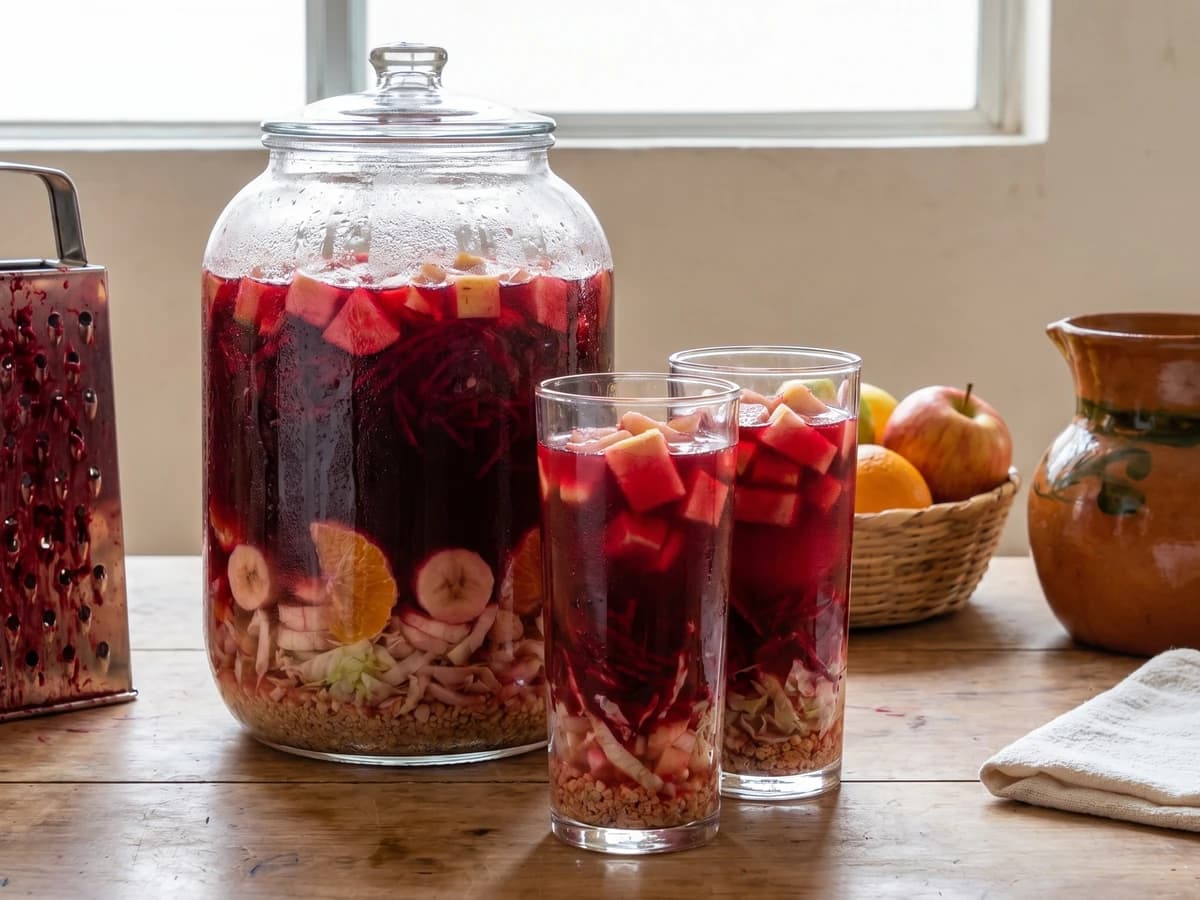
Aguascalientes' Lenten agua fresca, jewel-red from cooked beet and full of apple, banana, orange, lettuce, and ground peanuts, served cold when Holy Week meets the Feria de San Marcos.

Chef Lupita
Sonora and Sinaloa's creamy malted barley water, built on toasted cebada perla, Mexican canela, vanilla from Papantla, and evaporated milk. Pink-beige, rich, and served cold over heavy ice in a heavy glass tumbler. Liquid cookie comfort the northwest way.

Chef Lupita
Yucatán's everyday tonic of boiled chaya leaves blended with lima agria, sugar, and ice. The bright green jarra that sits on every Peninsula table from Mérida to Valladolid.