
Chef Makoa
Ahimaʻa Puaʻa (Tahitian Earth-Oven Pork)
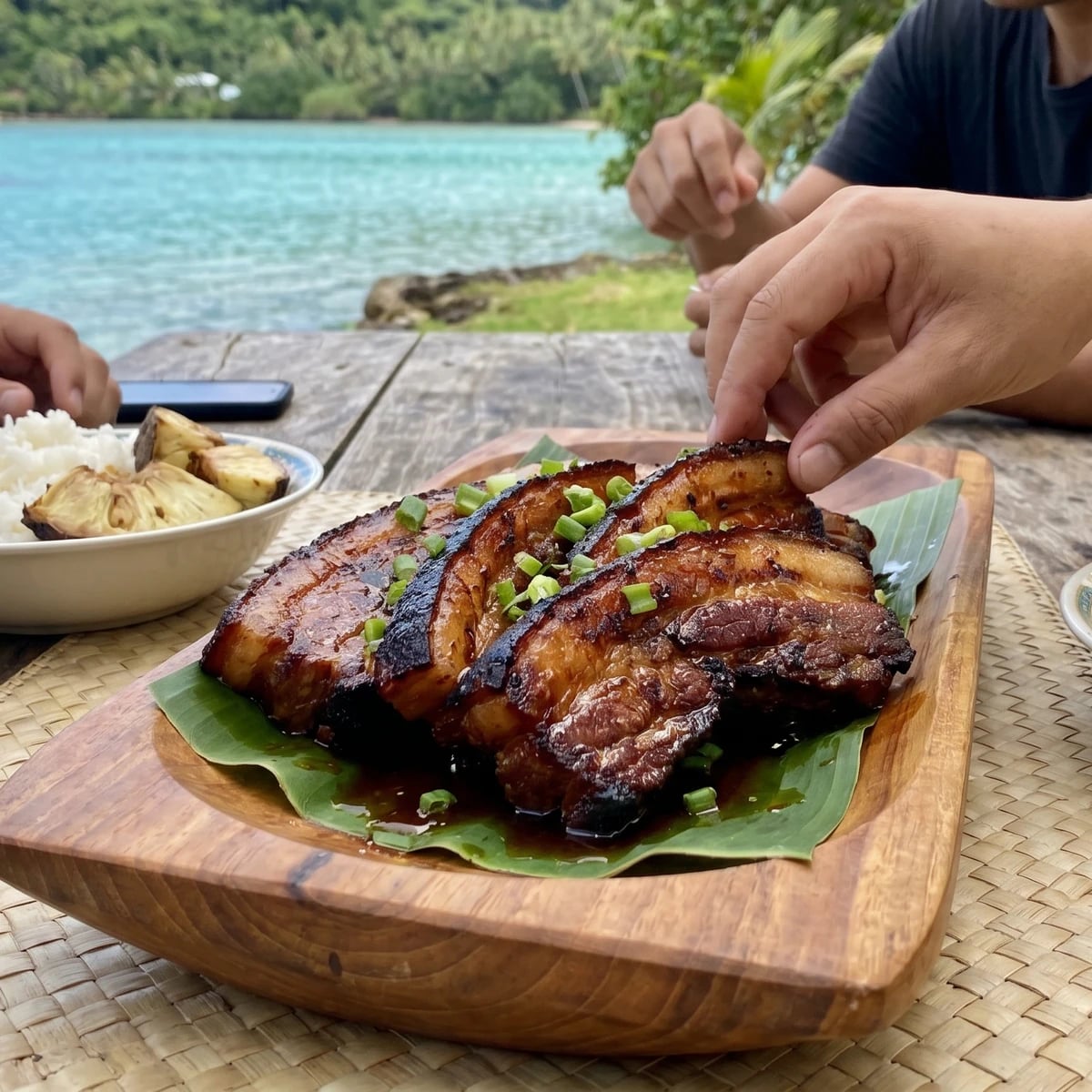
Tahitian puaʻa cooked in the spirit of the ahimaʻa, the earth oven of maʻa Tahiti, wrapped in banana leaf and held low and slow until the meat gives in two fingers.
A cooking platform built around craft, culture, and the stories behind what we eat.
Created by
Puaʻa roti is Tahiti's home-style roast pork, a Hakka-Tahitian table dish with soy, honey, garlic, and ginger cooked until the belly goes mahogany and sticky at the edges.
The canoe brought the pig, and later the ships brought other hands to the table. That is Tahiti too. Puaʻa roti belongs to the fenua, the land and people of Tahiti, where Hakka Chinese families and Tahitian families cooked beside each other long enough that soy, honey, garlic, and ginger became part of everyday maʻa, food, without asking anyone's permission.
This is not the old ahimaʻa, the Tahitian earth oven, and I don't pretend it is. The umu by any name is one oven, imu in Hawaiʻi, umu in Sāmoa and Tonga, hāngī in Aotearoa, and that deep fire has its own ceremony. Puaʻa roti lives closer to the family kitchen, the market stall, the plate with rice and fāfā, taro leaf, or ʻuru, breadfruit, beside it. Deep food and everyday food can sit on the same mat. No need make enemies of cousins.
The work here is patience and brushing. The belly roasts low until the fat softens, then you lacquer it again and again until the skin and edges go dark, glossy, a little charred, sweet-salty under your teeth. Same ocean, many tables: Hawaiian kālua puaʻa, Tongan lū pulu, Sāmoan puaʻa from the umu, Tahitian puaʻa roti from the Hakka-Tahitian kitchen. Name the hand and the family shows.
Chinese workers, many of them Hakka, came into French Polynesia in the 1800s and built a lasting Tahitian-Chinese food culture in Papeʻete markets, home kitchens, and everyday family meals. Puaʻa roti reflects that history: pig, a canoe animal with older ceremonial weight in Polynesia, cooked with soy sauce, sugar or honey, garlic, and ginger from the Chinese-Tahitian pantry. It is post-contact Tahitian food, not a lesser food, and it sits honestly beside older maʻa Tahiti like ʻuru, taro, fāfā, and the ahimaʻa.
Quantity
3 pounds
skin-on if possible, or boneless pork shoulder
Quantity
1/2 cup
Quantity
1/3 cup
Quantity
2 tablespoons
Quantity
2 tablespoons
Quantity
1 tablespoon
Quantity
5
finely grated
Quantity
1 tablespoon
finely grated
Quantity
1 teaspoon
Quantity
1/2 teaspoon
Quantity
1/2 teaspoon
Quantity
2 tablespoons
Quantity
2 tablespoons
for thinning glaze if needed
Quantity
for serving
Quantity
2
thinly sliced
| Ingredient | Quantity |
|---|---|
| pork bellyskin-on if possible, or boneless pork shoulder | 3 pounds |
| soy sauce | 1/2 cup |
| honey | 1/3 cup |
| brown sugar | 2 tablespoons |
| oyster sauce | 2 tablespoons |
| rice vinegar or fresh lime juice | 1 tablespoon |
| garlic clovesfinely grated | 5 |
| fresh gingerfinely grated | 1 tablespoon |
| Chinese five-spice powder | 1 teaspoon |
| black pepper | 1/2 teaspoon |
| sea salt (optional) | 1/2 teaspoon |
| neutral oil | 2 tablespoons |
| waterfor thinning glaze if needed | 2 tablespoons |
| cooked rice, ʻuru, or taro | for serving |
| green onion (optional)thinly sliced | 2 |
Pat the pork dry. If the skin is on, score the skin and fat in shallow lines about half an inch apart, cutting into the fat but not deep into the meat. That gives the glaze places to sit and the fat a way to render. If you're using shoulder, score the surface the same way and keep moving.
Stir together the soy sauce, honey, brown sugar, oyster sauce, vinegar or lime, garlic, ginger, five-spice, black pepper, and oil. Taste before adding salt, because soy sauce already carries plenty. You want sweet, salty, garlicky, and sharp enough at the end that the pork won't taste flat.
Rub half the lacquer over the pork, working it into the scored fat. Cover and refrigerate at least 4 hours, or overnight if you have the time. Keep the other half of the lacquer separate for brushing later, clean and uncooked.
Heat the oven to 300F. Set the pork on a rack over a roasting pan, fat side up, and roast for 1 hour 45 minutes to 2 hours, brushing once or twice with the clean lacquer. The meat should feel relaxed when pressed, and the fat should look glossy, not pale and tight.
Raise the oven to 425F. Brush the pork again and roast 10 to 15 minutes more, watching close, until the edges turn dark mahogany and a little charred. If the glaze thickens too much, loosen it with a spoon or two of water. Don't walk away now. Sugar goes from beautiful to burnt quick.
Rest the pork 15 minutes so the juices settle back down. Slice it thick for a family platter or thinner for rice plates, then brush with any clean cooked-down glaze left in the pan. Serve with rice, ʻuru, or taro, and green onion if you like. Glossy, salty-sweet, enough for one more.
1 serving (about 240g)
Culinary guides, cultural storytelling, and the editorial depth that makes cooking meaningful.
Discover Culinary Explorer
Chef Makoa
Tahitian puaʻa cooked in the spirit of the ahimaʻa, the earth oven of maʻa Tahiti, wrapped in banana leaf and held low and slow until the meat gives in two fingers.

Chef Makoa
Glossy Chinese-Tahitian roast duck from Papeʻete, lacquered with soy, honey, and five-spice, carved for the lazy Susan, then dipped into thick fresh coconut milk beside rice, ʻuru, and a crowded table.

Chef Makoa
Tahiti's chao men is Hakka chow mein made fully local: glossy egg noodles, pork, cabbage, carrot, and green onion, fast from the wok and generous enough for the table.

Chef Makoa
Tahiti's fāfaru takes raw ʻahi into miti fāfaru, a pungent fermented seawater brine, then brings it back to the table with mitihue, breadfruit, and the lesson that good funk is food kept alive.