
Chef Thomas
A Proper Bacon Sandwich
Back bacon in a hot pan, good white bread, soft salted butter. Ten minutes between waking up and the first bite of something that makes the morning make sense.
A cooking platform built around craft, culture, and the stories behind what we eat.
Created by Chef Thomas
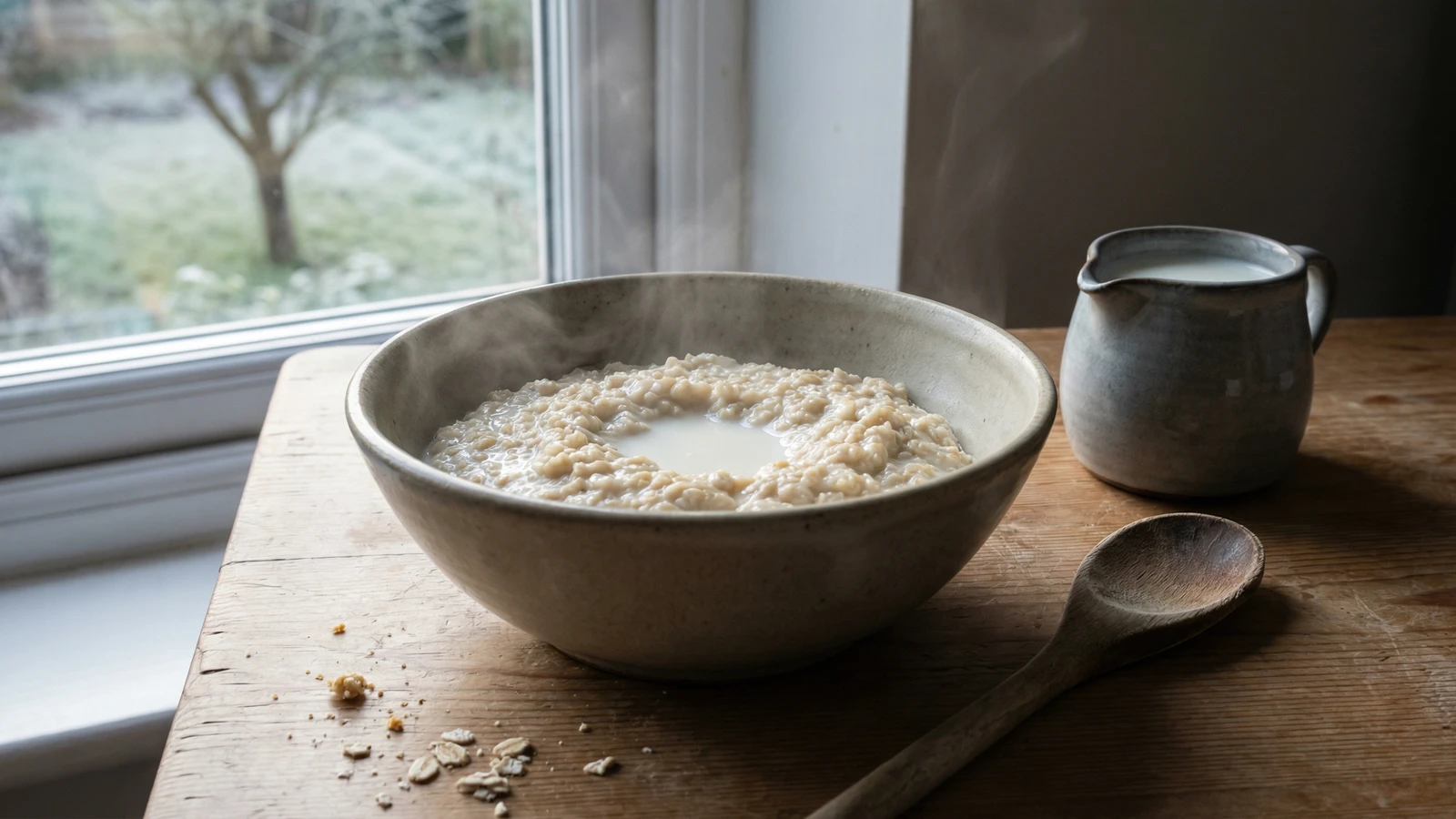
Pinhead oats stirred slowly with water and finished with salt, the way porridge was made before someone decided it needed honey and chia seeds and a photograph.
January mornings. The kitchen is cold before the kettle boils, and the windows are black at half six. This is when porridge makes sense. Not the instant sort, not the microwave sort, but real porridge: pinhead oats, water, salt, and twenty minutes of your attention while the rest of the house is still asleep.
There are three ingredients. That's it. Which means each one is doing all the work and there is nowhere for any of them to hide. The oats should be pinhead, coarse-cut, the kind that still look like grain rather than dust. The water should be fresh and cold. The salt should be good salt, added at the end, just enough to make the oats taste like themselves. Sugar is not invited. Honey is not invited. This is a savoury bowl. The Scots understood this centuries ago and they were right.
I make porridge most mornings from October through to March. The notebook has a single entry for it, written years ago: oats, water, salt, slow. I haven't needed to revise it. The ritual is the recipe. The spoon turning in the pan. The kitchen warming up. The smell of toasted grain filling the room before the sun is properly up. There are few better feelings than sitting down to a bowl of something hot that you made with your hands and nothing else.
Quantity
100g
also called steel-cut or coarse oatmeal
Quantity
500ml
Quantity
good pinch
| Ingredient | Quantity |
|---|---|
| pinhead oatmealalso called steel-cut or coarse oatmeal | 100g |
| water | 500ml |
| fine sea salt | good pinch |
Put the oats in a heavy-bottomed saucepan over a medium heat and stir them for a minute or two. No oil, no butter, just the dry oats and the heat. You'll smell them start to change: a warm, biscuity scent that tells you the starches are waking up. This is the difference between porridge that tastes of something and porridge that tastes of wallpaper paste.
Pour in the water. It will hiss and spit when it hits the hot oats, which is right. Stir it once, bring it to a gentle simmer, then turn the heat down as low as it will go. You want the surface barely trembling, not bubbling. A hard boil makes porridge gluey. A gentle simmer makes it creamy. The difference matters.
Let it cook for twenty-five to thirty minutes, stirring every few minutes with a wooden spoon. The Scots use a spurtle, a straight wooden stick, and if you have one, so much the better. Stir in one direction. Tradition says clockwise to keep the devil out, which is as good a reason as any. The porridge is ready when it has thickened to the point where the spoon leaves a trail that fills in slowly. It should be creamy and loose, not stiff. It will thicken further in the bowl.
Add the salt in the last five minutes. Not before. Salt added too early tightens the oats and makes them stubborn. Added at the end, it opens everything up. Taste it. The salt should make the porridge taste more of itself, not salty. Ladle into warm bowls. Some pour cold milk or cream around the edge, so each spoonful is hot porridge meeting cold cream. That contrast is worth trying at least once.
1 serving (about 260g)
Culinary guides, cultural storytelling, and the editorial depth that makes cooking meaningful.
Discover Culinary ExplorerChef Thomas
Back bacon in a hot pan, good white bread, soft salted butter. Ten minutes between waking up and the first bite of something that makes the morning make sense.

Chef Thomas
Tinned beans warmed with butter and Worcestershire, spooned over thick toast and topped with a fried egg. The meal that half the country falls back on when the day asks nothing more of them.

Chef Thomas
Oats soaked overnight in milk and cream with grated apple and lemon, then spooned into bowls and buried under whatever the orchard and the hedgerow are offering this week.

Chef Thomas
Thick slices of black pudding fried crisp in butter, served alongside sharp apple wedges softened in the same pan. A cold-morning breakfast that smells like someone is paying attention.