
Chef Lupita
Aguascalientes Beef Tongue Pozole (Pozole de Lengua)
Aguascalientes' Bajio pozole de lengua, built with cacahuazintle hominy, tender beef tongue, chile ancho and guajillo, with xoconostle brightness and table garnishes.
A cooking platform built around craft, culture, and the stories behind what we eat.
Created by
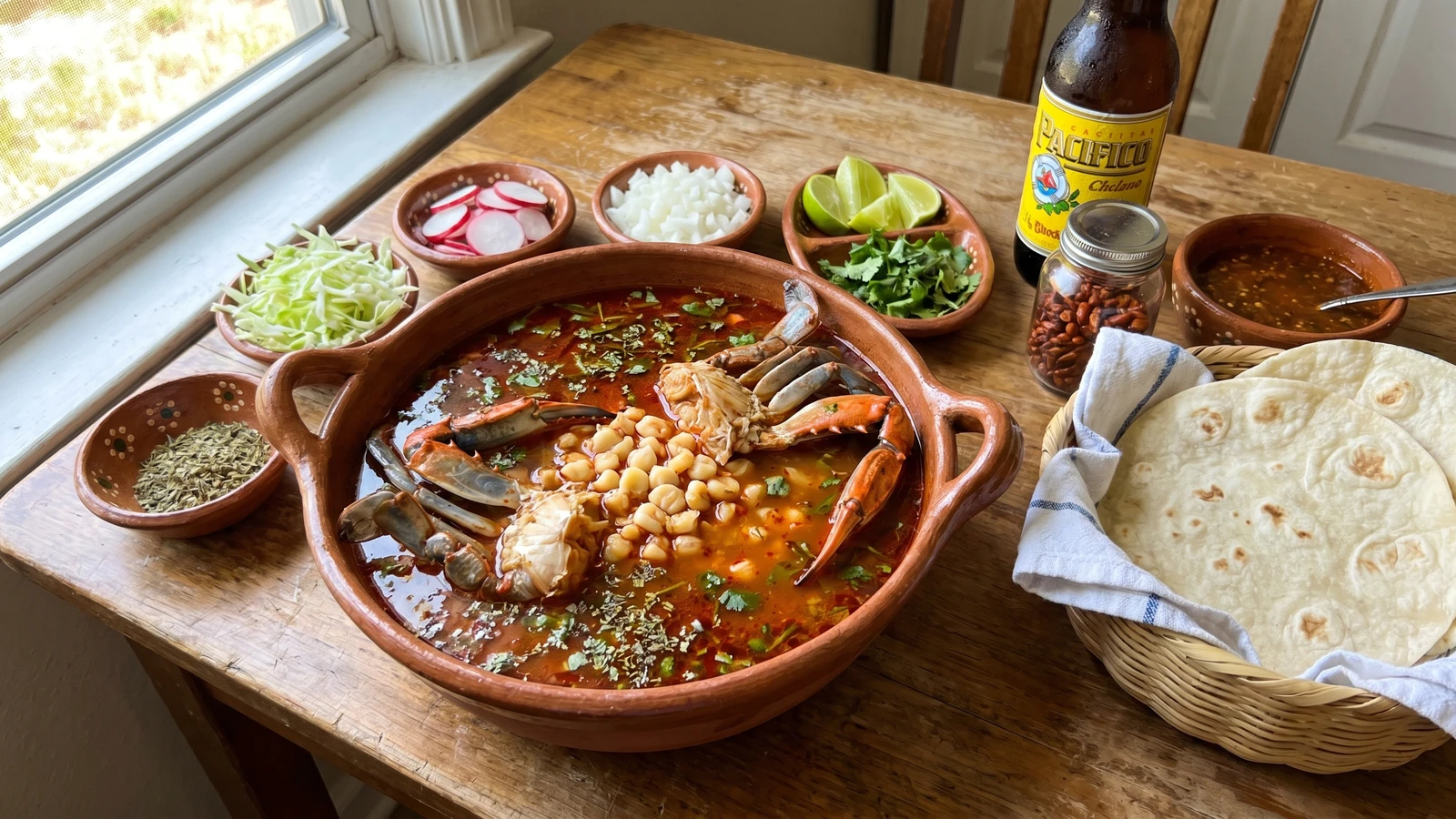
Sinaloa's coastal pozole, blue crab and hominy simmered in a toasted-guajillo and chiltepin broth, finished with cilantro and dried shrimp. The Pacific coast's answer to Jalisco's pozole rojo.
This is from Sinaloa. Specifically from the coastal stretch between Mazatlan and Culiacan, where the jaiba azul comes off the boats in the morning and the cooks at the marisquerias and home kitchens treat it the way Jalisco treats pork. Pozole rojo de jaiba is what happens when a corn-and-chile tradition meets the Pacific.
The broth is built on guajillo, ancho, and chiltepin. The chiltepin is the chile of the noroeste, wild, small, and uncompromising. It does not look like much in the bowl. You taste it. The dried shrimp powder is the other anchor. It pulls the flavor of the sea into the broth so that the chile and the crab read as one dish, not two. Without the polvo de camaron, this is a chile broth with crab in it. With it, it is pozole sinaloense.
My mother never made this. She was from Jalisco and she made the pork version every Sunday and she never once strayed. I learned this pozole from a senora named Dona Elvira in the Mercado Pino Suarez in Mazatlan. She let me sit with her for two mornings and I wrote everything in the back of my notebook in pencil because the page was already wet from the ice on her crab table. She told me: 'La jaiba se come con las manos, mija. Si te ensucias, lo estas haciendo bien.' The crab is eaten with the hands. If you get dirty, you are doing it right. Saber cocinar es saber vivir.
Pozole de jaiba evolved on Sinaloa's coast as a regional adaptation of the older pre-Columbian pozole tradition, replacing the inland pork of Jalisco and the turkey of Guerrero with the abundant blue crab (Callinectes sapidus and Callinectes arcuatus) of the Sea of Cortez. Sinaloa is Mexico's leading producer of both maiz pozolero and farmed shrimp, and its noroeste cuisine reflects a coastal sensibility that distinguishes it from the central-Mexican pozole canon. The use of dried shrimp powder as a broth-deepener traces to indigenous Cahita and Mayo coastal cooking practices, in which dried seafood was a year-round pantry staple long before refrigeration reached the region.
Quantity
8
cleaned and halved
Quantity
1 pound
Quantity
10 cups
Quantity
1 medium
halved
Quantity
1 small
finely diced
Quantity
1
halved crosswise
Quantity
4
peeled
Quantity
2
Quantity
1 tablespoon, plus more to taste
Quantity
10
stemmed and seeded
Quantity
4
stemmed and seeded
Quantity
3
or 2 chile de arbol if chiltepin is unavailable
Quantity
2 medium
Quantity
1 teaspoon
Quantity
1 teaspoon, plus more for serving
Quantity
3 tablespoons
Quantity
2 cans (29 ounces each)
drained and rinsed
Quantity
1 tablespoon
Quantity
1/4 cup, plus more for serving
Quantity
for serving
Quantity
for serving
Quantity
for serving
Quantity
for serving
Quantity
for serving
| Ingredient | Quantity |
|---|---|
| live blue crabs (jaibas azules)cleaned and halved | 8 |
| picked blue crab meat | 1 pound |
| water or light shrimp stock | 10 cups |
| white onion (for broth)halved | 1 medium |
| white onion (for serving)finely diced | 1 small |
| head of garlichalved crosswise | 1 |
| garlic clovespeeled | 4 |
| bay leaves | 2 |
| kosher salt | 1 tablespoon, plus more to taste |
| dried chile guajillostemmed and seeded | 10 |
| dried chile anchostemmed and seeded | 4 |
| dried chile chiltepinor 2 chile de arbol if chiltepin is unavailable | 3 |
| Roma tomatoes | 2 medium |
| cumin seeds | 1 teaspoon |
| dried Mexican oregano | 1 teaspoon, plus more for serving |
| manteca de cerdo (pork lard) | 3 tablespoons |
| Mexican-style hominy (maiz pozolero)drained and rinsed | 2 cans (29 ounces each) |
| dried shrimp powder (polvo de camaron seco) | 1 tablespoon |
| chopped fresh cilantro | 1/4 cup, plus more for serving |
| shredded green cabbage (optional) | for serving |
| sliced radishes (optional) | for serving |
| lime wedges (optional) | for serving |
| tostadas or sobaqueras (flour tortillas) (optional) | for serving |
| bottled chiltepin salsa (optional) | for serving |
Rinse the live blue crabs under cold running water. Lift the top shell, remove the gray feathery gills, and rinse out the cavity. Cut each crab in half through the body with a heavy knife. Leave the legs and claws attached. The shells, the legs, and the body all carry flavor and they all go in the pot. In Mazatlan they call this work la limpia and they do it in the mercado before you walk it home.
Place the cleaned crab halves in a heavy 8-quart stockpot or wide cazuela. Pour in the water or light shrimp stock. Add the halved onion, halved head of garlic, bay leaves, and salt. Bring to a gentle simmer over medium heat. Skim the foam that rises in the first ten minutes. Simmer for 30 minutes. Cold water draws the flavor out of the shells slowly. A boil clouds the broth and turns the crab meat rubbery.
Strain the broth through a fine-mesh sieve into a clean pot. Pull the crab halves from the strainer and set them on a sheet pan to cool. Discard the spent onion, garlic, and bay. Pick the meat out of half the crab bodies and reserve it with the picked crab meat. Leave the other half whole, legs and all, to go back into the pot at the end. Sinaloan cooks serve crab in the bowl, not just on top of it. The diner works for the meat and the broth tastes like it was earned.
Heat a dry comal or heavy skillet over medium. Toast the guajillo and ancho chiles separately, about 30 seconds per side. They should puff and turn fragrant, never blacken. Toast the chiltepin for only a few seconds. It is small and it burns in a heartbeat. The kitchen will smell like the chile vendors at the Mercado Pino Suarez in Mazatlan. That smell is the oils waking up.
On the same comal, char the Roma tomatoes and the four whole garlic cloves until the skins blister and blacken in spots, about 6 to 8 minutes, turning often. Toast the cumin seeds in a dry pan for 30 seconds, until they release their fragrance. The char on the tomato is what gives the broth its rojo depth, not raw tomato pulp.
Place the toasted guajillo, ancho, and chiltepin in a heatproof bowl and cover with hot tap water. Hot water, not boiling. Let them soften for 20 minutes. Drain and transfer to a blender with the charred tomatoes, charred garlic, cumin, and dried oregano. Add one cup of the reserved crab broth. Blend until completely smooth. Strain through a fine-mesh sieve, pressing on the solids with the back of a ladle. Discard the skins. You want a clean, deep red puree.
In a wide skillet or the bottom of a clean cazuela, melt the manteca over medium heat. Pour in the strained chile puree. It will sputter. Cook for 8 to 10 minutes, stirring constantly with a wooden spoon, until the puree darkens and the fat starts to separate at the edges. La manteca es el sabor. This step is what turns chile water into a sauce. No me vengas con atajos.
Stir the fried chile paste into the reserved crab broth. Add the drained hominy and the dried shrimp powder. Simmer for 25 minutes, partially covered, so the hominy drinks the chile and the broth tightens. Taste for salt. The hominy absorbs flavor and the broth needs to be assertive against the sweetness of the crab.
Slide the reserved crab halves and legs back into the pot. Add the picked crab meat. Lower the heat and warm through for 5 to 7 minutes only. The picked meat is already cooked and it will turn stringy if you simmer it. Stir in the chopped cilantro at the very end. Pull the pot off the heat. The bowl should look red and oily on top, with crab legs breaking the surface and hominy floating throughout.
Ladle into wide bowls, making sure each one gets a few crab pieces and plenty of hominy. Set the cabbage, radishes, lime wedges, diced onion, oregano, sobaqueras, and chiltepin salsa in small dishes around the table. Each diner builds their own bowl. The crab is eaten with the hands. Lay extra servilletas. Cada estado, su propia cocina, and this one belongs to Sinaloa.
1 serving (about 450g)
Culinary guides, cultural storytelling, and the editorial depth that makes cooking meaningful.
Discover Culinary ExplorerChef Lupita
Aguascalientes' Bajio pozole de lengua, built with cacahuazintle hominy, tender beef tongue, chile ancho and guajillo, with xoconostle brightness and table garnishes.

Chef Lupita
Veracruz's Gulf coast rice from Alvarado, built with seafood stock, tomato, chile chipotle, epazote, shrimp, fish, jaiba, and pulpo, served loose and brothy in a clay cazuela.

Chef Lupita
Costa Chica's wet salt-beef stew, built from chile costeño, guajillo, tomato, manteca, yuca, plantain, and masa dumplings, the ranching pot of Cuajinicuilapa and Pinotepa.

Chef Lupita
Michoacán's P'urhépecha atápakua is a masa-thickened sauce and stew at once, built with pork, chile guajillo, and hierbabuena added only at the end.