
Chef Isabel
Aguaillo de la Sierra de Cadiz
Aguaillo is from the Sierra de Cadiz: cold water, stale bread, garlic, oil and vinegar, closer to a field drink than a bowl of soup, and sharp enough to wake you in the heat.
A cooking platform built around craft, culture, and the stories behind what we eat.
Created by
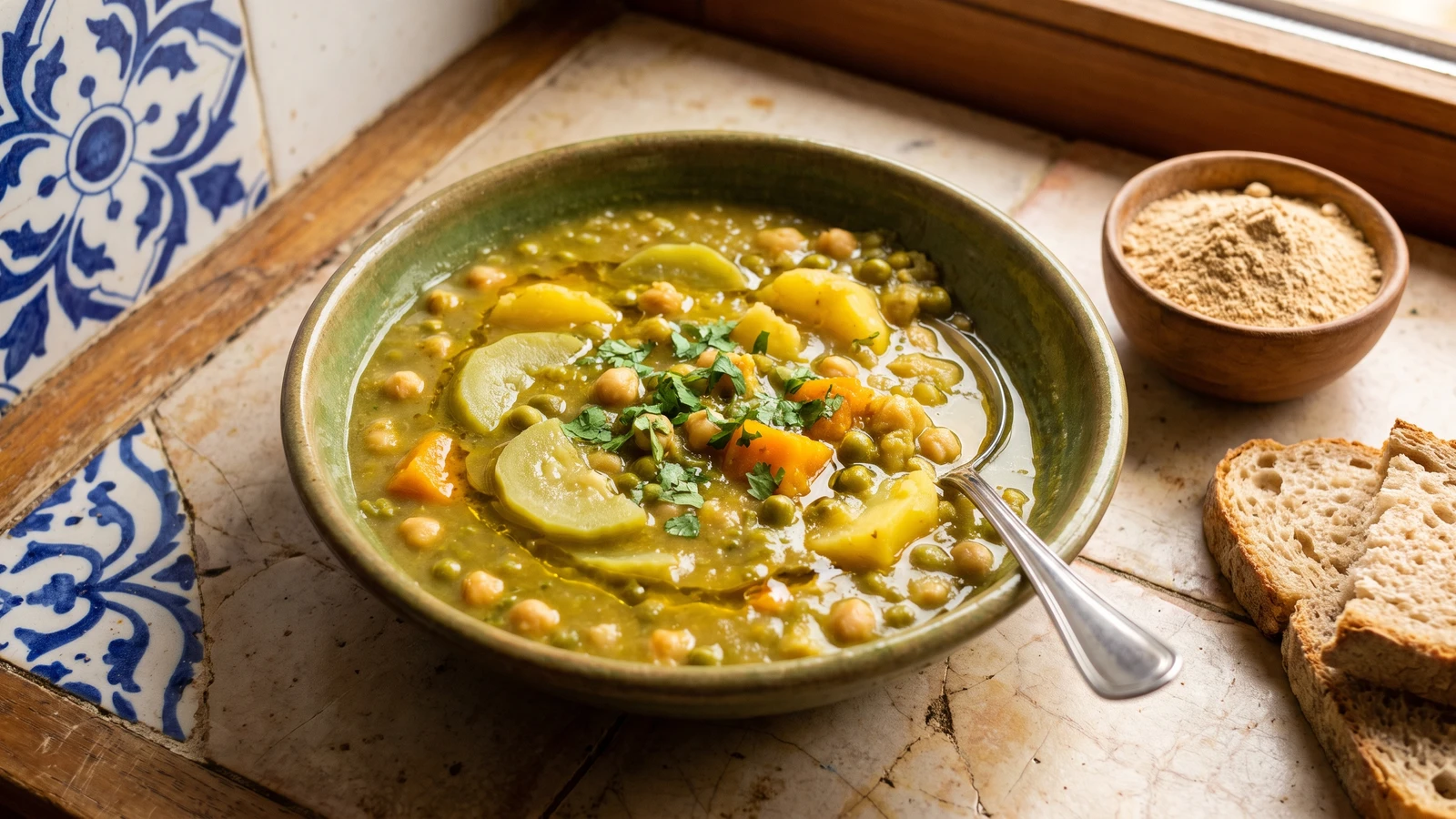
Potaje de arvejas is Canarian spoon food: green peas, bubango, potatoes, and pumpkin in a gentle pot thickened by a mashed vegetable majado, not by cream or flour.
Potaje de arvejas is Canarian, from the islands where arvejas means peas and a potaje is proper cocina de cuchara, spoon food. It is not a heavy northern bean stew and it is not a thin vegetable soup. The peas lead, the bubango softens into the broth, and the potatoes and pumpkin give the pot its body.
The method that decides it is the majado, the mash that thickens the stew. You cook the vegetables until tender, lift out a little potato, pumpkin, and bubango, then crush them with garlic, cumin, and cilantro before stirring them back in. That is what gives the broth its soft, cloudy body without making it dull. Skip it and you have vegetables floating in water. Fine, but not this potaje.
If you are far from the islands, use a small firm courgette for bubango and frozen peas when fresh ones are not sweet. The courgette will collapse a little faster than bubango, so cut it thicker and do not bully the pot once it goes in. No hace falta haber pisado España. With good peas, a patient simmer, and the majado done properly, siempre sale, si lo sigues.
In the Margin beside this one I have written only: do not overcook the peas. They should taste green at the end, not tired. Add them late if they are frozen, earlier only if they are fresh and sturdy.
Potajes are part of the Canarian home table, shaped by island gardens where potatoes, pumpkin, bubango, pulses, herbs, and gofio fed households through cool, damp days in the medianías, the middle slopes between coast and summit. Arvejas is the common Canarian word for peas, a usage shared with older Atlantic and Portuguese speech rather than the peninsular guisante. The thickening with a majado of garlic, cumin, herbs, and cooked vegetables belongs to the practical island habit of giving body to a pot from what is already inside it.
Quantity
350g
Quantity
300g
cut into thick half-moons
Quantity
350g
peeled and cut into 3cm chunks
Quantity
250g
peeled and cut into 3cm chunks
Quantity
1 medium
finely chopped
Quantity
1 small
finely chopped
Quantity
2 fresh tomatoes or 200g canned
grated if fresh
Quantity
3 cloves
divided
Quantity
4 tablespoons
Quantity
1 teaspoon
Quantity
1/2 teaspoon, plus a pinch
Quantity
1
Quantity
1 litre
Quantity
20g
leaves and tender stems chopped
Quantity
1 tablespoon
chopped
Quantity
to taste
Quantity
to taste
| Ingredient | Quantity |
|---|---|
| shelled fresh peas or frozen green peas | 350g |
| bubango or small firm courgettecut into thick half-moons | 300g |
| waxy potatoespeeled and cut into 3cm chunks | 350g |
| pumpkin or winter squashpeeled and cut into 3cm chunks | 250g |
| onionfinely chopped | 1 medium |
| green pepperfinely chopped | 1 small |
| ripe tomatoes or canned crushed tomatograted if fresh | 2 fresh tomatoes or 200g canned |
| garlicdivided | 3 cloves |
| olive oil | 4 tablespoons |
| sweet pimentón | 1 teaspoon |
| ground cumin | 1/2 teaspoon, plus a pinch |
| bay leaf | 1 |
| vegetable stock or water | 1 litre |
| fresh cilantroleaves and tender stems chopped | 20g |
| parsleychopped | 1 tablespoon |
| salt | to taste |
| black pepper | to taste |
Warm the olive oil in a heavy pot over medium-low heat. Add the onion, green pepper, and a pinch of salt, and cook for 12 to 15 minutes until soft, dark gold, and sweet. Add 2 minced garlic cloves and cook 1 minute more. The sofrito, the slow onion base, must not be rushed; pale onion gives you a pale broth.
Stir in the grated tomato and cook for 6 to 8 minutes, until the oil begins to show at the edge and the tomato has lost its raw smell. Take the pot briefly off the heat, stir in the pimentón and 1/2 teaspoon cumin, then add the bay leaf, potatoes, pumpkin, and stock or water. Return to the heat and bring to a gentle simmer.
Cook uncovered at a quiet simmer for 15 minutes. Add the bubango and cook 10 to 12 minutes more, until the potatoes are tender and the pumpkin yields easily to a spoon. Do not stir hard. Shake the pot now and then so the pieces stay whole.
Lift out 2 pieces of potato, 2 pieces of pumpkin, and 2 pieces of bubango into a mortar or bowl. Add the remaining garlic clove, a pinch of cumin, half the cilantro, the parsley, and a little hot broth. Crush to a rough paste. This majado is the body of the potaje; it thickens the broth with its own vegetables, tal como se hace allí.
Stir the majado back into the pot, then add the peas. Simmer 5 to 7 minutes for frozen peas, or 8 to 10 minutes for fresh peas, just until tender and still green. Taste for salt and black pepper. If the potaje is too thick, loosen it with a little water; if it is thin, simmer 3 minutes more uncovered.
Turn off the heat and let the potaje rest for 10 minutes. Stir in the remaining cilantro just before serving, so it tastes fresh instead of cooked flat. Ladle into deep bowls with a thread of olive oil on top. Bread beside it is sensible. A spoon is not optional.
1 serving (about 420g)
Culinary guides, cultural storytelling, and the editorial depth that makes cooking meaningful.
Discover Culinary ExplorerChef Isabel
Aguaillo is from the Sierra de Cadiz: cold water, stale bread, garlic, oil and vinegar, closer to a field drink than a bowl of soup, and sharp enough to wake you in the heat.

Chef Isabel
Ajilimojili is Jaen's tomato-free cold soup: potato, roasted red pepper, garlic, olive oil, and vinegar pounded into a cool, silky spoonful.

Chef Isabel
Ajo carretero is Soriano, from the pine country of Soria: lamb cooked in a plain garlicky broth, then served the old way, meat first and bread-soaked soup after.

Chef Isabel
Ajoblanco Extremeño is the poor-kitchen cold soup of Extremadura: bread, garlic, oil, egg yolk, vinegar, and icy water, with no almonds. Whisk it slowly and serve it bien fresquito.