
Chef Thomas
A Proper Roast Chicken
A whole bird rubbed with butter, stuffed with lemon and thyme, roasted until the skin crackles and the kitchen smells like the kind of evening you want to sit down and stay in.
A cooking platform built around craft, culture, and the stories behind what we eat.
Created by Chef Thomas
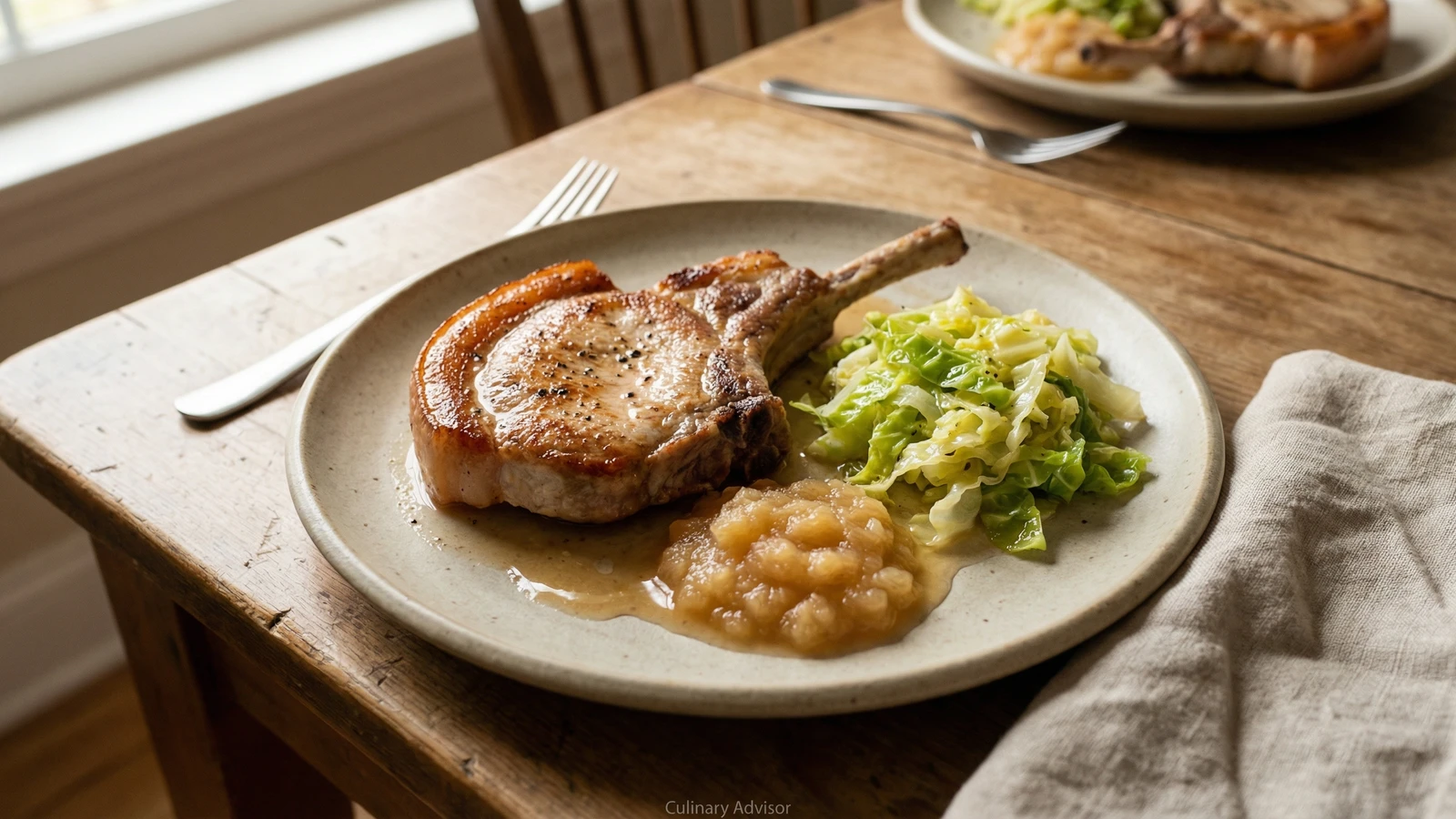
Bone-in pork chops, fried until the fat crisps and the kitchen fills with the smell of browned butter, served with a sharp Bramley apple sauce and Savoy cabbage that's seen just enough heat to soften but not surrender.
October. The first evening you reach for a jumper before starting to cook. The apples on the tree by the back wall have been falling for a week, and the Savoy cabbage in the garden has tightened up in the cooler nights, its outer leaves dark and crinkled, the heart pale and dense. This is the evening for pork chops.
Pork and apple is one of those pairings that has existed for so long nobody remembers who thought of it first. It doesn't need reimagining. A thick chop, bone in, fried in butter until the fat goes crisp and glassy. A rough apple sauce, sharp enough to cut through the richness. Cabbage, buttered and bright, with a grating of nutmeg that you can't quite identify but would miss if it weren't there. Three things on a plate, and none of them competing.
I cook this when the evenings draw in and the kitchen window starts to fog. It takes less than half an hour from start to finish, most of that spent standing at the hob, paying attention. A recipe is a conversation, not a contract. The chops might be thicker than mine, your apples sharper or sweeter. Adjust. Taste. Trust your nose. We're only making dinner.
I wrote it down in the notebook last autumn: pork, apple, cabbage, Tuesday, the garden still warm from the afternoon. That was enough to remember it by.
Quantity
2, about 2.5cm thick
Quantity
to taste
Quantity
to taste
Quantity
a knob
for the pork
Quantity
a splash
Quantity
3
peeled, cored, and roughly chopped
Quantity
1 tablespoon
Quantity
a squeeze
Quantity
1 small
quartered, cored, and shredded
Quantity
40g
for the cabbage
Quantity
1 clove
flattened with the side of a knife
Quantity
for grating
| Ingredient | Quantity |
|---|---|
| bone-in pork chops | 2, about 2.5cm thick |
| fine sea salt | to taste |
| black pepper | to taste |
| unsalted butterfor the pork | a knob |
| olive oil | a splash |
| Bramley applespeeled, cored, and roughly chopped | 3 |
| caster sugar | 1 tablespoon |
| lemon juice | a squeeze |
| Savoy cabbagequartered, cored, and shredded | 1 small |
| unsalted butterfor the cabbage | 40g |
| garlicflattened with the side of a knife | 1 clove |
| nutmeg | for grating |
Start the apple sauce first. It wants time. Put the chopped Bramleys into a small saucepan with the sugar and a splash of water, barely enough to cover the bottom of the pan. Set it over a low heat with a lid on. The apples will collapse in ten to fifteen minutes, falling apart into a rough, pale sauce without any help from you. Stir it once or twice. When it's soft and fluffy, taste it. If it needs more sugar, add a little, but err on the side of sharpness. The pork wants something with bite, not something sweet. A squeeze of lemon at the end keeps it honest. Set it aside.
Take the chops out of the fridge a good twenty minutes before you cook them. Cold meat in a hot pan tightens and toughens. Season them generously on both sides with salt and pepper. Press the salt in with your fingers. More than you think. The bone and the fat need seasoning too.
Get a heavy pan properly hot. Not warm. Hot. Add the oil and then the knob of butter. When the butter foams and the foam starts to subside, lay the chops in, away from you so the fat doesn't spit at your wrist. Leave them alone. Three to four minutes on the first side, until the underside has gone deep golden and the edges of the fat have started to turn crisp and translucent. Turn them once. The second side needs the same time, perhaps a little less. If the chops are thick, stand them on their fat edge for a minute, holding them with tongs, to render that strip of back fat until it's golden and crisp. This is worth the trouble.
While the chops rest, cook the cabbage. It won't take long. Melt the butter in a wide pan over a medium heat with the flattened garlic clove. When the butter foams, add the shredded cabbage and turn it through the butter with tongs. Season with salt. Cook for three to four minutes, turning it occasionally, until the leaves have wilted and gone bright green but still have some life in them. You want tender, not limp. Grate a little nutmeg over the top. Not much. Just enough that you notice something warm underneath the butter. Fish out the garlic.
Put a chop on each warm plate. Spoon the cabbage alongside, letting some of the butter from the pan come with it. A generous spoonful of apple sauce next to the pork, not on it. Let people help themselves to more from the pan. Pour any resting juices from the chops over the meat. That's dinner.
1 serving (about 550g)
Culinary guides, cultural storytelling, and the editorial depth that makes cooking meaningful.
Discover Culinary ExplorerChef Thomas
A whole bird rubbed with butter, stuffed with lemon and thyme, roasted until the skin crackles and the kitchen smells like the kind of evening you want to sit down and stay in.
Chef Thomas
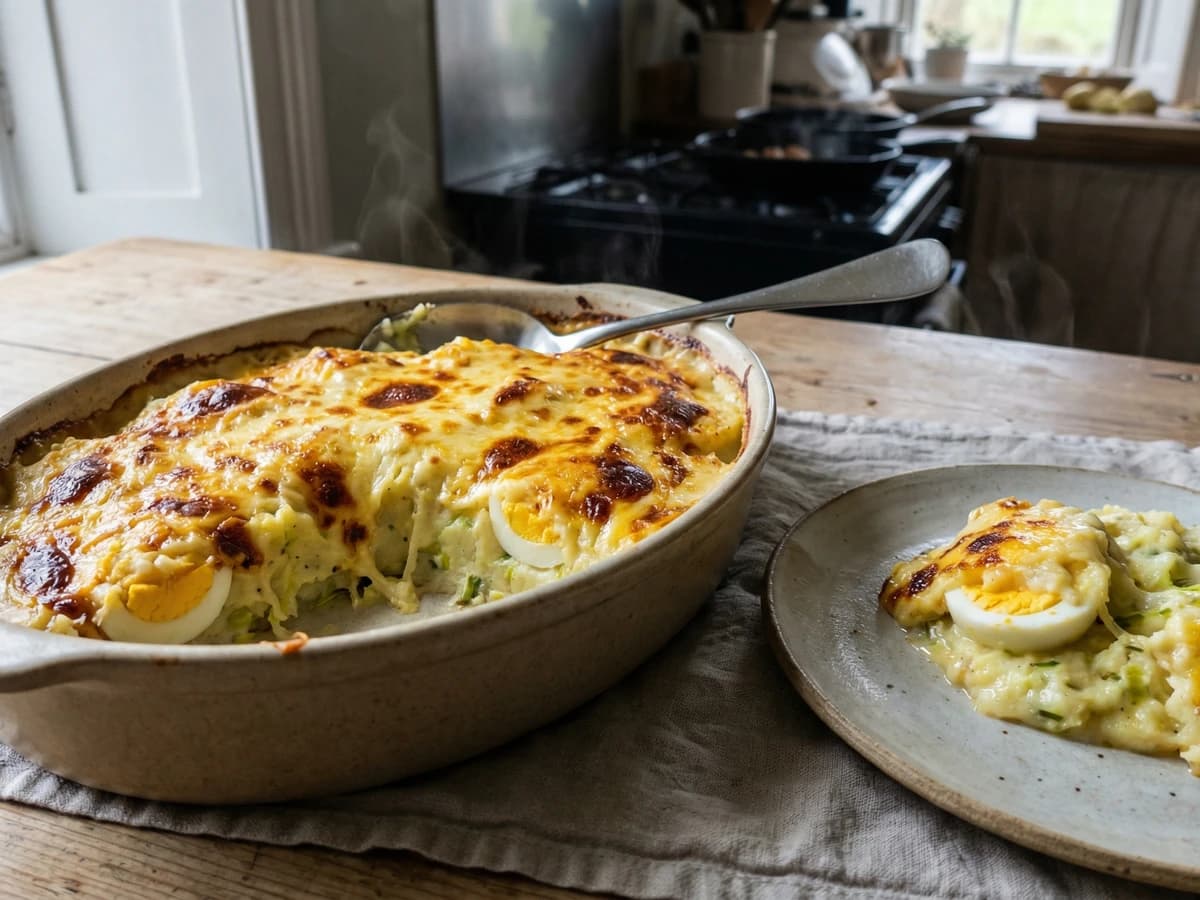
Eggs bedded into leek-flecked mash under a blanket of sharp cheese sauce, baked until golden and bubbling. A Welsh supper dish that proves the simplest things are usually the best.

Chef Thomas
A cold evening carbonara made with good smoked back bacon, eggs, Parmesan, and more black pepper than seems reasonable, tossed together in the time it takes to boil the pasta.

Chef Thomas
Thick bacon chops, bronzed in butter and slicked with a mustard and honey glaze that catches and caramelises under a hot grill. Twenty minutes, two plates, a very good Tuesday.