
Chef Graziella
Arista alla Fiorentina
The roast pork of Florence: bone-in loin studded with rosemary and garlic, nothing more. This is the dish that earned its name from a Byzantine bishop who declared it aristos, the best.
A cooking platform built around craft, culture, and the stories behind what we eat.

Created by
Hollowed summer tomatoes filled with herbed breadcrumbs and baked until the tops turn golden and the flesh becomes sweet and yielding. Cucina povera at its most satisfying.
This is peasant cooking, which means it is honest cooking. Tuscan farm wives did not stuff tomatoes because they sought creativity. They stuffed them because tomatoes grew abundantly in the garden and stale bread sat on the counter, and waste was not permitted.
The filling is nothing more than bread, herbs, oil, and a whisper of garlic. Two cloves for six tomatoes, minced to a paste so it distributes evenly and mellows in the heat. Americans would add five cloves and call it Italian. They would be wrong.
What matters here is the tomato itself. It must be ripe enough to perfume your kitchen when you slice it, firm enough to stand upright through an hour of baking. Hothouse tomatoes grown for shipping will not do. Summer tomatoes, warm from the vine or at least from the farmers' market, are what this dish requires. If you cannot find them, wait until you can. Some dishes demand their season.
Pomodori ripieni appear across Italy wherever tomatoes grow, but the Tuscan version, restrained and bread-based, reflects the region's obsession with using stale bread. In a land where bread was baked weekly and waste was sin, every scrap found purpose. The stuffed tomato likely evolved in the 19th century, after tomatoes finally overcame two centuries of Italian suspicion and became a summer staple.
Quantity
6 large (about 3 pounds)
ripe but firm
Quantity
2 cups
crusts removed, torn into small pieces
Quantity
1/4 cup leaves
chopped fine
Quantity
12
torn
Quantity
2
minced to a paste
Quantity
1/3 cup, plus more for drizzling
Quantity
2 tablespoons
rinsed and chopped
Quantity
1/2 cup
freshly grated
Quantity
1 teaspoon
Quantity
to taste
freshly ground
| Ingredient | Quantity |
|---|---|
| ripe tomatoesripe but firm | 6 large (about 3 pounds) |
| day-old country breadcrusts removed, torn into small pieces | 2 cups |
| flat-leaf Italian parsleychopped fine | 1/4 cup leaves |
| fresh basil leavestorn | 12 |
| garlic clovesminced to a paste | 2 |
| extra virgin olive oil | 1/3 cup, plus more for drizzling |
| capersrinsed and chopped | 2 tablespoons |
| Parmigiano-Reggianofreshly grated | 1/2 cup |
| kosher salt | 1 teaspoon |
| black pepperfreshly ground | to taste |
Slice the top quarter off each tomato and set these caps aside. Using a small spoon or melon baller, carefully hollow out the interior, leaving walls about half an inch thick. Work over a bowl to catch the pulp and juices. The tomatoes should stand upright without wobbling. If necessary, slice a thin piece from the bottom to create a stable base, but do not cut through to the interior.
Sprinkle the inside of each hollowed tomato with a pinch of salt. Turn them upside down on a rack set over a baking sheet and let them drain for 20 minutes. This removes excess moisture that would make the filling soggy. While the tomatoes drain, strain the reserved pulp, discarding the seeds. Chop the pulp coarsely and set aside.
In a bowl, combine the torn bread with three tablespoons of the olive oil. Toss until the bread absorbs the oil evenly. Add the chopped tomato pulp, parsley, basil, garlic, capers, and half the Parmigiano. Season with salt and pepper. Mix thoroughly with your hands. The filling should hold together loosely when squeezed but not be wet or pasty.
Heat the oven to 375 degrees Fahrenheit. Pat the inside of each drained tomato dry with paper towels. Spoon the filling into each cavity, mounding it slightly above the rim. Do not pack it tightly. The filling needs space to develop a crust. Place the filled tomatoes in a baking dish where they fit snugly without touching. Scatter the remaining Parmigiano over the tops.
Drizzle the remaining olive oil over the filled tomatoes and around the base of the dish. Bake uncovered for 45 to 50 minutes, until the tops are deeply golden and the tomato flesh has softened and begun to wrinkle at the edges. The filling should be crisp on top but moist within. If the tops brown too quickly, cover loosely with foil for the final 15 minutes.
Remove from the oven and let rest for 10 minutes. The tomatoes are fragile when hot and will hold together better after resting. Serve warm or at room temperature. Drizzle with a thread of your best olive oil. The reserved tomato caps can be placed jauntily on top or alongside, though this is optional vanity.
1 stuffed tomato (about 220g)
Culinary guides, cultural storytelling, and the editorial depth that makes cooking meaningful.
Discover Culinary ExplorerChef Graziella
The roast pork of Florence: bone-in loin studded with rosemary and garlic, nothing more. This is the dish that earned its name from a Byzantine bishop who declared it aristos, the best.
Chef Graziella
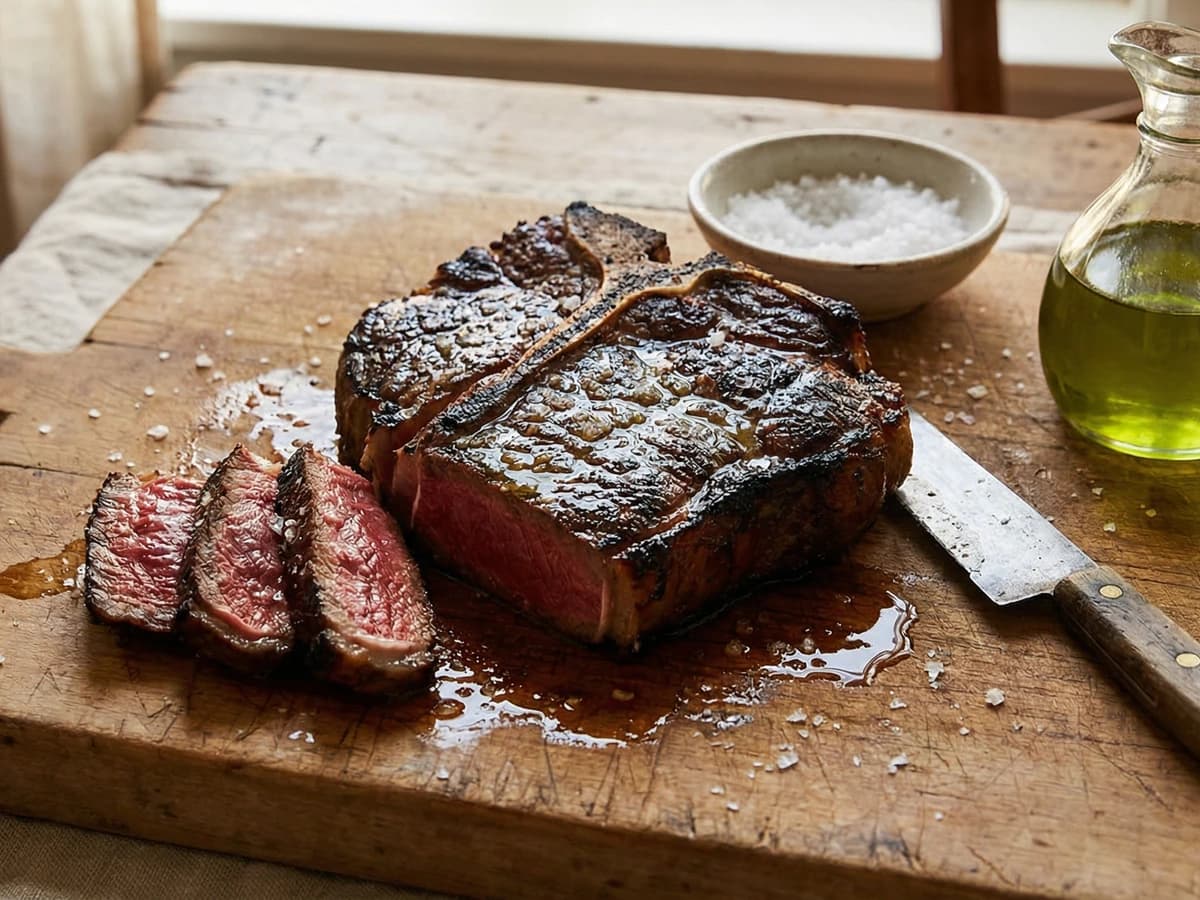
The T-bone of Florence, thick as three fingers and charred over blazing coals, rested until the juices settle, finished with nothing but salt and the best olive oil Tuscany can offer.

Chef Graziella
The noble guinea fowl of Tuscan farmhouses, wrapped in pancetta, perfumed with sage, roasted until the skin shatters and the meat stays moist. This is what Italians bring to the table when ordinary poultry will not serve.

Chef Graziella
The ancient grain of the Garfagnana, simmered with whatever the garden offers and finished with the green-gold olive oil that Tuscany produces better than anywhere else. Peasant food that sustained Roman legions and Tuscan farmers alike.