
Chef Klaus
Allgäuer Krautkrapfen
The Allgäu pan dish that makes a meal from noodle dough, winter kraut, onion, and fat: brown the cut sides first, then cook gently so the rolls hold.
A cooking platform built around craft, culture, and the stories behind what we eat.
Created by
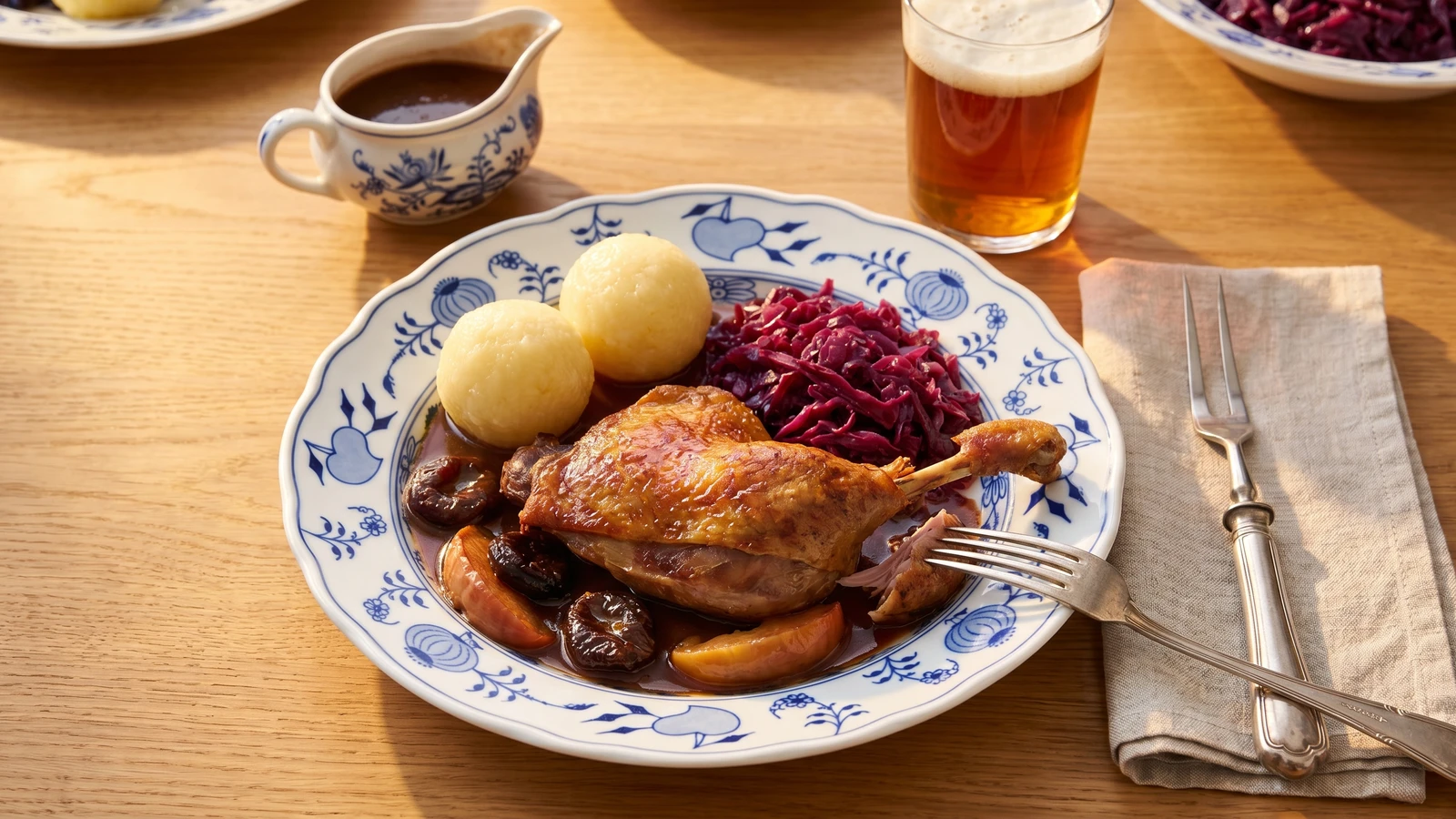
The northern goose leg for Christmas or Martinmas, started in a cool oven so the fat renders slowly, then finished with apples, dried plums, and a sharp-sweet sauce.
Pommersche Gänsekeule belongs to the cold half of the year, when the goose is on the table for Martinmas and Christmas, and the larder speaks louder than the garden. Pomerania cooks it with apples and dried plums, sweet and sour together, what the north calls söötsuur. In the south they reach more quickly for red cabbage, chestnuts, and dumplings; up here the fruit from storage and the fat from the bird do the work. Im Norden anders, im Süden anders.
The deciding technique is the start. I put the legs skin side up in a cool oven and let the heat climb slowly, because goose skin carries more fat than a chicken ever dreamed of, and hard heat at the start tightens the meat before the fat has somewhere to go. Start cool and the fat renders cleanly into the pan. Then the skin can crisp later, when the meat is already tender. Runter mit der Temperatur first, colour later.
The sauce is not from a jar. Nicht aus dem Glas. Onion, root vegetables, apple, dried plums, a little vinegar, and the browned pan juices give you the sweet-sour line this dish needs. Keep the rendered goose fat; roast potatoes in it tomorrow. Weggeworfen wird nichts. Watch the pan near the end: glossy sauce, tender meat, crisp skin. That's the whole business.
Pomerania, the Baltic region split after 1945 between northeastern Germany and Poland, was long known for geese raised on grain stubble and pasture, and goose remained a feast bird for Martinmas on 11 November and for Christmas. The sweet-sour use of dried fruit, vinegar, and apples fits the north German and Baltic larder, where fruit was dried or stored for winter and used to balance fatty meat. Pomeranian cookbooks from the nineteenth and early twentieth centuries often show this taste for Backpflaumen, dried plums, in meat dishes, a regional habit quite different from the Bavarian and Swabian roast table.
Quantity
4
about 350-450g each
Quantity
2 teaspoons
Quantity
1 teaspoon
Quantity
1 teaspoon
Quantity
2
sliced
Quantity
1
chopped
Quantity
150g
chopped
Quantity
2
cored and cut into wedges
Quantity
150g
pitted
Quantity
250ml
Quantity
300ml
Quantity
2 tablespoons
Quantity
1
Quantity
4
lightly crushed
Quantity
1 teaspoon
Quantity
to finish
| Ingredient | Quantity |
|---|---|
| goose legsabout 350-450g each | 4 |
| fine sea salt | 2 teaspoons |
| freshly ground black pepper | 1 teaspoon |
| dried mugwort (Beifuß) or marjoram | 1 teaspoon |
| onionssliced | 2 |
| carrotchopped | 1 |
| celeriacchopped | 150g |
| tart apples, such as Boskoop or Elstarcored and cut into wedges | 2 |
| dried plums (Backpflaumen)pitted | 150g |
| dry white wine or dry apple cider | 250ml |
| goose stock or good chicken stock | 300ml |
| apple cider vinegar | 2 tablespoons |
| bay leaf | 1 |
| juniper berrieslightly crushed | 4 |
| sugar (optional) | 1 teaspoon |
| salt and black pepper | to finish |
Pat the goose legs dry, then rub them all over with the salt, pepper, and mugwort or marjoram. Dry skin browns; wet skin sits there looking sorry. If you have time, leave the legs uncovered in the refrigerator for a few hours or overnight, because air dries the skin and salt seasons the meat past the surface.
Put the onions, carrot, celeriac, bay, and juniper in a roasting pan just large enough to hold the legs. Set the goose legs on top, skin side up, so the vegetables lift the meat away from the first rush of fat and turn into the base of the sauce instead of scorching.
Slide the pan into a cool oven, set it to 150C, and roast for 1 hour. This is the step that decides the dish. A slow climb renders the goose fat without seizing the meat; hard heat at the start tightens the legs while the fat is still trapped under the skin. Das braucht seine Zeit.
After 1 hour, spoon off most of the clear fat into a heatproof jar and keep it. Add the apples, dried plums, wine or cider, stock, and vinegar to the pan, keeping the liquid below the skin so the top can still crisp. The fruit softens into the sauce, the vinegar cuts the fat, and the pan juices do what jarred sauce never will.
Roast for another 1 hour to 1 hour 15 minutes at 160C, basting the meat but not flooding the skin. The legs are ready when a knife slides easily into the thickest part and the joint gives when you move it. If the pan dries before that happens, add a small splash of stock; dry vegetables burn bitter, and bitter does not become sauce.
Lift the temperature to 220C for 10 to 15 minutes, watching closely, until the skin turns deep golden and crisp at the edges. Now the high heat belongs here, at the end, because the fat has already rendered and the meat is tender. Colour first would be vanity. Colour last is cooking.
Move the goose legs to a warm platter and let them rest while you finish the sauce. Strain the pan juices into a saucepan, pressing the vegetables, apple, and a few plums through the sieve for body, then skim off excess fat. Simmer until glossy, taste, and balance with a little salt, vinegar, or the teaspoon of sugar only if the apples were sharp. Würzen, Fett, Salz zum Schluss.
Spoon the sweet-sour plum and apple sauce around the goose legs, not over the crisp skin, or you soften the one thing you worked for. Serve with Kartoffelklöße, potato dumplings, or boiled potatoes and ruby red cabbage. The saved goose fat goes into tomorrow's potatoes. Weggeworfen wird nichts.
1 serving (about 425g)
Culinary guides, cultural storytelling, and the editorial depth that makes cooking meaningful.
Discover Culinary ExplorerChef Klaus
The Allgäu pan dish that makes a meal from noodle dough, winter kraut, onion, and fat: brown the cut sides first, then cook gently so the rolls hold.

Chef Klaus
Swabian egg pasta turned toward the apple cellar: fresh Spätzle tossed with browned butter, tart apples, cinnamon, and enough restraint to stay supper, not cake.

Chef Klaus
Hesse's pork goulash belongs to Apfelwein country: shoulder, onions, and tart cider cooked low until the cheap cut turns soft and the sauce lands sweet-sour, not sour-sweet.

Chef Klaus
The old sweet supper that saves yesterday's loaf: stale bread drinks eggy milk, the pan stays moderate, and butter browns the outside only after the centre has set.