
Chef Lupita
Acúmara Tatemada al Comal
Michoacán's Lake Pátzcuaro acúmara, a whole kurucha from the lago tatemada on a comal de leña and served with chile perón atápakua, corn tortillas, and P'urhépecha discipline.
A cooking platform built around craft, culture, and the stories behind what we eat.
Created by
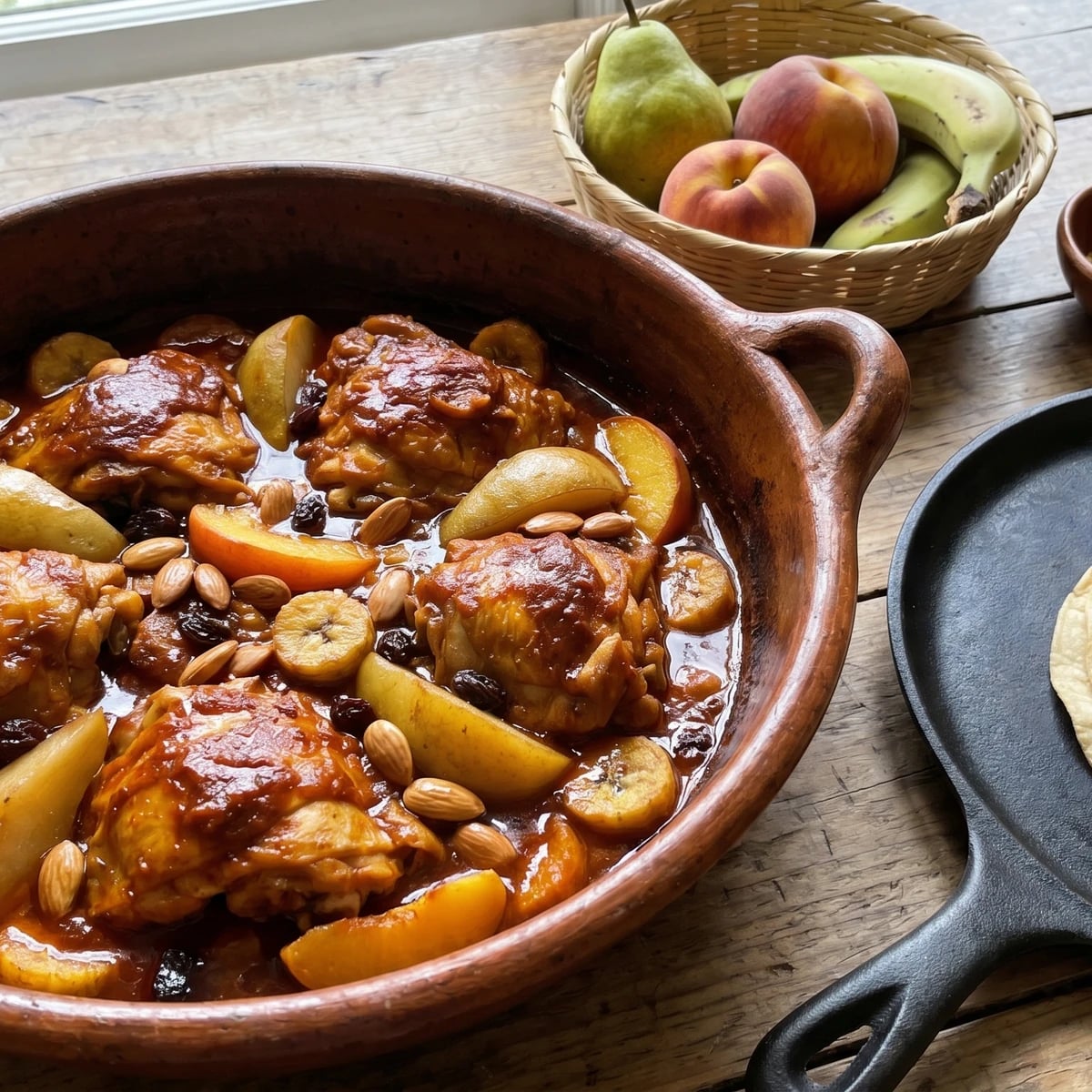
Chiapas highland chicken in a spiced tomato broth with pear, peach, plantain, raisins, and almonds, the sweet-savory Sunday cazuela that knows exactly where it comes from.
Chiapas, especially the highland kitchens around San Cristobal de las Casas and Comitan, knows how to put fruit into a savory pot without turning dinner into dessert. Pollo en frutas lives in that borderland: chicken browned in manteca, tomato broth, warm spices, ripe fruit, raisins, almonds, and a chile ancho that gives body more than heat.
This is not a northern flour-tortilla plate and it is not a plate covered in melted cheese. This is Chiapas, with fruit from the market, chicken from the Sunday table, and a cazuela deep enough to hold sweet and savory in the same bite. The plantain thickens and perfumes the sauce. The pear and peach should hold their shape. If they collapse into mush, you cooked without paying attention.
I first wrote this dish down from a señora near the mercado in San Cristobal who corrected me twice before I had even touched the stove. Brown the chicken properly. Fry the tomato sauce in the fat. Add the fruit late. That is the architecture. Recetas probadas y garantizadas, but only if you respect the order.
Sweet-savory meat dishes in Chiapas reflect the colonial meeting of indigenous poultry and chile cookery with Spanish-introduced orchard fruits, almonds, raisins, cinnamon, and cloves. In the Chiapas highlands, especially around San Cristobal de las Casas and Comitan, these fruit-and-meat cazuelas became part of festive home cooking rather than everyday market food. The dish belongs to the same Mexican family of baroque sweet-savory stews as Puebla's chiles en nogada and central Mexican picadillos, but its tropical plantain and highland fruit balance mark it as Chiapaneco.
Quantity
3 pounds
patted dry
Quantity
1 1/2 teaspoons, plus more to taste
Quantity
1/2 teaspoon
Quantity
3 tablespoons
Quantity
1 medium
thinly sliced
Quantity
4
peeled
Quantity
5
cored and quartered
Quantity
1
stemmed, seeded, and toasted
Quantity
1 cup
for soaking the chile
Quantity
1 1/2 cups
Quantity
1 small
Quantity
3
Quantity
4
Quantity
1
Quantity
1 sprig
Quantity
1 tablespoon
Quantity
1 tablespoon
Quantity
1
peeled and sliced into 1/2-inch rounds
Quantity
2
peeled, cored, and cut into thick wedges
Quantity
2
peeled, pitted, and cut into thick wedges
Quantity
1/3 cup
Quantity
1/3 cup
Quantity
for serving
| Ingredient | Quantity |
|---|---|
| bone-in chicken thighs and drumstickspatted dry | 3 pounds |
| kosher salt | 1 1/2 teaspoons, plus more to taste |
| freshly ground black pepper | 1/2 teaspoon |
| manteca de cerdo (pork lard) | 3 tablespoons |
| white onionthinly sliced | 1 medium |
| garlic clovespeeled | 4 |
| ripe Roma tomatoescored and quartered | 5 |
| dried chile anchostemmed, seeded, and toasted | 1 |
| hot chicken broth or waterfor soaking the chile | 1 cup |
| chicken broth | 1 1/2 cups |
| Mexican cinnamon stick | 1 small |
| whole cloves | 3 |
| whole allspice berries | 4 |
| bay leaf | 1 |
| fresh thyme | 1 sprig |
| apple cider vinegar | 1 tablespoon |
| piloncillo or dark brown sugar | 1 tablespoon |
| ripe plantainpeeled and sliced into 1/2-inch rounds | 1 |
| firm-ripe pearspeeled, cored, and cut into thick wedges | 2 |
| firm-ripe peachespeeled, pitted, and cut into thick wedges | 2 |
| raisins | 1/3 cup |
| blanched almonds | 1/3 cup |
| warm corn tortillas (optional) | for serving |
Pat the chicken dry and season it all over with the salt and black pepper. Let it sit while you prepare the chile and tomatoes. Dry skin browns. Wet skin stews, and we are not starting this dish with pale chicken.
Heat a dry comal or heavy skillet over medium. Toast the chile ancho about 20 to 30 seconds per side, just until it softens, darkens slightly, and smells like raisins and warm chile. Do not blacken it. Put the toasted chile in a bowl, cover with the hot broth or water, and let it soak for 15 minutes.
Transfer the soaked ancho to a blender with the tomatoes, garlic cloves, and 1/2 cup of the soaking liquid. Blend until completely smooth. Strain through a fine-mesh sieve if your blender leaves chile skin behind. The sauce should look brick red and smell like tomato, chile, and garlic, not raw water.
Melt the manteca in a wide clay cazuela or heavy Dutch oven over medium heat. Add the chicken skin side down in a single layer, working in batches if needed. Brown 5 to 6 minutes per side, until the skin is golden and the fat in the pot smells roasted. Remove the chicken to a plate. La manteca es el sabor, and this browned fat is the base of the sauce.
Add the sliced onion to the same pot and cook until soft and lightly golden, about 6 minutes. Pour in the blended tomato-ancho sauce. It will sputter. Stir and fry the sauce for 8 to 10 minutes, until it darkens, thickens, and the fat starts to show at the edges. This is where the raw tomato becomes a proper guiso. No me vengas con atajos.
Return the chicken and any juices to the pot. Add the chicken broth, cinnamon stick, cloves, allspice, bay leaf, thyme, vinegar, and piloncillo. Bring to a gentle simmer, cover partially, and cook 35 to 40 minutes, turning the chicken once, until the meat is tender and the sauce has a glossy red-brown depth.
Add the plantain, pears, peaches, raisins, and almonds. Nestle them around the chicken instead of stirring hard and breaking everything. Simmer uncovered 15 to 20 minutes, until the fruit is tender but still holds its shape and the sauce lightly coats the back of a spoon. Taste for salt. Sweet needs salt or it becomes flat.
Turn off the heat and let the cazuela rest 10 minutes. Remove the cinnamon stick, bay leaf, thyme stem, cloves, and allspice if you can find them. Serve family-style in the cazuela with warm corn tortillas. Spoon fruit and sauce over every piece of chicken. Cada estado, su propia cocina.
1 serving (about 450g)
Culinary guides, cultural storytelling, and the editorial depth that makes cooking meaningful.
Discover Culinary Explorer
Chef Lupita
Michoacán's Lake Pátzcuaro acúmara, a whole kurucha from the lago tatemada on a comal de leña and served with chile perón atápakua, corn tortillas, and P'urhépecha discipline.

Chef Lupita
Puebla's weekday adobo of pork shoulder braised in a thick guajillo and ancho sauce sharpened with vinegar, cumin, and clove. The deep red of a market spice stall, the dish a poblana cooks without thinking.

Chef Lupita
Loreto's pit-roasted clams, planted hinge-up in beach sand and tatemadas under a fast fire of dried romerillo brush, the resinous Baja desert shrub that gives this dish its smoke.

Chef Lupita
Oaxaca's eighth mole, the silky, almond-and-cinnamon almendrado, served over poached chicken. Mild, sweet, restrained, and a quiet rebuttal to anyone who thinks Mexican food has to be hot to be Mexican.