Culinary Explorer
A cooking platform built around craft, culture, and the stories behind what we eat.
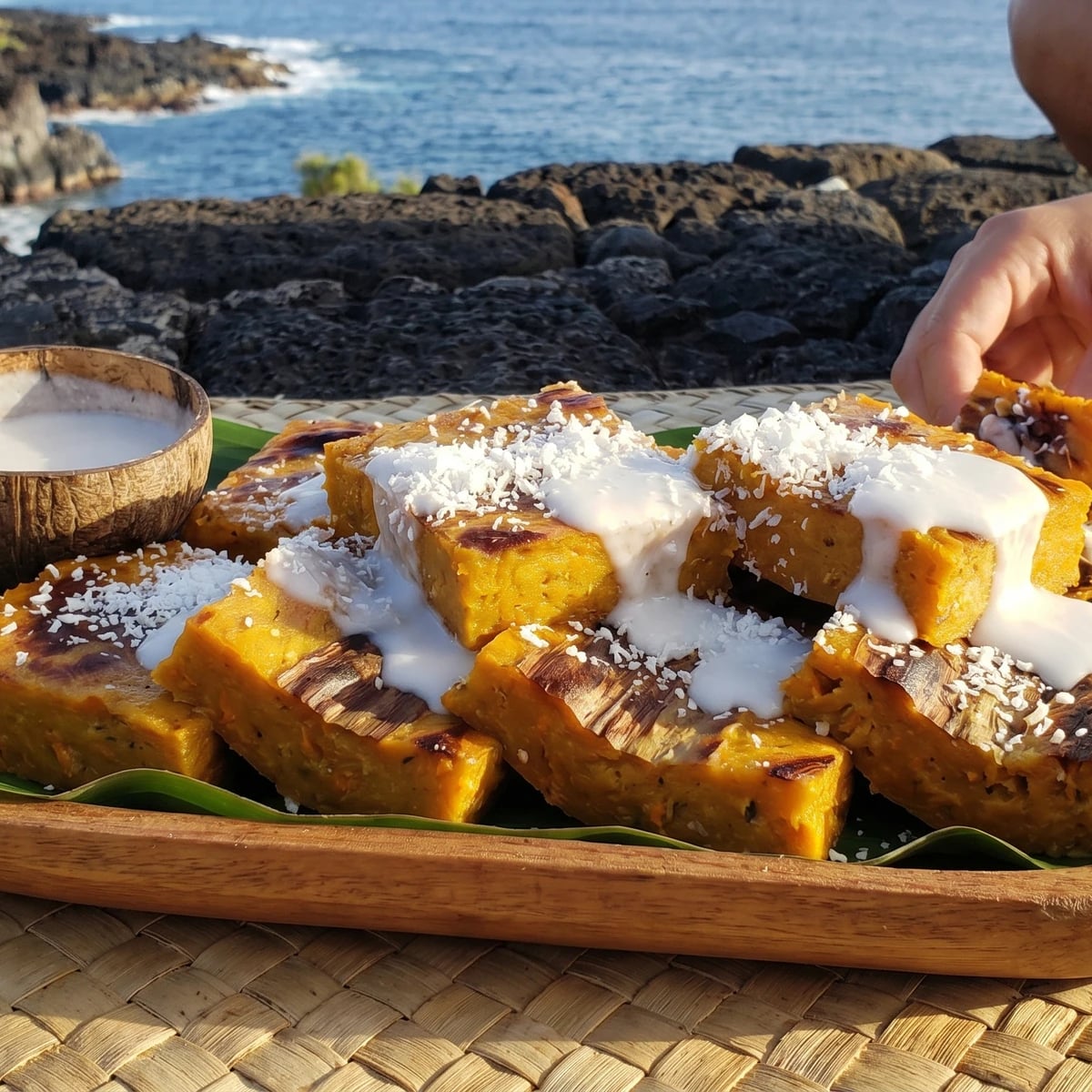
Poʻe Rapa Nui (Banana and Pumpkin Pudding)
Created by Chef Makoa
Rapa Nui's poʻe folds ripe banana and pumpkin into a dense, tender pudding, baked in leaf and finished with coconut cream. Same ocean, different bowl, the far corner speaking its own hand.
At the far corner of the Triangle, Rapa Nui keeps the canoe's memory in a hard place, wind on the grass, black volcanic stone, the ocean all around. This poʻe (banana and pumpkin pudding) belongs to that island and to the Rapanui people, not to Hawaiʻi and not to a blurred plate called Polynesian. I cook it open-handed, the way a cousin sets a bowl in front of you and says, eat first, ask after.
The name will make some people think of Tahitian poʻe, that soft fruit pudding finished in coconut, or the Cook Islands poke, the banana pudding thickened with starch, or even the pounded words back home, poi and paʻiʻai (hand-pounded kalo, taro). Same family, not the same dish. Rapa Nui's hand folds ripe banana and cooked pumpkin together, binds them with flour from the later pantry, then bakes it dense enough to slice and soft enough to spoon coconut cream over. One ocean, one canoe, one root, but every island keeps its own bowl.
What matters here is dryness and patience. The pumpkin must cook until it gives up extra water, the banana should be so ripe it's nearly fallen into sweetness, and the flour goes in just enough to hold the whole thing together. Don't chase cake. This is pudding with a backbone, celebration food that also sits fine on a weekday counter, cut in squares, shared with coffee, tea, or whatever the house has. Eat what you have, and name whose hand taught it.
Ingredients
pumpkin or firm orange squash
Quantity
1 1/2 pounds
peeled, seeded, and cut into 1-inch pieces
very ripe bananas
Quantity
4
mashed, about 2 cups
sugar
Quantity
1/2 cup
or up to 3/4 cup if the fruit is not very sweet
| Ingredient | Quantity |
|---|---|
| pumpkin or firm orange squashpeeled, seeded, and cut into 1-inch pieces | 1 1/2 pounds |
| very ripe bananasmashed, about 2 cups | 4 |
| sugaror up to 3/4 cup if the fruit is not very sweet | 1/2 cup |
Where cooking meets culture.
Culinary guides, cultural storytelling, and the editorial depth that makes cooking meaningful.
Discover Culinary Explorer