
Chef Isabel
Aguaillo de la Sierra de Cadiz
Aguaillo is from the Sierra de Cadiz: cold water, stale bread, garlic, oil and vinegar, closer to a field drink than a bowl of soup, and sharp enough to wake you in the heat.
A cooking platform built around craft, culture, and the stories behind what we eat.
Created by
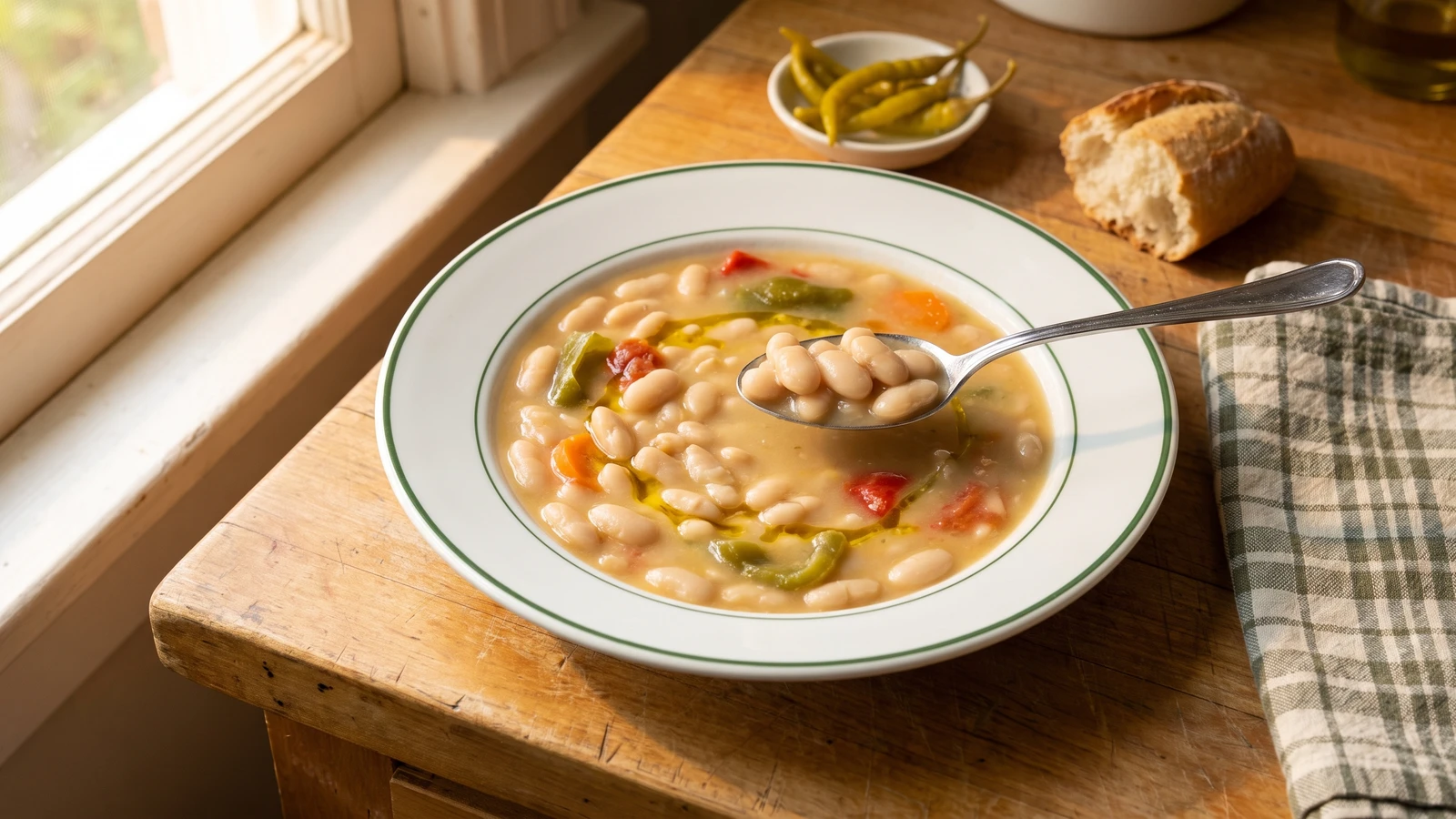
Pochas a la Navarra are the fresh white beans of late summer, cooked gently with onion, pepper, tomato, and olive oil until the broth turns pale, sweet, and creamy.
Pochas a la Navarra belong to Navarra, especially to the late summer market, when the white beans are shelled fresh before they ever dry. That is what makes the dish what it is: not a dried bean pot, not a pork stew, but tender young pochas cooked with a vegetable sofrito, the slow onion base, until they melt like butter. Cocina de cuchara, spoon food, but light on its feet.
The method that decides it is gentleness. Fresh pochas don't need soaking and they don't forgive a hard boil. Cover them with cold water, bring them up slowly, and keep the pot at a quiet tremble while the onion, green pepper, tomato, and garlic cook down in olive oil until sweet and thick. That sofrito gives the broth its body. Rush it and you get beans in pale water, and nobody waited all year for that.
If you are far from Navarra, no hace falta haber pisado España. Use frozen fresh shelling beans if you can find them, or fresh borlotti, cranberry, or cannellini beans from the pod. They will taste a little different and may take longer, but the rule is the same: cook them gently and salt near the end. Dried white beans work only as a different pot, soaked overnight and simmered longer. Good, yes. Pochas, no.
Serve them loose and brothy, with piparras, the pickled green chillies of the north, on the side if you have them. In my Margin beside this one I wrote: "sin prisa, sin carne," without hurry, without meat. Siempre sale, si lo sigues.
Pochas are especially tied to Navarra and La Rioja, where the beans are harvested while still pale and tender, before drying for the winter larder. In Navarra they are most often cooked as a late-summer vegetable stew, with onion, pepper, tomato, garlic, and olive oil, and served with pickled piparras or guindillas to cut the sweetness. Their season is short, which is why frozen pochas are respected in home kitchens: they preserve the dish better than forcing it from fully dried beans.
Quantity
1kg
rinsed and picked over
Quantity
1 large
finely chopped
Quantity
1
finely chopped
Quantity
1 small
finely chopped
Quantity
2
peeled and grated
Quantity
3 cloves
finely chopped
Quantity
1 small
peeled and diced
Quantity
1
Quantity
80ml
Quantity
1 teaspoon
Quantity
1.2 litres, plus more if needed
Quantity
to taste
Quantity
to serve
| Ingredient | Quantity |
|---|---|
| fresh shelled pochasrinsed and picked over | 1kg |
| onionfinely chopped | 1 large |
| green Italian frying pepperfinely chopped | 1 |
| red pepperfinely chopped | 1 small |
| ripe tomatoespeeled and grated | 2 |
| garlicfinely chopped | 3 cloves |
| carrotpeeled and diced | 1 small |
| bay leaf | 1 |
| extra virgin olive oil | 80ml |
| sweet pimentón | 1 teaspoon |
| cold water | 1.2 litres, plus more if needed |
| salt | to taste |
| pickled piparras or guindillas (optional) | to serve |
Put the fresh pochas in a wide heavy pot with the carrot and bay leaf. Cover with 1.2 litres cold water, enough to sit about two fingers above the beans. Bring it up slowly over medium heat, then lower the heat until the surface only trembles. Do not soak them. These are fresh beans, and soaking would only wash away what you paid for.
While the beans begin to soften, warm the olive oil in a frying pan over low heat. Add the onion, green pepper, red pepper, and a small pinch of salt. Cook gently for 20 to 25 minutes, stirring now and then, until the onion is dark gold, the peppers are soft, and the oil has turned sweet. This slow cook is the floor of the dish. Rush it and the broth stays thin.
Stir the garlic into the sofrito for 1 minute, then add the grated tomato. Cook another 8 to 10 minutes, until the tomato loses its raw smell and thickens. Pull the pan off the heat, stir in the sweet pimentón, and return it only for a few seconds. Pimentón burns easily, and burned pimentón tastes bitter all the way through the pot.
Scrape the sofrito into the pot of pochas and swirl the pot by the handles to mix. Do not beat the beans with a spoon. Keep simmering gently until the pochas are tender and creamy inside, usually 35 to 50 minutes total from the first simmer, depending on their freshness. If the water drops below the beans, add a small splash of hot water.
When the pochas are tender, season with salt and simmer 5 minutes more. The broth should be loose but lightly creamy, not thick like paste. Take the pot off the heat and let it rest 10 minutes so the skins settle and the sofrito finishes giving itself to the broth.
Serve in deep bowls, with a little olive oil over the top if the beans look shy, and piparras or pickled guindillas on the side. Their sharp bite is not decoration; it wakes up the soft sweetness of the pochas. Bread on the table, of course.
1 serving (about 620g)
Culinary guides, cultural storytelling, and the editorial depth that makes cooking meaningful.
Discover Culinary ExplorerChef Isabel
Aguaillo is from the Sierra de Cadiz: cold water, stale bread, garlic, oil and vinegar, closer to a field drink than a bowl of soup, and sharp enough to wake you in the heat.

Chef Isabel
Ajilimojili is Jaen's tomato-free cold soup: potato, roasted red pepper, garlic, olive oil, and vinegar pounded into a cool, silky spoonful.

Chef Isabel
Ajo carretero is Soriano, from the pine country of Soria: lamb cooked in a plain garlicky broth, then served the old way, meat first and bread-soaked soup after.

Chef Isabel
Ajoblanco Extremeño is the poor-kitchen cold soup of Extremadura: bread, garlic, oil, egg yolk, vinegar, and icy water, with no almonds. Whisk it slowly and serve it bien fresquito.