Culinary Explorer
A cooking platform built around craft, culture, and the stories behind what we eat.
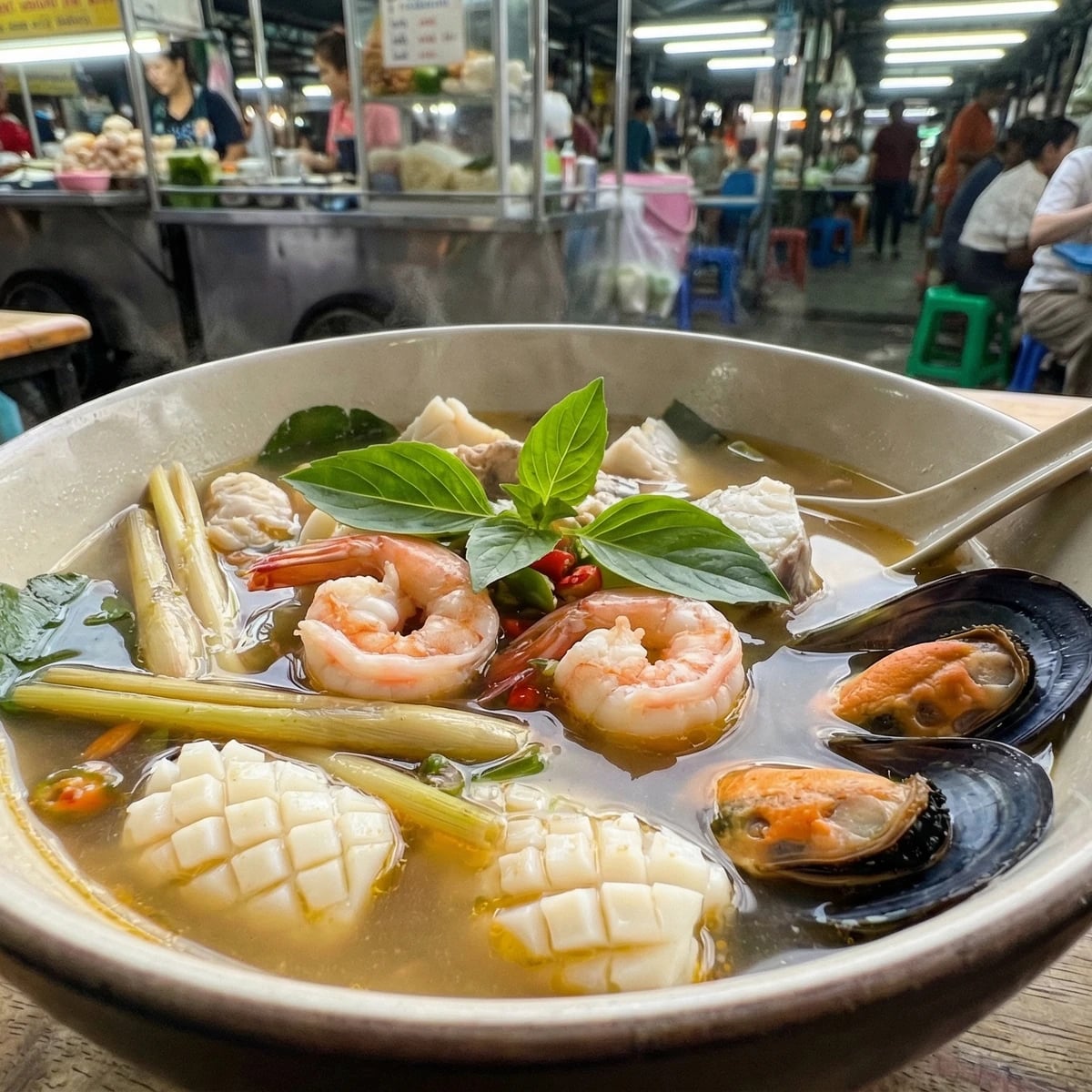
Seafood Hot Pot Soup (Po Taek)
Created by Chef Fai
Tom yum's wilder sibling: more seafood, more herbs, more heat, no coconut, no apologies. The same four pillars pushed to their limit in a fisherman's broth that earns its name by overflowing the pot.
Po taek is what happens when the four pillars stop whispering and start shouting.
Ajarn always said that Thai soups are infusion systems. No kreung tam, no paste. Whole herbs, bruised and torn, thrown into hot liquid to release their essential oils directly into the broth. Tom yum does this with restraint. Po taek does it with reckless generosity. More lemongrass. More galangal. More kaffir lime leaves. More chilies. And then, just when you think the herb load is absurd, a fistful of Thai basil (horapha) goes in at the end. It's a soup that pushes the infusion principle to its breaking point, and the name tells you as much: po taek means "the pot broke." The fisherman's catch was so big, so wild, that the pot couldn't hold it.
The seafood is the other story. This isn't a one-protein soup. Shrimp, squid, mussels, fish, sometimes crab. Each protein cooks at a different rate, so timing matters. Shrimp curl in two minutes. Squid goes rubbery in three. Mussels need to open. White fish flakes if you look at it wrong. You add them in sequence, not all at once, and you pull the pot off the heat the moment everything is just done. Overcooking is the enemy.
Fish sauce for salt. Lime for sour. Chilies for heat. A bare touch of palm sugar to round the edges. That's the law. But po taek leans harder into sour and spicy than tom yum does. The sweetness is dialed almost to zero. This is a soup that hits you in the face and doesn't apologize. The lime juice goes in last, off the heat, because heat destroys the bright acid that makes the whole thing sing. Ajarn drilled that into me: "Lime is alive. Kill it with heat and you lose everything."
I first had po taek the way it's supposed to be at a seafood shack in Mahachai, the fishing port outside Bangkok. The cook had a pot the size of a truck tire, half the herbs from the morning market floating in it, and she pulled whole fish out of a styrofoam box with her bare hands. That broth tasted like the ocean had a fight with a Thai garden. It was the most alive thing I'd ever eaten.
Ingredients
head-on shrimp
Quantity
250g (about 8 large)
peeled and deveined, shells and heads reserved
squid tubes
Quantity
200g
cleaned, scored in crosshatch pattern, cut into rings
mussels (hoi malaeng phu)
Quantity
200g
scrubbed and debearded
| Ingredient | Quantity |
|---|---|
| head-on shrimppeeled and deveined, shells and heads reserved | 250g (about 8 large) |
| squid tubescleaned, scored in crosshatch pattern, cut into rings | 200g |
| mussels (hoi malaeng phu)scrubbed and debearded | 200g |
Where cooking meets culture.
Culinary guides, cultural storytelling, and the editorial depth that makes cooking meaningful.
Discover Culinary Explorer