Culinary Explorer
A cooking platform built around craft, culture, and the stories behind what we eat.
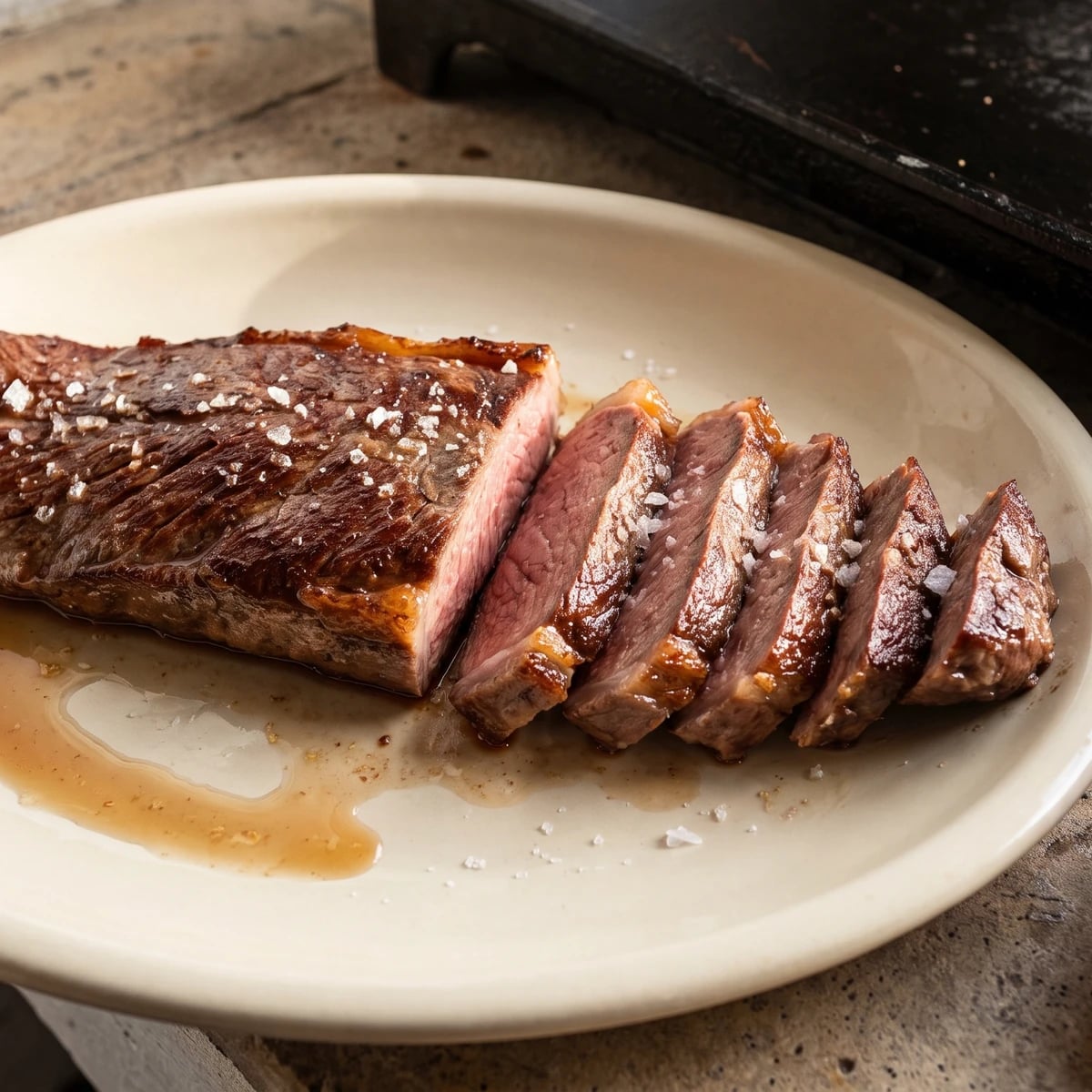
Pluma Ibérica a la Plancha (Iberian Loin Tip)
Created by Chef Isabel
Extremadura cooks pluma Ibérica fast and bare: a fierce plancha, a short rest, and coarse salt leave the feather-shaped loin tip deeply browned outside and rosy, juicy, and marbled within.
Pluma Ibérica a la plancha belongs to the dehesa country of Extremadura. The pluma is the small, feather-shaped muscle at the end of the loin, tender like solomillo but threaded with far more fat. That marbling is the point. What makes this the dish, rather than merely grilled pork, is the cut and the refusal to bury it: no marinade, no sauce, only fierce iron and coarse salt.
The method that decides it is a bone-dry surface against a properly hot plancha. If the iron is lukewarm, the fat leaks away before the meat browns and you get grey pork sitting in its own juices. Pat it dry, oil the meat rather than the pan, and leave it untouched long enough to build a dark crust. A thermometer takes the guesswork out of the rosy centre. Pésalo, no lo adivines, and measure the temperature too.
No hace falta haber pisado España. If pluma is unavailable, use presa Ibérica cut into steaks of the same thickness; it is meatier and needs a little longer. Well-marbled pork collar or neck is the useful substitute farther from Spain, though its grain is coarser and it lacks some of Ibérico's sweet, nutty fat. Don't replace it with tenderloin, which is too lean for this treatment. The Margin beside this recipe says only, "seca, fuego fuerte, reposo": dry, fierce heat, rest. Siempre sale, si lo sigues.
Ingredients
pluma Ibérica
Quantity
700g (about 2 whole pieces)
silver skin removed, visible fat left intact
olive oil
Quantity
10ml
coarse sea salt
Quantity
7g
| Ingredient | Quantity |
|---|---|
| pluma Ibéricasilver skin removed, visible fat left intact | 700g (about 2 whole pieces) |
| olive oil | 10ml |
| coarse sea salt | 7g |
Where cooking meets culture.
Culinary guides, cultural storytelling, and the editorial depth that makes cooking meaningful.
Discover Culinary Explorer