
Chef Lupita
Arroz a la Oaxaqueña
Oaxaca's red rice, stained with tomato and fried in lard, steamed with carrots, ejotes, black beans, and epazote. The side that anchors a Oaxacan family meal and earns its place beside the main.
A cooking platform built around craft, culture, and the stories behind what we eat.
Created by
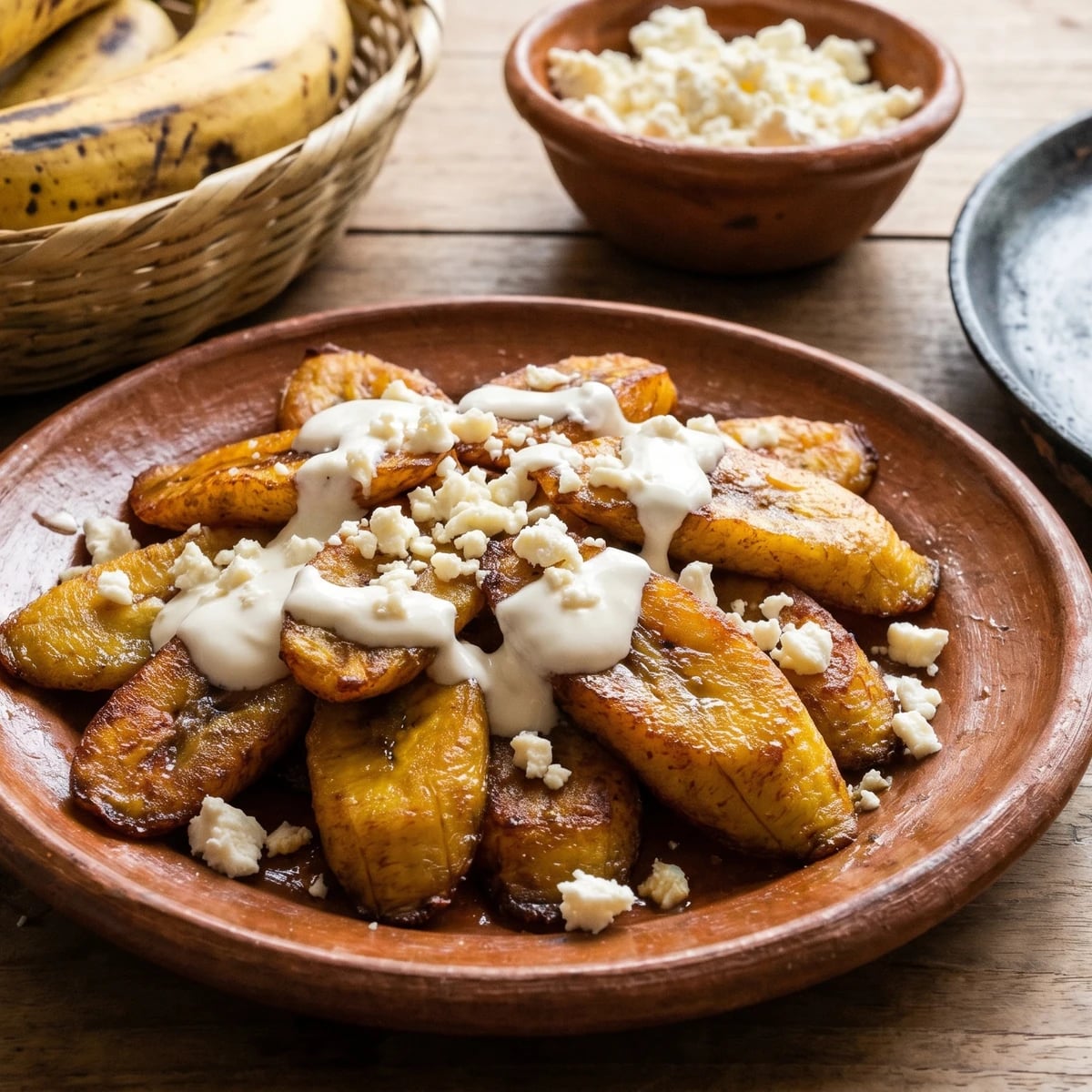
Veracruz's Gulf-side plantains, fried until the edges turn dark gold, then covered with thick crema and queso fresco for the sweet-savory bite that belongs beside rice, beans, or fish.
Veracruz, especially the humid Gulf lowlands from the port down toward the Sotavento, knows what to do with a ripe plantain. This is not a garnish. In those kitchens, plátano macho sits on the counter until the skin goes yellow with black patches, then it goes into hot oil and comes out sweet, browned, and soft at the center.
The ingredient that defines the dish is ripeness. Not chile. Not spice. Ripeness. A green plantain belongs to other preparations. For this, you need plátano macho maduro, the kind that looks almost too far gone to someone who doesn't know the market. Pregúntale a las señoras del mercado. They will hand you the right one.
I learned this version from women in Veracruz who served it with the central comida, next to arroz blanco, frijoles de olla, and fried fish. Thick crema, not sour cream. Queso fresco, not yellow cheese. No me vengas con atajos. This dish is budget cooking, yes, but budget cooking is not careless cooking. The slices must brown slowly enough to caramelize and quickly enough not to drink oil. Saber cocinar es saber vivir.
Plantains reached Mexico after the Spanish conquest through Atlantic trade routes that linked the Caribbean, West Africa, and the Gulf of Mexico, which is why they became strongest in Veracruz, Tabasco, Chiapas, and the Yucatán Peninsula rather than in the northern states. In Veracruz, ripe fried plantains became part of the comida table because the crop thrives in the humid lowlands and pairs naturally with beans, rice, seafood, and dairy from the region's ranching interior. The crema-and-queso finish is a Mexican household adaptation: sweet fruit balanced by cultured cream and fresh cheese, not a dessert sauce.
Quantity
3
yellow with black patches, peeled and sliced on the diagonal
Quantity
3/4 cup
corn oil or safflower oil, for shallow frying
Quantity
1/2 teaspoon
Quantity
1/2 cup
Quantity
1/2 cup
crumbled
| Ingredient | Quantity |
|---|---|
| ripe plátanos machosyellow with black patches, peeled and sliced on the diagonal | 3 |
| neutral vegetable oilcorn oil or safflower oil, for shallow frying | 3/4 cup |
| fine sea salt | 1/2 teaspoon |
| thick Mexican crema | 1/2 cup |
| queso frescocrumbled | 1/2 cup |
Use plátanos machos with yellow skins covered in black patches. If they are green, they are wrong for this dish. If they are completely black and leaking, they are too far gone. You want fruit that gives slightly when pressed, like a ripe avocado. The sugar is what browns in the pan.
Cut off both ends of each plantain. Make a shallow slit down the length of the peel and pull the skin away. Slice the plantains on a diagonal into pieces about 1/2 inch thick. The diagonal cut gives you more surface area, and more surface area means better caramelized edges. Así se hace y punto.
Pour the oil into a wide heavy skillet to a depth of about 1/4 inch. Heat over medium until a small piece of plantain sizzles gently when it touches the oil. The oil should sound alive, not angry. Too cool and the plantain drinks oil. Too hot and the outside burns before the center softens.
Lay the plantain slices in a single layer without crowding. Fry 2 to 3 minutes per side, turning once, until the edges are dark gold and the centers look soft and glossy. Do not walk away. Ripe plantain goes from caramelized to burned quickly because the sugar is high.
Lift the slices out with a slotted spoon and drain them on a rack or paper towels. Sprinkle with the sea salt while they are still hot enough for the salt to cling. That little salt is not decoration. It keeps the sweetness from becoming heavy.
Arrange the fried plantains on a warm barro rojo plate or shallow clay platter. Spoon the thick Mexican crema over the top in generous streaks, then scatter the queso fresco. Serve immediately, while the edges still hold their light crispness and the centers are soft. This belongs on the comida table, not in a tall restaurant stack.
1 serving (about 165g)
Culinary guides, cultural storytelling, and the editorial depth that makes cooking meaningful.
Discover Culinary Explorer
Chef Lupita
Oaxaca's red rice, stained with tomato and fried in lard, steamed with carrots, ejotes, black beans, and epazote. The side that anchors a Oaxacan family meal and earns its place beside the main.

Chef Lupita
Sinaloa's home-cook white rice topped with cold cubes of cream cheese that soften into the warm grain, finished with crema and a sprinkle of chiltepin at the table. The trick that makes a side dish feel like a small luxury.

Chef Lupita
Sonora's white rice, toasted in butter and steamed with sweet corn and tender peas. The clean, quiet partner to a plate of carne asada, not the red rice of central Mexico.

Chef Lupita
Yucatán's white rice with sweet corn kernels, toasted in lard with garlic and onion. The quiet base that holds up against the peninsula's bold achiote-stained stews.