Culinary Explorer

A cooking platform built around craft, culture, and the stories behind what we eat.
Discover Culinary Explorer
Plátanos al Horno con Naranja Agria

Plátanos al Horno con Naranja Agria

Created by

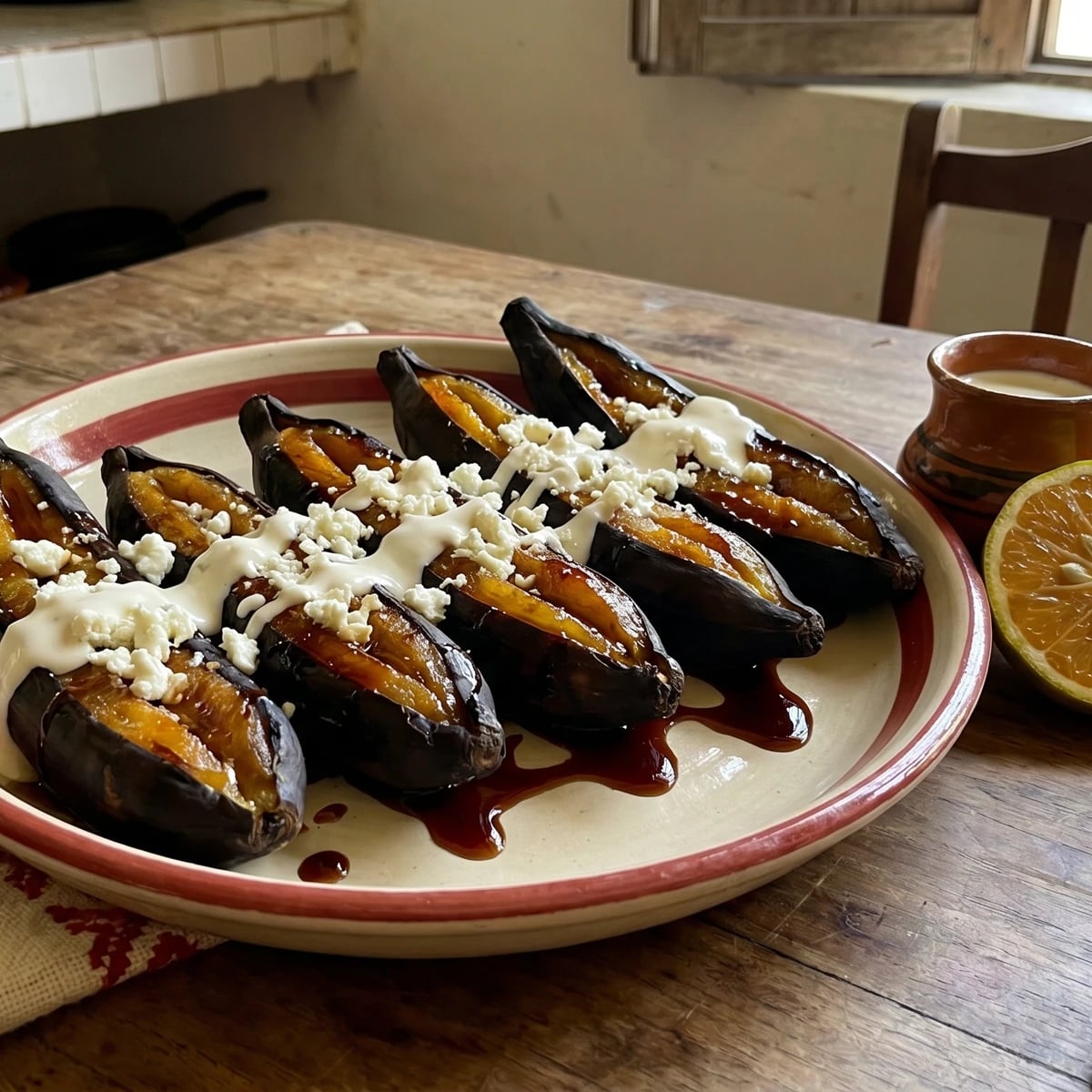
Yucatecan ripe plantains baked whole in their blackened skins, split open and glazed with naranja agria, manteca, and piloncillo. The sweet, sour answer to a plate of cochinita pibil.

Side Dishes
Mexican
Weeknight
Comfort Food
10 min
Active Time
45 min cook55 min total
Yield6 servings

This is from Yucatán. Specifically from the home kitchens around Mérida and the smaller towns of the peninsula, where a plate of cochinita pibil or pavo en escabeche is never set on the table without something sweet and sour to answer it. These plantains are that answer.

The plantain itself is not Yucatecan in origin, it traveled here from West Africa through the Caribbean, but the peninsula adopted it the way it adopted everything: by putting naranja agria on it. Naranja agria, the sour orange the Spanish brought from Seville and that grows in patios all over Yucatán, is the citrus that defines this kitchen. It is in the cochinita, in the escabeche, in the salbutes, and it is here, cutting the sweetness of the caramelized plantain with a bitter-sour edge that orange juice and lime juice together can only approximate.

Baking the plantain whole in its skin is the trick. The skin holds the moisture in, the flesh confits in its own sugars and a little manteca, and the syrup that runs out of the slits at the end is essentially candy. You do not peel a plantain to roast it in Yucatán. You let the skin do the work. The cook who taught me this was a señora in Tixkokob who set them in the bottom of her oven while the cochinita finished on top, the lard from one dripping down to baste the other. La cocina no es decoración, es trabajo. Saber cocinar es saber vivir.

The plantain arrived in the Yucatán peninsula through Cuban and Caribbean trade routes in the 16th and 17th centuries, having traveled from its origins in Southeast Asia through Africa and the Atlantic slave trade. Naranja agria, citrus aurantium, was brought from Seville by Spanish colonists in the same period and adapted so completely to Yucatecan soil that it became the defining acid of the regional cuisine, displacing lime in most savory applications. The Maya word for plantain, 'haaz,' is still used in rural Yucatán alongside the Spanish 'plátano,' and the combination of African ingredient, European citrus, and Maya cooking technique, slow heat in an earthen oven, is the kind of culinary trilingualism that defines the peninsula's table.

The technique, the tradition, and the story behind every dish.

Discover Culinary Explorer

Ingredients

very ripe plantains

Quantity

6

skins almost entirely black with patches of yellow

naranja agria juice (sour orange)

Quantity

1/3 cup

freshly squeezed

manteca de cerdo (pork lard)

Quantity

3 tablespoons

melted

piloncillo

Quantity

2 tablespoons

grated, or dark brown sugar packed

kosher salt

Quantity

1/2 teaspoon

ground canela (Mexican cinnamon) (optional)

Quantity

1/4 teaspoon

crema de rancho or thick Mexican crema (optional)

Quantity

for serving

queso fresco (optional)

Quantity

for serving

crumbled

Equipment Needed

  • Heavy sheet pan or shallow clay cazuela
  • Paring knife
  • Citrus juicer for the naranja agria
  • Small bowl for the glaze

Instructions

  1. 1

    Choose the right plantains

    Look at the skins. They should be almost completely black with a few patches of dark yellow showing through. Yellow plantains are not ready. Slightly black is not ready. You want them ugly, soft to a gentle squeeze, and smelling faintly sweet at the stem. If your plantains are still firm, leave them on the counter for three or four more days. La fruta dice cuándo está lista. The fruit tells you when it is ready, not the calendar.

    A plantain that is too firm will steam dry inside the skin and stay starchy. A plantain that is too far gone will collapse into mush. Black with yellow patches is the window.
  2. 2

    Heat the oven and prepare the plantains

    Heat the oven to 400F. Wipe the plantains clean with a damp cloth. Do not peel them. The skin is the cazuela. Lay them on a sheet pan or a shallow clay cazuela in a single layer, with a little room between each one. Pierce each plantain twice along the top with the tip of a paring knife, about a quarter inch deep. Those slits let the sugars vent and keep the skin from bursting open in the heat.

  3. 3

    Bake whole in the skin

    Slide the pan into the oven and bake for 35 to 45 minutes. You are waiting for three things at once: the skins should turn fully black and glossy, dark syrup should be weeping from the slits and pooling under the plantains, and the flesh should feel soft when you press the skin with the back of a spoon. The smaller the plantain, the faster it cooks. Check at thirty-five minutes.

  4. 4

    Mix the naranja agria glaze

    While the plantains bake, stir together the naranja agria juice, melted lard, grated piloncillo, salt, and canela in a small bowl. The piloncillo will not dissolve completely and that is fine, it will finish melting on the hot plantain. The naranja agria is what makes this a Yucatecan dish and not a plain baked plantain. It cuts the sweetness with a sour edge that no other citrus replicates.

    If you cannot find naranja agria, mix three parts fresh orange juice with two parts lime juice and one part grapefruit juice. It is a compromise, not an upgrade. The bitterness of the true Seville orange is its own flavor and substitutes only get close.
  5. 5

    Split and glaze

    Pull the plantains out of the oven. Let them rest for two minutes so the steam stops jumping out at you. Slit each one lengthwise down the top, from stem to tip, and pinch the ends together to push the soft flesh up through the opening, the way you would a baked potato. The flesh will be deep amber, almost translucent at the edges, sticky from its own caramelized sugars. Spoon the naranja agria glaze over the open flesh of each one. Let it soak in for a minute. Spoon any glaze that ran onto the pan back over the top.

  6. 6

    Serve alongside the main

    Bring the whole pan to the table, plantains still in their blackened skins. This is a side dish for cochinita pibil, pavo en escabeche, or any slow-cooked Yucatecan main where the salt and the achiote want a sweet, sour answer on the side. Crumble queso fresco over the top and drizzle crema if you are serving them on their own. Eat them with a spoon, straight from the skin. Así se hace y punto.

Chef Tips

  • The single most important decision is when to use the plantains. Black skins, yellow patches, soft under the thumb. Anything firmer and you will get a starchy, sad result. Anything softer and you will get baby food. Buy them yellow and wait. Five to seven days on the counter is normal.
  • Naranja agria is sold in Latin markets, especially Cuban and Yucatecan grocers. Bottled naranja agria works in a pinch but read the label, you want sour orange juice, not a sweetened mixer. The brand Goya sells a passable one. If nothing is available, mix three parts orange juice, two parts lime, one part grapefruit. Pregúntale a las señoras del mercado, they will know where to find it.
  • Manteca de cerdo is the right fat. Olive oil will not give you the same body and butter will burn at the temperature these need. If you only have neutral oil, use it, but the dish will taste cleaner and less rounded. La manteca es el sabor.

Advance Preparation

  • The naranja agria glaze can be mixed up to a day ahead and refrigerated. Bring it back to room temperature before using so the lard does not seize up on the hot plantain.
  • The plantains are best served straight from the oven. They hold for an hour at room temperature but the skins toughen as they cool. Do not refrigerate baked plantains, they turn gummy.

Frequently Asked Questions

Nutrition Information

1 serving (about 240g)

Calories
450 calories
Total Fat
16 g
Saturated Fat
8 g
Trans Fat
0 g
Unsaturated Fat
7 g
Cholesterol
27 mg
Sodium
280 mg
Total Carbohydrates
71 g
Dietary Fiber
5 g
Sugars
35 g
Protein
5 g

Note: Chef personas and recipes are created with AI assistance. Cook with care: follow safe food-handling practices, check doneness with a thermometer when needed, and adapt for allergies and your kitchen.

Where cooking meets culture.

Culinary guides, cultural storytelling, and the editorial depth that makes cooking meaningful.

Discover Culinary Explorer

More from Yucatecan Side Dishes

Browse the full collection