
Chef Makoa
Faiʻai Eleni (Sāmoan Mackerel in Coconut Cream)
Sāmoa's faiʻai eleni turns tinned mackerel, onion, and coconut cream into a quick, generous supper, the pantry fish that feeds the whole ʻaiga beside talo, ʻulu, green banana, or rice.
A cooking platform built around craft, culture, and the stories behind what we eat.
Created by
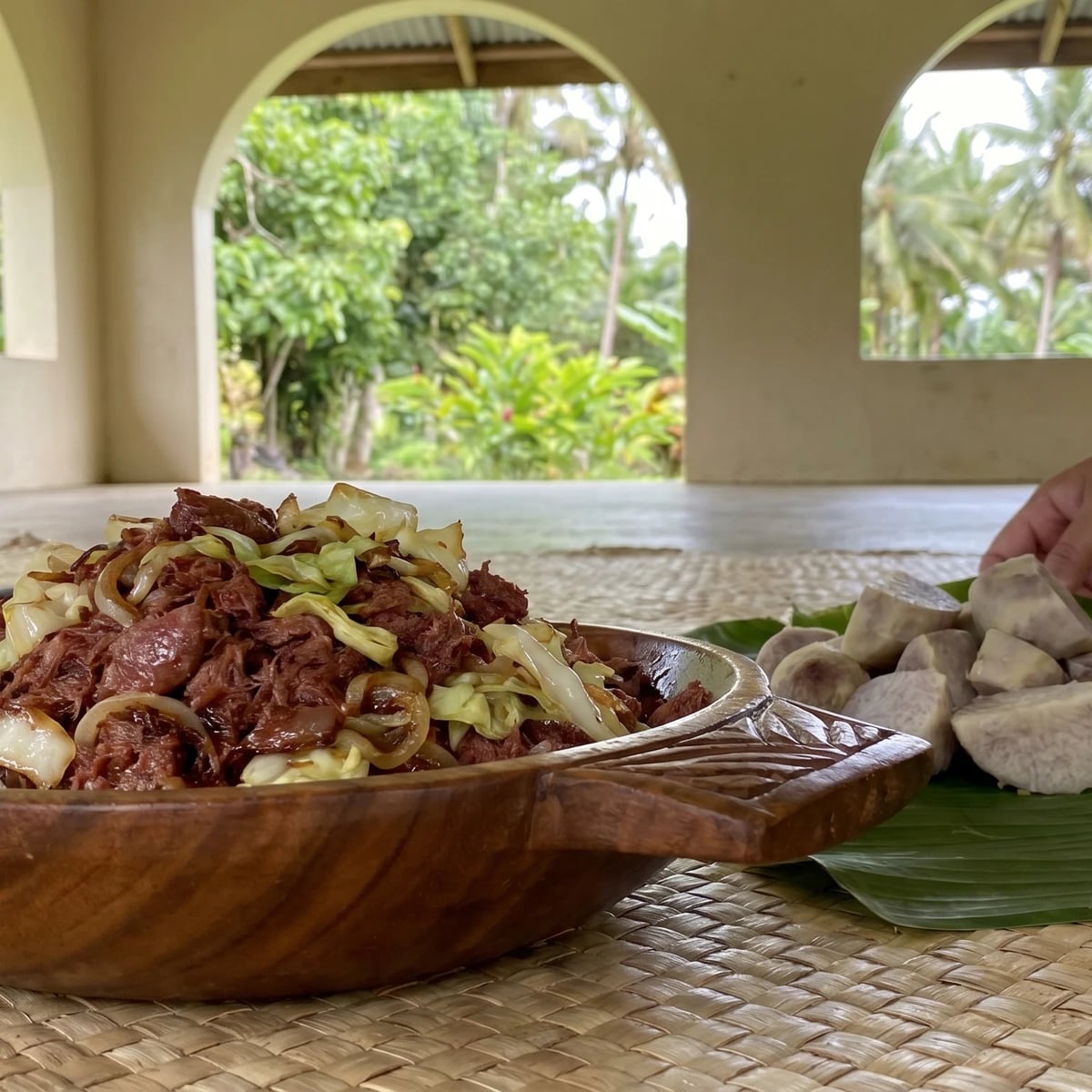
Sāmoa's pisupo is food off the barge made family food: tinned corned beef drained, fried down with onion, and served with taro, rice, or breadfruit.
The old foods came by canoe, and some everyday foods came later by ship. Sāmoa knows both truths at the same table. Talo, the taro, is the elder root on the plate, kin to my Hāloa back home in Hawaiʻi, and pisupo is the tin that arrived from the outside and still got taken into the aiga, the family, because people had to eat and aunties know how to make plenty out of little.
This is Sāmoan food, plain and direct: tinned corned beef, drained so it doesn't swim, fried with onion until the edges darken and the fat turns glossy. No need make it precious. You eat it with boiled talo, green banana, ʻulu when you have it, or rice when that's what the pantry gives. Eat what you have. That's not surrender, that's island sense.
The cousins across the Triangle understand this kind of food. Tonga folds corned beef into lū pulu, taro leaves with coconut cream and beef. The Cook Islands set tinned meat beside rukau, taro leaves cooked rich. Hawaiʻi has its own plate-lunch corned beef and cabbage, and Sāmoa has sapasui and pisupo sitting right beside palusami and the umu. Deep food and everyday food, both feeding people.
So cook it hot and honest. Let the onion soften first, let the beef fry long enough to lose that tinny edge, and don't drown it. The talo beside it is doing the old work, grounding the salt and richness. One ocean, one canoe, one root, and a can from the barge made welcome because the table had room.
Pisupo in gagana Sāmoa comes from the English words "pea soup," first tied to imported canned food and later used widely for tinned corned beef. In the late nineteenth and twentieth centuries, mission, colonial, military, and shipping routes brought canned meats into Sāmoan pantries, where families made them part of everyday meals rather than ceremonial deep food. The contrast matters: palusami, talo, breadfruit, and the umu carry the older canoe-crop grammar, while pisupo tells the later story of trade, scarcity, convenience, and Sāmoan cooks making the outside pantry feed the aiga.
Quantity
1 can (12 ounces)
Quantity
1 tablespoon
if needed
Quantity
1 large
thinly sliced
Quantity
2 cloves
minced
Quantity
1 small
diced
Quantity
2 cups
shredded
Quantity
1/4 cup
only if the pan gets dry
Quantity
to taste
Quantity
for serving
| Ingredient | Quantity |
|---|---|
| tinned corned beef (pisupo) | 1 can (12 ounces) |
| neutral oil (optional)if needed | 1 tablespoon |
| onionthinly sliced | 1 large |
| garlic (optional)minced | 2 cloves |
| tomato (optional)diced | 1 small |
| green cabbage (optional)shredded | 2 cups |
| water (optional)only if the pan gets dry | 1/4 cup |
| black pepper | to taste |
| cooked talo (Sāmoan taro), rice, green banana, or breadfruit | for serving |
Open the pisupo and drain off the loose liquid and extra fat from the can. Leave enough richness to fry, but not so much the beef boils in itself. This is salty food already, so don't add salt now.
Set a heavy skillet over medium heat. Add the oil only if your corned beef is lean, then cook the onion until it softens, sweetens, and starts to go golden at the edges, about 5 minutes. If you're using garlic, stir it in for the last 30 seconds so it smells warm but doesn't burn.
Add the drained corned beef and break it up with a wooden spoon. Let it sit against the pan between stirs so the edges darken and crisp a little, then fold it back through the onion. You want glossy, rich pieces with browned bits, not a wet paste.
If you're using tomato, stir it in and cook until it collapses into the beef. If you're using cabbage, fold it through and cook just until tender but still alive under your teeth, 3 to 4 minutes. The cabbage stretches the tin and cuts the salt, old pantry wisdom right there.
Taste, then season with black pepper. Serve the pisupo hot or warm with boiled talo, rice, green banana, or breadfruit. The starch is not a side thought here. It catches the salt, carries the fat, and makes the meal steady enough for the whole table.
1 serving (about 275g)
Culinary guides, cultural storytelling, and the editorial depth that makes cooking meaningful.
Discover Culinary Explorer
Chef Makoa
Sāmoa's faiʻai eleni turns tinned mackerel, onion, and coconut cream into a quick, generous supper, the pantry fish that feeds the whole ʻaiga beside talo, ʻulu, green banana, or rice.

Chef Makoa
Sāmoa's faiʻai feʻe is reef octopus simmered patient in fresh coconut cream, rich and glossy enough to eat beside talo at toʻonaʻi, with the ocean feeding the whole aiga.

Chef Makoa
Sāmoa's taro-leaf parcel made generous with pisupo, coconut cream, and time: a toʻonaʻi kind of comfort, with Tonga's lū pulu and Hawaiʻi's laulau sitting close as cousins.

Chef Makoa
Sāmoa’s oka iʻa bathes fresh fish in citrus and peʻepeʻe, fresh coconut cream, then runs tomato, cucumber, and onion through it cold. Same fish as Tahiti’s ʻia ota, different bowl.