Culinary Explorer
A cooking platform built around craft, culture, and the stories behind what we eat.
Pisto Manchego
Created by Chef Isabel
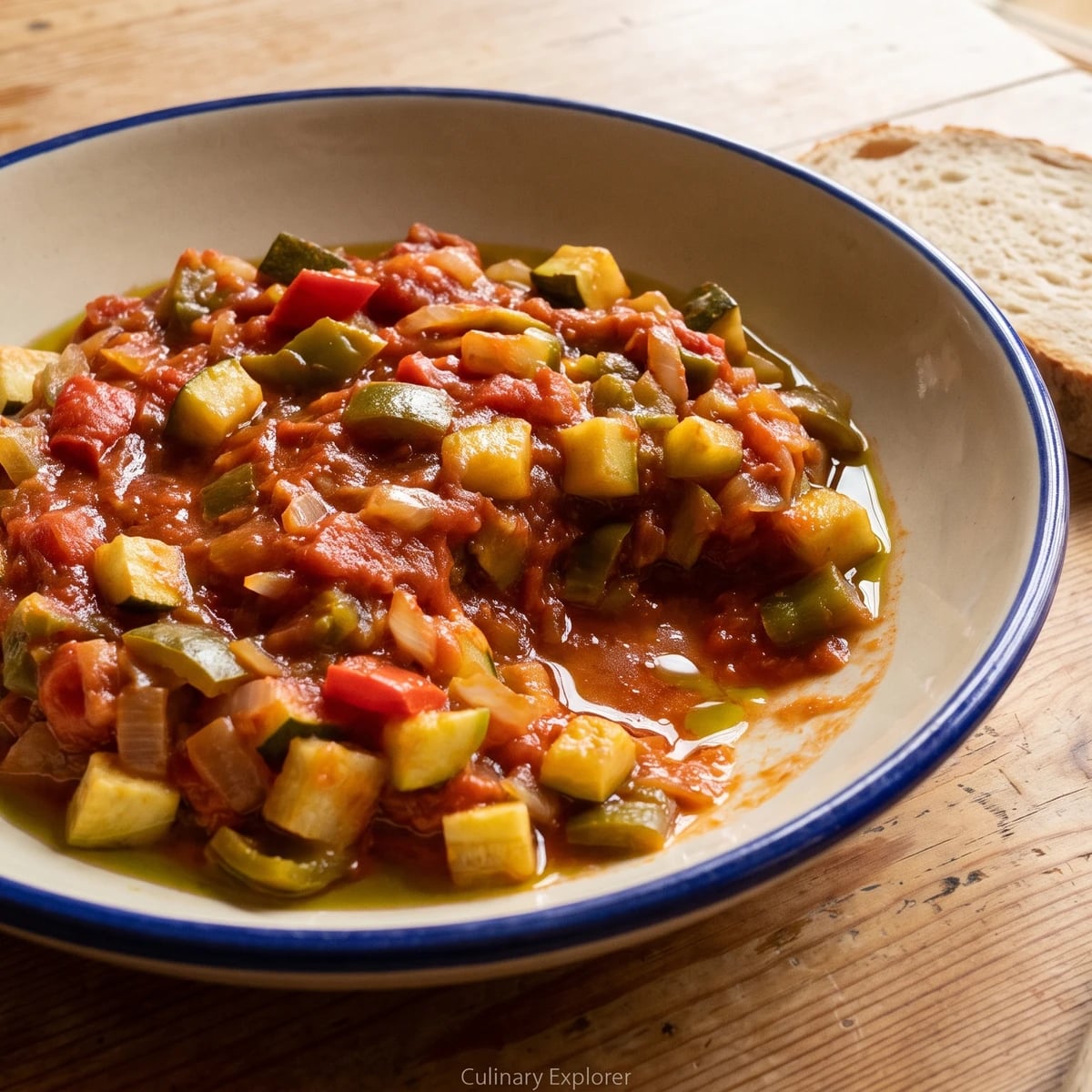
Pisto Manchego is La Mancha in a pan: summer tomato, green pepper, red pepper, onion, and courgette, cooked separately until sweet, then joined so each piece keeps its shape in the thick sauce.
Pisto Manchego is La Mancha's summer vegetable pan: tomato, long green pepper, a little red pepper, onion, and courgette, cooked in olive oil until sweet. What makes it this pisto is the shape of it. The vegetables stay diced and recognizable, held together by tomato reduced until it coats them. It isn't a purée, and it shouldn't sit in a puddle.
The method that decides it is simple: cook each vegetable apart. Onion, pepper, courgette, and tomato surrender their water at different speeds. Tip them in together and the courgette gives up before the pepper is tender; give each its turn, then fold everything together for the last ten minutes. I use one wide pan and one bowl, so this asks for time, not a sink full of washing.
Far from La Mancha, use a green bell pepper if pimiento verde italiano, the long green frying pepper, is missing. Its skin is thicker and its flavour less grassy, so dice it slightly smaller and cook it three to five minutes longer. When tomatoes are pale and hard, good canned whole peeled tomatoes are the honest choice. Drain them lightly, crush them, and reduce them ten minutes longer. The result is deeper and less fresh, but it is still pisto worth eating.
The Margin beside my recipe says only, "No water under the spoon." Reduce the tomato properly, keep the courgette intact, and let the finished pan rest before serving. Siempre sale, si lo sigues. It turns out if you follow it.
Ingredients
extra virgin olive oil
Quantity
90ml
divided
onion
Quantity
300g
cut into 1.5cm dice
pimiento verde italiano or long green frying pepper
Quantity
300g
seeded and cut into 1.5cm dice
| Ingredient | Quantity |
|---|---|
| extra virgin olive oildivided | 90ml |
| onioncut into 1.5cm dice | 300g |
| pimiento verde italiano or long green frying pepperseeded and cut into 1.5cm dice | 300g |
Where cooking meets culture.
Culinary guides, cultural storytelling, and the editorial depth that makes cooking meaningful.
Discover Culinary Explorer