Chef Lupita
Aceite de Chiltepin Bajacaliforniano
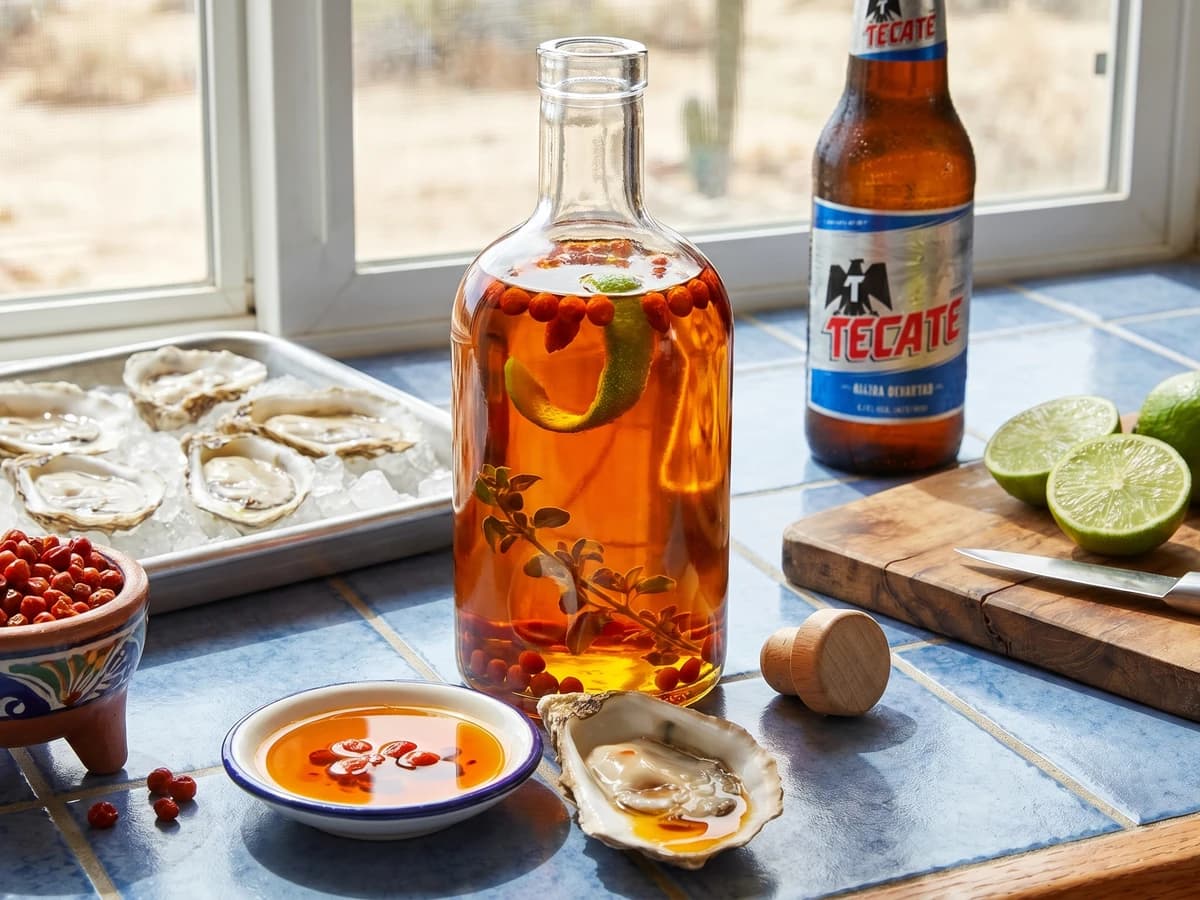
Baja California's wild chiltepin steeped in olive oil with garlic, orejon, and lime peel, until the oil turns ruby-amber and carries the slow, sneaky burn of the desert coast.
A cooking platform built around craft, culture, and the stories behind what we eat.
Created by
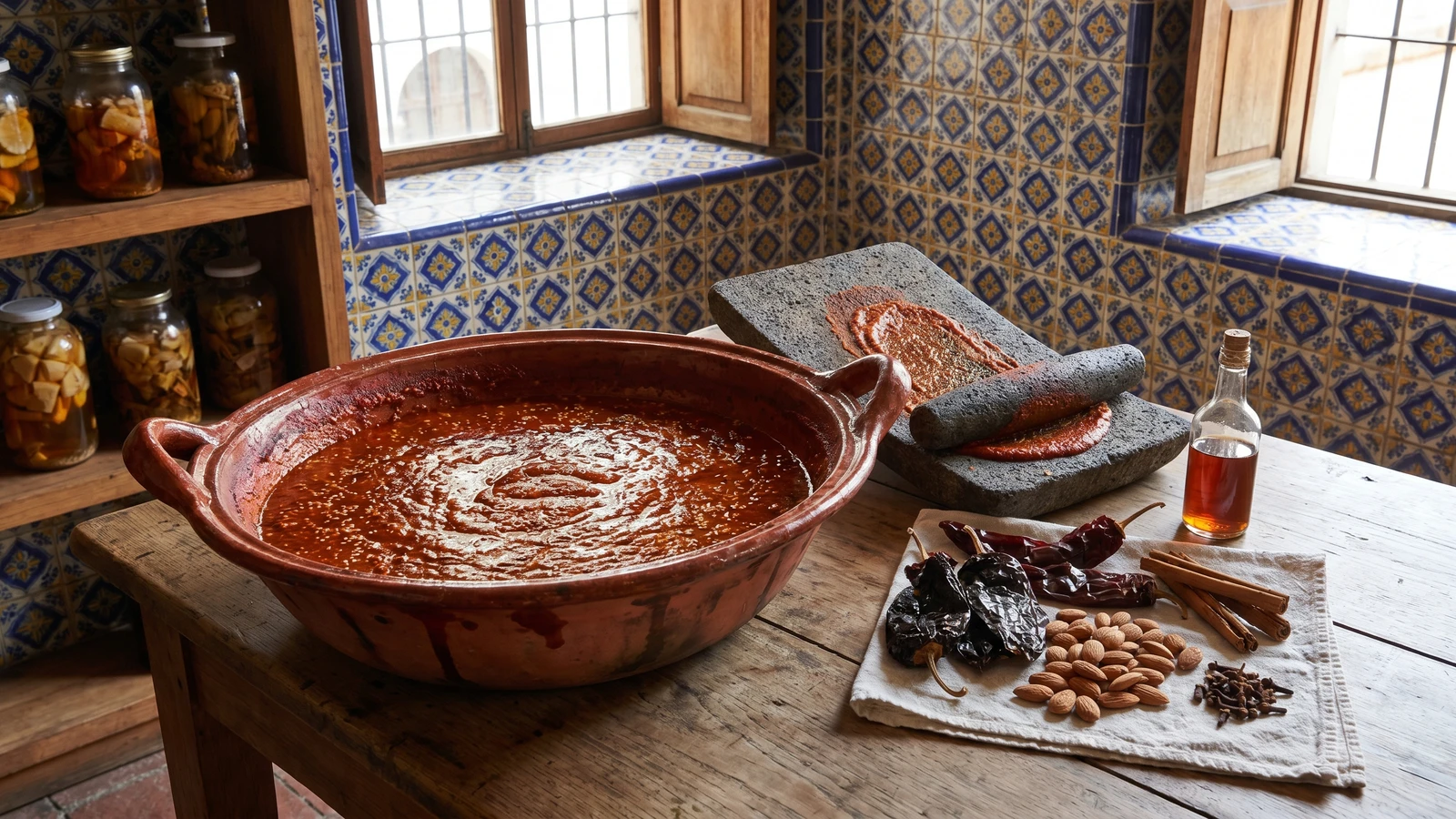
Puebla's convent pipián rojo, built from ancho, guajillo, pepita roja, almond, sesame, canela, and jerez, a mother sauce from the tiled kitchens where nuns made architecture in clay cazuelas.
Puebla, the Angelópolis, is where this pipián rojo conventual belongs: the city of Talavera tiles, enclosed convent kitchens, and cooks who learned to make seed sauces behave like architecture. In the old center, the kitchen of Santa Rosa is the image everyone remembers, blue and yellow tile around a hearth, but Santa Clara and Santa Mónica also belong to this convent world. Do not flatten that into Mexican sauce. Cada estado, su propia cocina.
The chile here is ancho, with a little guajillo for brightness and mulato for the dark fruit at the back. The body comes from pepita roja and almond ground together, not from chocolate. Sesame, canela, clavo, raisins, fried bread, tomato, and a sober splash of jerez make the register unmistakably conventual. New World seed, Old World pantry. That is Puebla after the conquest, practical and baroque at the same time.
I've stood in the Santa Rosa kitchen museum and watched students stare at the tiles as if the walls made the sauce. No. The hands did. Dominican, Clarissan, and Augustinian women toasted, ground, fried, and simmered until the paste stopped tasting raw and began tasting finished. El metate es la regla. A blender can help a modern cook survive the day, but the rule is still the stone, pressure, patience.
This is a sauce, not the plate. It dresses turkey, chicken, pork, chayotes, or cauliflower somewhere else. Here you learn the mother sauce. You give it hours. You fry it in lard until the fat separates and the brick-red paste shines. No me vengas con atajos. A baroque sauce owes you nothing until you work for it.
Pipián comes from pre-Columbian seed sauces thickened with ground pumpkin seed, while the Puebla conventual version belongs to the 17th and 18th century kitchens of Santa Rosa (Dominican), Santa Clara (Clarissan), and Santa Mónica (Augustinian Recollect), where European almonds, cinnamon, cloves, bread, raisins, and fortified wine entered indigenous grinding logic. The famous mole poblano legend is attached to Santa Rosa, but Puebla's convent recipe registers preserve pipianes and almendrados as parallel feast sauces, often served when a cook wanted ceremony without the full dark weight of mole. The Talavera-lined kitchen of Santa Rosa, built in the 18th century and preserved as a museum, remains the visual record of that culinary architecture.
Quantity
8
wiped clean, stemmed and seeded
Quantity
3
wiped clean, stemmed and seeded
Quantity
2
wiped clean, stemmed and seeded
Quantity
4 cups
for soaking the toasted chiles
Quantity
1 1/2 pounds
Quantity
1 medium
quartered
Quantity
6
unpeeled
Quantity
1 1/2 cups
Quantity
1 cup
Quantity
1/2 cup, plus 2 tablespoons for finishing
Quantity
1
sliced
Quantity
1
torn into pieces
Quantity
1/4 cup
Quantity
1 three-inch stick
Quantity
4
Quantity
8
Quantity
1 teaspoon
Quantity
1/2 teaspoon
Quantity
2
Quantity
1/2 cup
divided
Quantity
6 cups
preferably homemade
Quantity
1/4 cup
Quantity
1 tablespoon, plus more to taste
Quantity
1 teaspoon
only if the tomatoes are sharp
| Ingredient | Quantity |
|---|---|
| dried chile anchowiped clean, stemmed and seeded | 8 |
| dried chile guajillowiped clean, stemmed and seeded | 3 |
| dried chile mulatowiped clean, stemmed and seeded | 2 |
| hot waterfor soaking the toasted chiles | 4 cups |
| ripe Roma tomatoes or jitomate guaje | 1 1/2 pounds |
| white onionquartered | 1 medium |
| garlic clovesunpeeled | 6 |
| pepita roja para pipián or unsalted hulled pumpkin seeds | 1 1/2 cups |
| blanched whole almonds | 1 cup |
| white sesame seeds | 1/2 cup, plus 2 tablespoons for finishing |
| day-old bolillosliced | 1 |
| day-old corn tortillatorn into pieces | 1 |
| raisins | 1/4 cup |
| Mexican canela stick | 1 three-inch stick |
| whole cloves | 4 |
| black peppercorns | 8 |
| dried Mexican thyme | 1 teaspoon |
| dried marjoram | 1/2 teaspoon |
| bay leaves | 2 |
| pork larddivided | 1/2 cup |
| unsalted turkey or chicken stockpreferably homemade | 6 cups |
| dry jerez | 1/4 cup |
| kosher salt | 1 tablespoon, plus more to taste |
| grated piloncillo (optional)only if the tomatoes are sharp | 1 teaspoon |
Wipe the ancho, guajillo, and mulato chiles with a dry cloth. Do not rinse them. Remove the stems, open them flat, and shake out the seeds. The ancho is the base, the guajillo gives red brightness, and the mulato gives dark fruit underneath. This is Puebla's register for this sauce. Chilhuacle belongs to Oaxaca. Cada estado, su propia cocina.
Heat a dry comal over medium. Toast the chiles one type at a time, pressing them flat with tongs for 15 to 25 seconds per side. They should soften, puff in spots, and smell deep, never burned. Put them in a bowl and cover with hot water for 20 minutes. Hot water, not boiling. Boiling roughens the skins and can make the sauce bitter.
On the same comal, roast the tomatoes, onion, and unpeeled garlic. Turn them until the tomatoes collapse in places, the onion has dark patches, and the garlic is soft inside its skin. Peel the garlic. The tomato gives acidity and body, but it is not the soul of the sauce. The seed and almond paste is.
Toast the pepita roja in a dry skillet until it smells nutty and some seeds begin to jump. Move it to a tray. Toast the almonds until pale gold, then the sesame until golden. Reserve 2 tablespoons of sesame for finishing. Toast the canela, cloves, and peppercorns for 30 seconds, just until fragrant. Watch everything. Nuts forgive laziness less than chiles do.
Melt 2 tablespoons of the lard in a small skillet. Fry the bolillo slices and torn tortilla until golden and crisp at the edges. Add the raisins for the last minute, just until they swell. This is convent cooking: bread for body, raisins for quiet sweetness, lard for depth. La manteca es el sabor.
Drain the soaked chiles. On a metate, grind the toasted spices first, then the sesame, pepita, and almonds until they become a thick paste. Work in the chiles, roasted tomatoes, onion, garlic, fried bread, tortilla, and raisins. El metate es la regla. If you are using a blender, work in small batches with just enough stock to move the blades. You want paste, not soup.
Melt the remaining lard in a wide barro rojo cazuela or heavy Dutch oven over medium heat. Add the ground paste carefully. It will sputter. Stir with a wooden spoon for 25 to 35 minutes, scraping the bottom and sides, until the paste darkens to brick red and the fat begins to separate at the edges. This is where the raw seed taste leaves. No me vengas con atajos.
Add the stock one cup at a time, stirring each addition fully into the paste before adding the next. Add the thyme, marjoram, bay leaves, and salt. Reduce the heat to low and simmer for about 2 hours, stirring every 10 minutes. A seed sauce sticks when you stop paying attention. The finished texture should coat a spoon heavily and fall back into the pot in slow ribbons.
Stir in the dry jerez during the last 15 minutes. Taste for salt. If the tomatoes are harsh, add the grated piloncillo, but only enough to round the edge. Do not make it sweet. Remove the bay leaves. The sauce should be glossy, red-brown, and deep with almond, chile, sesame, and canela.
Turn off the heat and let the pipián rest for 30 minutes before using. Finish with the reserved toasted sesame. This is a mother sauce, not a plate. It dresses turkey, chicken, pork, chayotes, cauliflower, or whatever main dish you are making elsewhere. Here you learned the sauce. Así se hace y punto.
1 serving (about 125g)
Culinary guides, cultural storytelling, and the editorial depth that makes cooking meaningful.
Discover Culinary ExplorerChef Lupita
Baja California's wild chiltepin steeped in olive oil with garlic, orejon, and lime peel, until the oil turns ruby-amber and carries the slow, sneaky burn of the desert coast.

Chef Lupita
Puebla's Lenten convent adobo, a brick-red vinegar chile paste of ancho, guajillo, garlic, oregano, and comino made to dress fish for the meatless calendar.
Chef Lupita
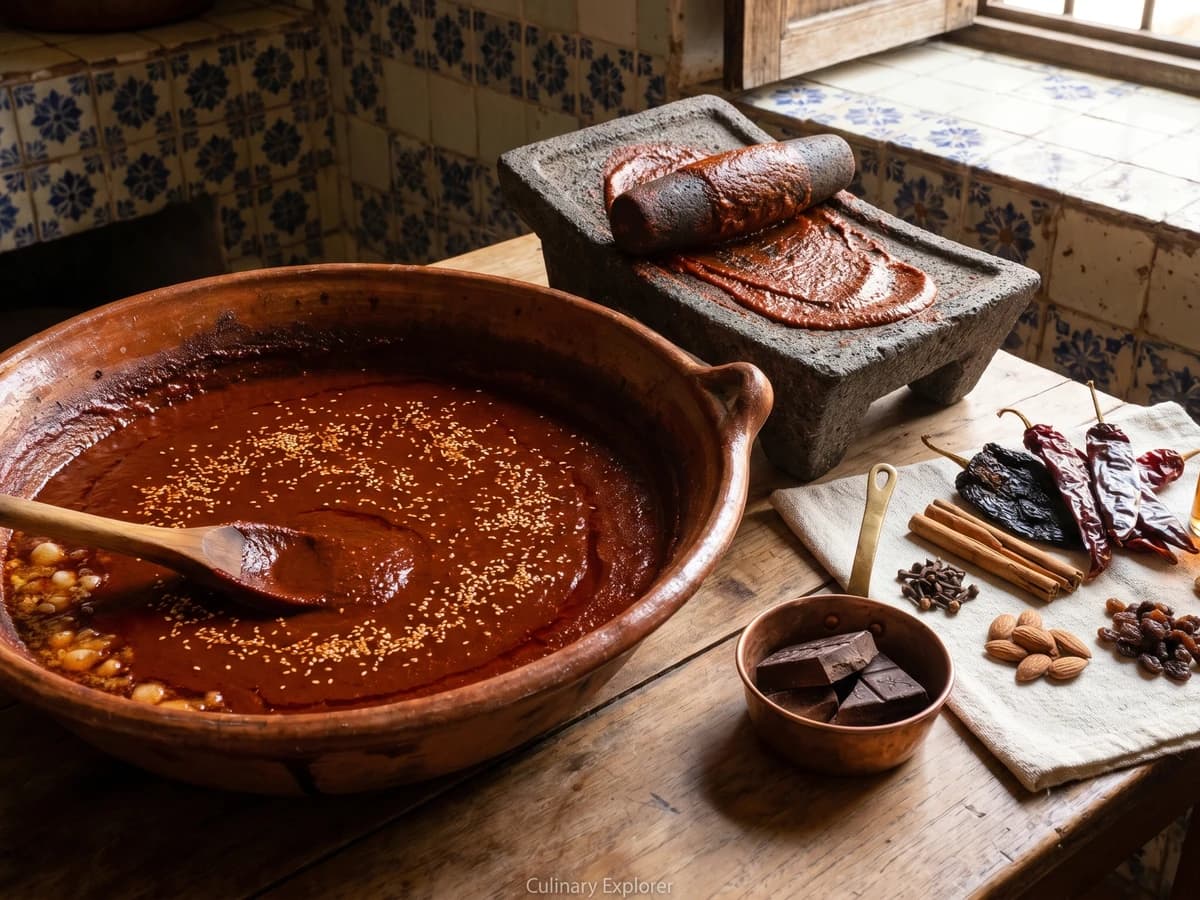
Zacatecas' wedding-table adobo, built from toasted guajillo and ancho, piloncillo, sour orange, chocolate, canela, clavo, almonds, sesame, and lard.

Chef Lupita
Puebla's convent kitchens built this adobo with ancho, guajillo, jerez, almonds, raisins, clove, and lard, a baroque marinade that stains pork loin and finishes as the sauce.