Chef Lupita
Aceite de Chiltepin Bajacaliforniano
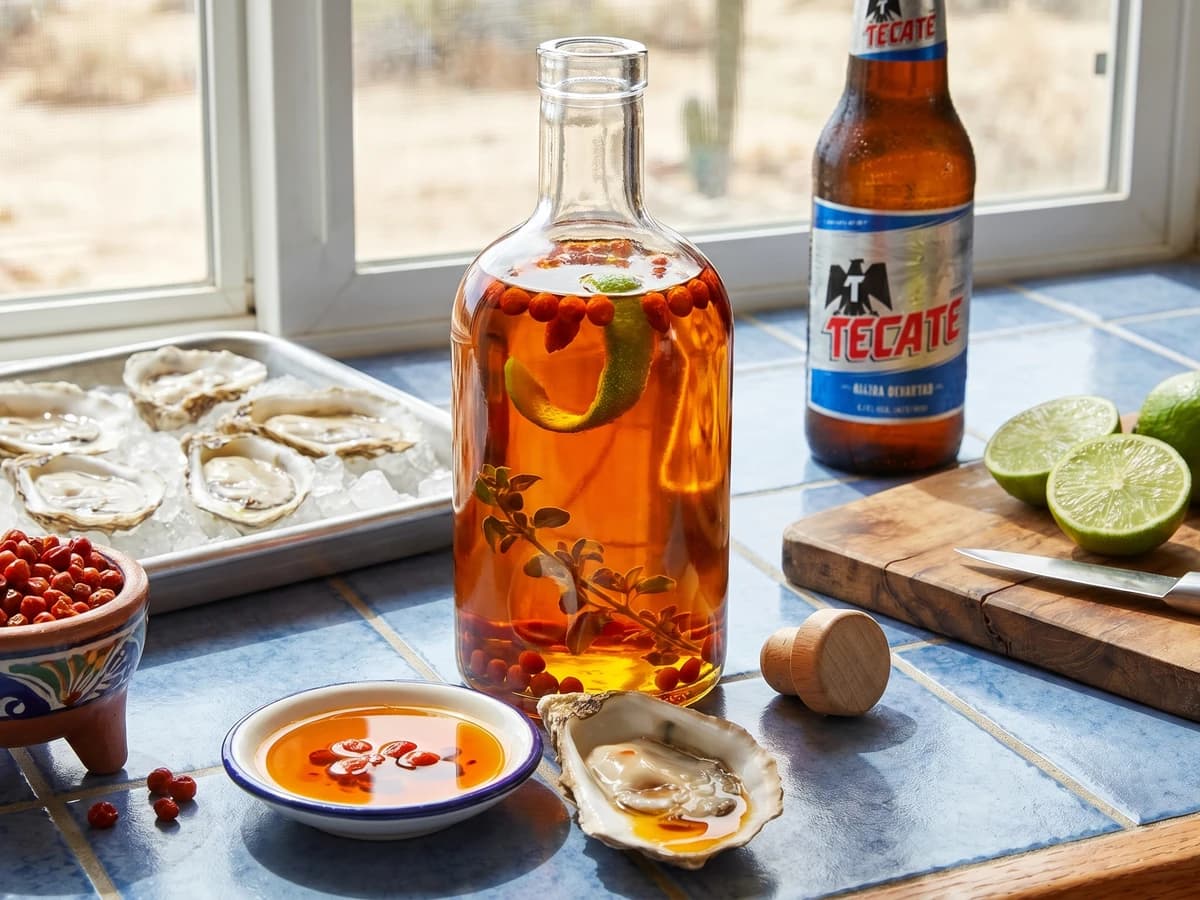
Baja California's wild chiltepin steeped in olive oil with garlic, orejon, and lime peel, until the oil turns ruby-amber and carries the slow, sneaky burn of the desert coast.
A cooking platform built around craft, culture, and the stories behind what we eat.

Created by
Michoacán's Meseta pipián, toasted pepitas and guajillo ground smooth, fried in manteca, and loosened with broth until it coats kurucha or chicken like a serious P'urhépecha sauce.
Michoacán, in the Meseta P'urhépecha between Pátzcuaro, Uruapan, and the high pine country, is where this pipián belongs. Not the beach, not the border, not some restaurant version with cream poured into it. This is a toasted pepita sauce from a region that still understands the comal, the molcajete, the clay cazuela, and the discipline of cooking over leña.
The chile that marks this sauce is guajillo, clean and red, with enough fruit to carry the toasted seed. The chile that tells you where you are is chile perón, yellow-orange, floral, citrusy, grown around the cool orchards of Uruapan and Pátzcuaro. If you cannot find it, use yellow chile manzano, the same Capsicum pubescens family. Do not throw in jalapeño and act innocent. You will lose the perfume of the Meseta.
Pipián is not atápakua, and atápakua is not mole. I am saying it twice because people flatten Mexican food whenever they get lazy. The pepita gives flavor and some body, yes, but this version is controlled with masa de maíz so the sauce coats kurucha or pollo without turning greasy and heavy. The women who taught me in the Pátzcuaro market corrected the texture with broth by the spoonful, never by panic. Watch the sauce. It tells you what it needs.
Serve it in barro, preferably green-glazed Patamban or a dark Capula vessel, with tortillas close by and no fuss on the table. This is a 32-state cuisine. Michoacán has its own hand, its own clay, its own chiles, and its own way of making a sauce sit properly on food. Saber cocinar es saber vivir.
The P'urhépecha communities of Michoacán's Meseta and Lake Pátzcuaro region preserved maize-thickened chile sauces long before the 16th-century arrival of Spanish livestock; after pigs and chickens entered the kitchen, manteca and chicken broth became common household tools without replacing the comal and molcajete. Pipián belongs to an older Mesoamerican family of seed-flavored sauces built from squash seeds, chiles, and maize, but the Michoacán distinction matters: atápakua is not mole, and its body comes from masa de maíz, not nuts or seeds. In 2010 UNESCO recognized Traditional Mexican Cuisine using the Michoacán paradigm, specifically the milpa, nixtamalization, comal cooking, and communal women-led transmission still visible in P'urhépecha kitchens.
Quantity
1 1/4 cups
unsalted, divided; reserve 1 tablespoon after toasting
Quantity
5
stemmed, seeded, and wiped clean
Quantity
1
roasted, stemmed, and seeded if desired
Quantity
2 large
unpeeled
Quantity
1 thick slice (about 2 ounces)
Quantity
3 cups
divided
Quantity
2 tablespoons
or 1 1/2 tablespoons masa harina
Quantity
2 tablespoons
Quantity
4 leaves or 1 small sprig
Quantity
1 teaspoon, plus more to taste
Quantity
for serving
Quantity
for serving
warmed
| Ingredient | Quantity |
|---|---|
| raw hulled pumpkin seeds (pepitas)unsalted, divided; reserve 1 tablespoon after toasting | 1 1/4 cups |
| dried chile guajillostemmed, seeded, and wiped clean | 5 |
| fresh chile perón or yellow chile manzanoroasted, stemmed, and seeded if desired | 1 |
| garlic clovesunpeeled | 2 large |
| white onion | 1 thick slice (about 2 ounces) |
| warm unsalted chicken broth or light fish brothdivided | 3 cups |
| fresh nixtamal masaor 1 1/2 tablespoons masa harina | 2 tablespoons |
| pork lard (manteca de cerdo) | 2 tablespoons |
| fresh nurite leaves or epazote (optional) | 4 leaves or 1 small sprig |
| kosher salt | 1 teaspoon, plus more to taste |
| cooked kurucha-style lake fish or poached chicken (optional) | for serving |
| hand-pressed corn tortillas (optional)warmed | for serving |
Heat a dry comal over medium. Add the pepitas in a single layer and move them constantly for 4 to 6 minutes, until they puff, pop quietly, and turn golden in spots. They should smell nutty, not scorched. Reserve 1 tablespoon for finishing. If the seeds go dark brown, start again. Burned pepita makes a bitter pipián and no amount of broth will save it.
On the same comal, toast the chile guajillo one at a time, about 15 to 20 seconds per side. Press each chile lightly with tongs until the skin shines and the color deepens to brick red. Do not blacken them. Put the toasted guajillos in a bowl and cover with hot water for 15 minutes. Hot water softens the flesh. Boiling water pulls bitterness from the skin.
Set the unpeeled garlic, onion slice, and chile perón on the comal. Turn them until the garlic softens in its skin, the onion browns at the edges, and the chile perón blisters. Peel the garlic. Rub off only the loose char from the chile perón, then stem it and seed it if you want less heat. The perón gives floral citrus heat from the Meseta. Jalapeño and serrano do not give you that. They are green and sharp. This is not the same thing.
Drain the guajillos and discard the soaking water. In a molcajete, grind the salt, roasted garlic, onion, chile perón, and guajillos into a paste, then work in the toasted pepitas by handfuls, loosening with broth as needed. For a batch sauce, use a blender: combine the guajillos, roasted garlic, onion, chile perón, toasted pepitas, and 2 cups of warm broth. Blend on high until smooth, at least 2 full minutes. A blender works. A molcajete gives a different texture. Don't pretend they are identical.
Melt the manteca de cerdo in a clay cazuela or heavy saucepan over medium heat. Pour in the pepita and chile base. It will sputter. Stir with a wooden spoon for 6 to 8 minutes, until the color deepens from pale orange to toasted ochre and tiny beads of fat show at the edge. La manteca es el sabor. This frying step cooks the raw chile taste out and wakes up the toasted seed oil.
Whisk the fresh masa with 1/2 cup of the remaining warm broth until smooth. Add the rest of the broth to the cazuela, then stir in the masa mixture. Add the nurite leaves or epazote if using. Keep the sauce at a quiet simmer for 12 to 15 minutes, stirring often so the bottom does not catch. The pepita is the flavor here, not the binder. The masa sets the body. That distinction matters.
Remove the nurite or epazote. Taste for salt. The sauce should coat the back of a spoon in a soft layer, not sit there like peanut butter. If it is too thick, add warm broth a few tablespoons at a time. If it is thin, simmer a few minutes longer. This is pipián, not atápakua, and atápakua is not mole. Names protect technique. Cada estado, su propia cocina.
Spoon the warm pipián over cooked kurucha-style lake fish or poached chicken. Scatter the reserved toasted pepitas over the top. Serve from a Michoacán clay cazuela with hand-pressed corn tortillas wrapped in a servilleta. This is a sauce for the table, not decoration for a white plate. Así se hace y punto.
1 serving (about 350g)
Culinary guides, cultural storytelling, and the editorial depth that makes cooking meaningful.
Discover Culinary ExplorerChef Lupita
Baja California's wild chiltepin steeped in olive oil with garlic, orejon, and lime peel, until the oil turns ruby-amber and carries the slow, sneaky burn of the desert coast.

Chef Lupita
Puebla's Lenten convent adobo, a brick-red vinegar chile paste of ancho, guajillo, garlic, oregano, and comino made to dress fish for the meatless calendar.
Chef Lupita
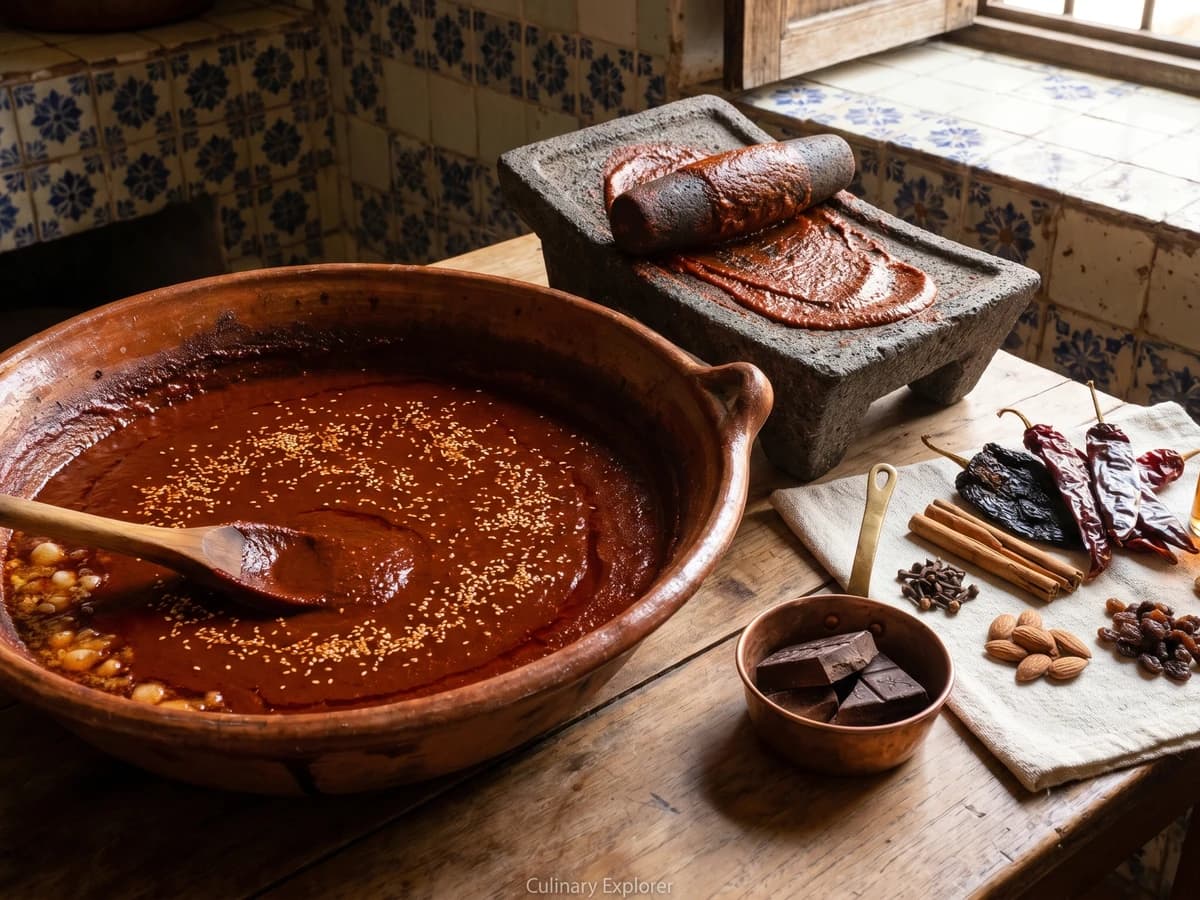
Zacatecas' wedding-table adobo, built from toasted guajillo and ancho, piloncillo, sour orange, chocolate, canela, clavo, almonds, sesame, and lard.

Chef Lupita
Puebla's convent kitchens built this adobo with ancho, guajillo, jerez, almonds, raisins, clove, and lard, a baroque marinade that stains pork loin and finishes as the sauce.