
Chef Joost
Acar Ketimun (Indo-Dutch Cucumber Pickle)
Acar means pickle, ketimun means cucumber, and this little bowl of sweet vinegar, chilli, and crunch is the cool note that lets an Indo-Dutch rijsttafel keep its balance.
A cooking platform built around craft, culture, and the stories behind what we eat.

Created by
The peanut sauce the Dutch learned through Indonesia, where peanuts, ketjap, sambal, and santen became the brown, glossy thread tying saté, rijsttafel, gado-gado, and even fries together.
The first secret of pindasaus is that the name points one way and the sauce's memory points another. In Indonesia, where the Dutch learned to love this family of sauces, you are more likely to meet bumbu kacang or sambal kacang: peanut seasoning, peanut relish. Pindasaus is the Dutch name that came home through colonial households, toko counters, rijsttafel restaurants, and the national talent for putting a good sauce where no purist would dare. For obvious reasons, scholars do not build monuments to patatje oorlog, fries with peanut sauce, mayonnaise, and raw onion. The snackbar built one anyway.
The name already tells you there has been travel. Pinda is Dutch now, but it did not begin in Dutch; most etymologists trace it through Atlantic creole languages such as Papiamentu or Sranan, back toward West African names for the groundnut. The plant itself began in South America, moved through Portuguese and Spanish routes, rooted deeply in Southeast Asian kitchens, and then returned to Dutch tables as something we now treat as ordinary. History and cookery, they cannot be separated, even when the pot is small.
What matters in the pan is balance, not mystery. Peanuts give body, ketjap manis gives dark sweetness and salt, sambal gives the clean bite, and santen, coconut cream, rounds the edges. Add water little by little, because peanut sauce thickens the moment your back is turned; that is not failure, it's the peanuts doing their work. Use whole roasted peanuts if you want the deeper texture. Use unsweetened peanut butter if dinner is already late. Hou het altijd simpel, always keep it simple. What you may not use is sweetened peanut butter and call the result dinner. That is pudding with ambitions.
Peanut sauces in Indonesia are usually named for kacang, the nut, and appear in dishes such as saté, gado-gado, pecel, and ketoprak; the Dutch name pindasaus belongs to the colonial afterlife of the Netherlands East Indies rather than to one single Indonesian original. After Indonesian independence in 1949 and the migration of many Indo-European families to the Netherlands, toko's, rijsttafel restaurants, and later snackbars made satésaus familiar far beyond the Indo-Dutch table. Its use on patatje oorlog, fries with peanut sauce, mayonnaise, and often raw onion, is a Dutch snackbar development of the late twentieth century, not an old Javanese custom.
Quantity
200g
skins removed if using whole peanuts
Quantity
1 tablespoon
Quantity
1 small
finely minced
Quantity
2
minced
Quantity
1 to 2 teaspoons
Quantity
50g santen or 200ml coconut milk
santen chopped
Quantity
250ml, plus more as needed
Quantity
3 tablespoons
Quantity
1 tablespoon tamarind paste or 2 teaspoons lime juice
Quantity
1/2 teaspoon, plus more to taste
Quantity
1 tablespoon
for finishing
| Ingredient | Quantity |
|---|---|
| unsalted roasted peanuts or unsweetened natural peanut butterskins removed if using whole peanuts | 200g |
| neutral oil | 1 tablespoon |
| shallotfinely minced | 1 small |
| garlic clovesminced | 2 |
| sambal oelek | 1 to 2 teaspoons |
| santen (compressed coconut cream) or full-fat coconut milksanten chopped | 50g santen or 200ml coconut milk |
| hot water | 250ml, plus more as needed |
| ketjap manis | 3 tablespoons |
| tamarind paste or lime juice | 1 tablespoon tamarind paste or 2 teaspoons lime juice |
| fine salt | 1/2 teaspoon, plus more to taste |
| chopped roasted peanuts (optional)for finishing | 1 tablespoon |
If using whole roasted peanuts, pulse them in a food processor until they become a coarse paste, sandy at first and then glossy where the oil begins to show. Stop before it turns perfectly smooth; a little texture is welcome here. If using unsweetened natural peanut butter, stir it well so the oil is mixed back in before it goes near the pan.
Warm the oil in a small heavy saucepan over medium-low heat. Add the shallot and cook for three to four minutes until soft and translucent, then add the garlic and sambal and stir for one minute more. Do not brown the garlic; bitterness is a loud guest and this sauce has no room for it.
Add the peanut paste or peanut butter and stir it into the shallot mixture. Add the chopped santen and 200ml of the hot water, whisking until the coconut cream dissolves and the sauce loosens. If using coconut milk instead of santen, add the coconut milk now and begin with only 100ml of hot water. The sauce will look split for a moment, then it will come together into a thick, glossy brown.
Stir in the ketjap manis, tamarind paste or lime juice, and salt. Let the sauce simmer very gently for five to seven minutes, stirring along the bottom so the peanuts do not catch. You are looking for a sauce that coats a spoon but still pours slowly. If it stands in a mound, loosen it with hot water a tablespoon at a time; for saté it may be thicker, for gado-gado it should flow.
Take the pan off the heat and let the sauce stand for ten minutes before serving. This little rest matters: the sambal settles, the coconut rounds out the edges, and the peanuts finish drinking. Spoon it over saté, pass it with gado-gado, set it among rijsttafel dishes, or let the snackbar have its say over fries with mayonnaise and raw onion. Finish with chopped roasted peanuts if you want a little bite.
1 serving (about 90g)
Culinary guides, cultural storytelling, and the editorial depth that makes cooking meaningful.
Discover Culinary ExplorerChef Joost
Acar means pickle, ketimun means cucumber, and this little bowl of sweet vinegar, chilli, and crunch is the cool note that lets an Indo-Dutch rijsttafel keep its balance.

Chef Joost
Appelcompote is the apple left with its dignity: soft enough to spoon beside pork or potatoes, still chunky enough to remind you autumn did the real work.
Chef Joost
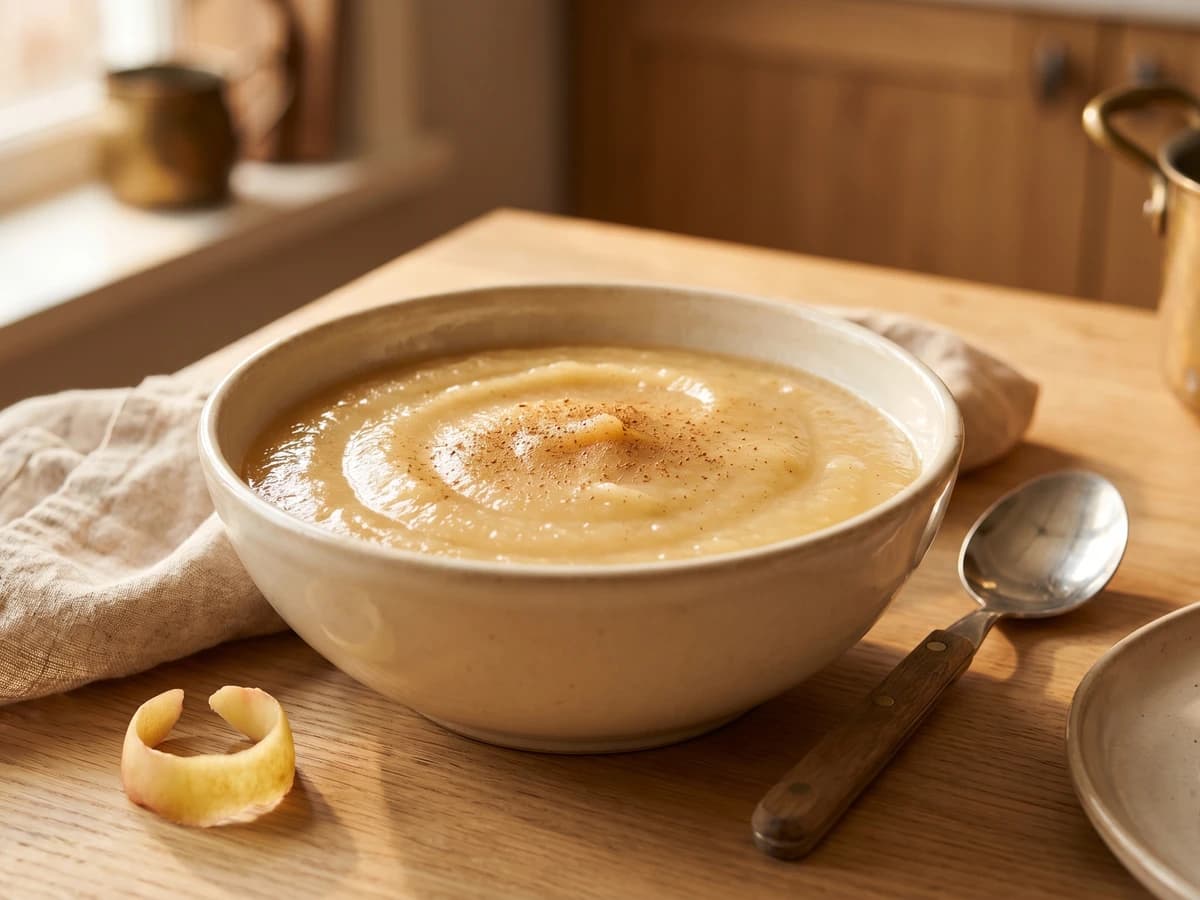
The little bowl beside the plate is never decoration: appelmoes is the Dutch treaty between sweet and savoury, spooned beside sausage, potatoes, pancakes, and childhood itself.

Chef Joost
Appelstroop is the orchard made patient: apples, pears, and beet syrup boiled down until morning bread, farmhouse cheese, and zuurvlees taste of Limburg in autumn.