
Chef Joost
Aardappelschotel met Gehakt
A plain name for a quietly clever dish: fresh mince, sweet fried onion, nutmeg, and mashed potato baked until the top goes golden and the table goes silent.
A cooking platform built around craft, culture, and the stories behind what we eat.
Created by
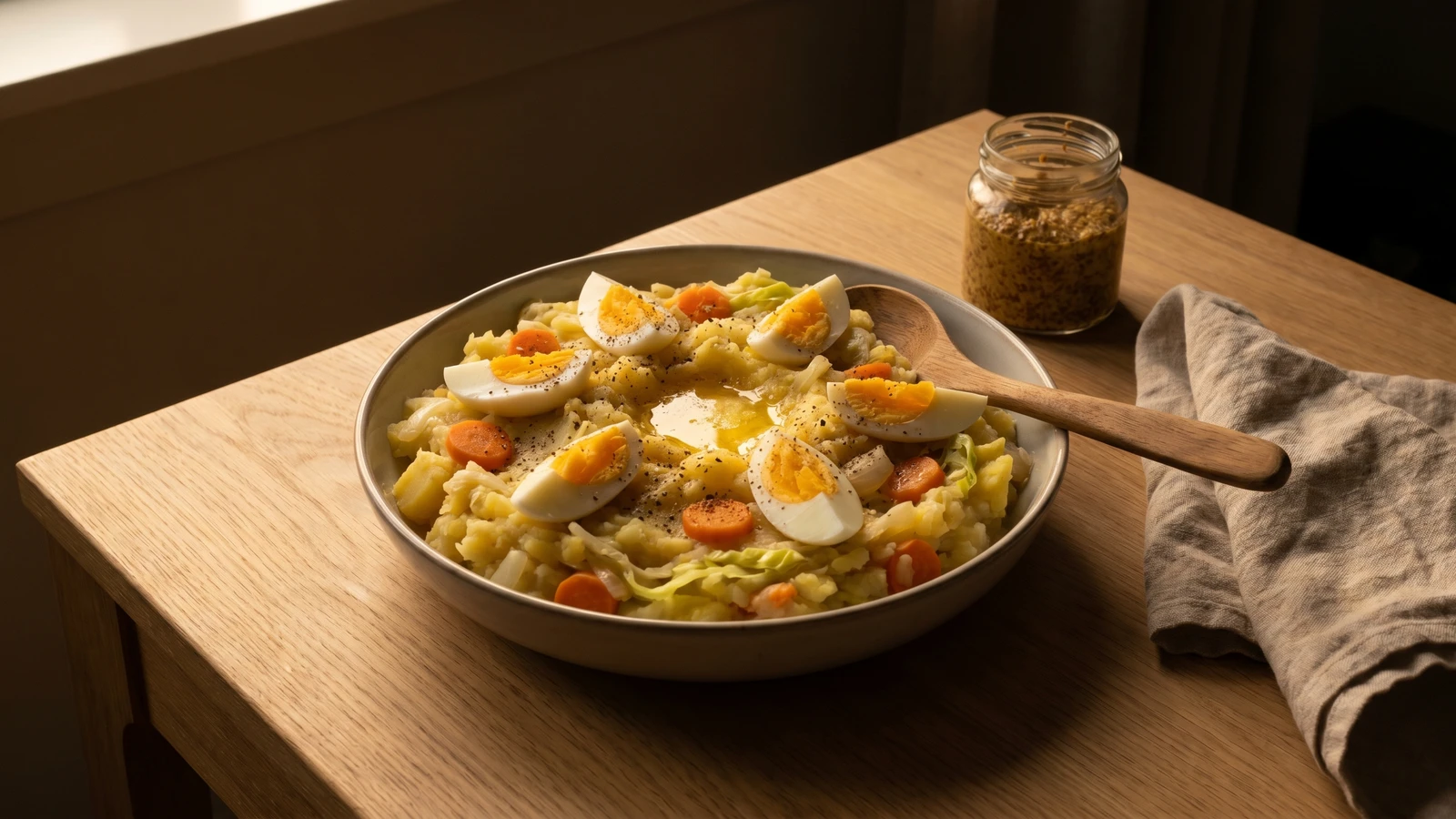
The name means peck in the little pot: a Zeeland winter supper of potatoes, stored vegetables, and one egg per person, proving poverty fare can still set a table.
In my grandmother's second notebook, some recipes arrive dressed for church. Pik-in-het-Potje arrives in working clothes. No flourish, no sugar, no feast day. Just a pot, potatoes, whatever winter vegetable had kept its nerve, and an egg for each person if the hens had been feeling generous.
The name already tells you, and for once it doesn't need a Roman ancestor. Pikken means to peck or pick, and potje is the little pot, so this is food you search for with your fork. A boiled egg hides among the potatoes and vegetables, and when you find yours, the meal changes from plain survival into something with a small prize inside. But let me tell you a secret: this is not a joke dish. It is Zeeland armoede-kost, poverty fare, and it carries the dignity of households that knew how to feed a table without pretending there was meat in the larder.
The method is the history. The roots and potatoes cook first, the eggs go in for the last ten minutes, and then everything is drained and crushed roughly with butter, pepper, and a small scrape of nutmeg if the cupboard allows it. Hou het altijd simpel, always keep it simple. Bring the pot to the table, let every person get one egg, and don't smooth away the lumps. The lumps are how you know supper stayed honest.
Pik-in-het-Potje belongs to Zeeland's armoede-kost, poverty fare preserved more strongly in household memory and provincial cooking than in grand printed cookbooks. Potatoes became everyday Dutch food in the eighteenth century, and by the nineteenth century one-pot combinations of potatoes, stored winter vegetables, and eggs were common cheap suppers in rural and coastal households. The name is practical rather than decorative: pikken, to peck or pick, describes the fork going into the pot to find the egg, a small protein prize when meat was absent.
Quantity
1.2kg
peeled and cut into large chunks
Quantity
400g
peeled and thickly sliced
Quantity
300g
thinly sliced
Quantity
2 medium
sliced
Quantity
1
well rinsed and sliced
Quantity
4
clean and uncracked
Quantity
1 teaspoon, plus more to taste
Quantity
40g, plus extra for serving if wanted
Quantity
75ml
Quantity
1/4 teaspoon
Quantity
to taste
Quantity
for the table
| Ingredient | Quantity |
|---|---|
| floury potatoespeeled and cut into large chunks | 1.2kg |
| winter carrotspeeled and thickly sliced | 400g |
| white cabbage or savoy cabbagethinly sliced | 300g |
| onionssliced | 2 medium |
| leekwell rinsed and sliced | 1 |
| large eggsclean and uncracked | 4 |
| fine sea salt | 1 teaspoon, plus more to taste |
| butter | 40g, plus extra for serving if wanted |
| milk or reserved cooking water | 75ml |
| freshly grated nutmeg | 1/4 teaspoon |
| freshly ground black pepper | to taste |
| sharp mustard (optional) | for the table |
Put the potatoes, carrots, cabbage, onions, leek, and salt into a heavy pot. Add cold water to just cover, set the lid slightly ajar, and bring it to a boil. Lower to a steady simmer and cook for about twelve minutes, until the potatoes are beginning to soften at the edges but are not yet done.
Lower the clean, uncracked eggs gently into the pot among the vegetables. Simmer for ten minutes more, until the potatoes are tender and the eggs are hard-cooked. The eggs go in late because poverty cooking still has standards; a grey-ringed egg is not thrift, it's impatience.
Lift the eggs out with a fork or slotted spoon and cool them briefly in cold water so you can handle them. Drain the vegetables, keeping a small cup of the cooking water. Return the vegetables to the pot for one minute over low heat, shaking gently, so the excess water leaves and the potatoes taste like potatoes rather than a wet apology.
Add the butter, milk or a splash of the reserved cooking water, nutmeg, and black pepper. Crush everything roughly with a masher or sturdy fork. Do not make it smooth; this is a pot supper, not wallpaper paste. Taste for salt, then make a small kuiltje, a little hollow, on top and let a bit of extra butter sit there if the day asks for it.
Peel the eggs and halve them, or tuck them back into the pot whole and let each person find one. Serve from the pot at the table with sharp mustard alongside. The mustard is not decoration; it cuts the sweetness of carrot and onion and wakes up the egg.
1 serving (about 560g)
Culinary guides, cultural storytelling, and the editorial depth that makes cooking meaningful.
Discover Culinary ExplorerChef Joost
A plain name for a quietly clever dish: fresh mince, sweet fried onion, nutmeg, and mashed potato baked until the top goes golden and the table goes silent.

Chef Joost
Ajam Besengek is the golden chicken stew of the Indo-Dutch table: coconut milk, turmeric, and candlenut cooked down until the sauce clings to the meat like memory.

Chef Joost
The old Dutch spelling says ajam, the city says Batavia, and the pot says exactly what the rijsttafel always was: memory, trade, and dinner in one dish.

Chef Joost
The name means simply fried chicken, but the Dutch spelling carries a whole Indies kitchen: turmeric, coriander, garlic, and a golden crust that remembers the boemboe.