Culinary Explorer
A cooking platform built around craft, culture, and the stories behind what we eat.
Picón Poblano-Tlaxcalteca
Created by Chef Lupita
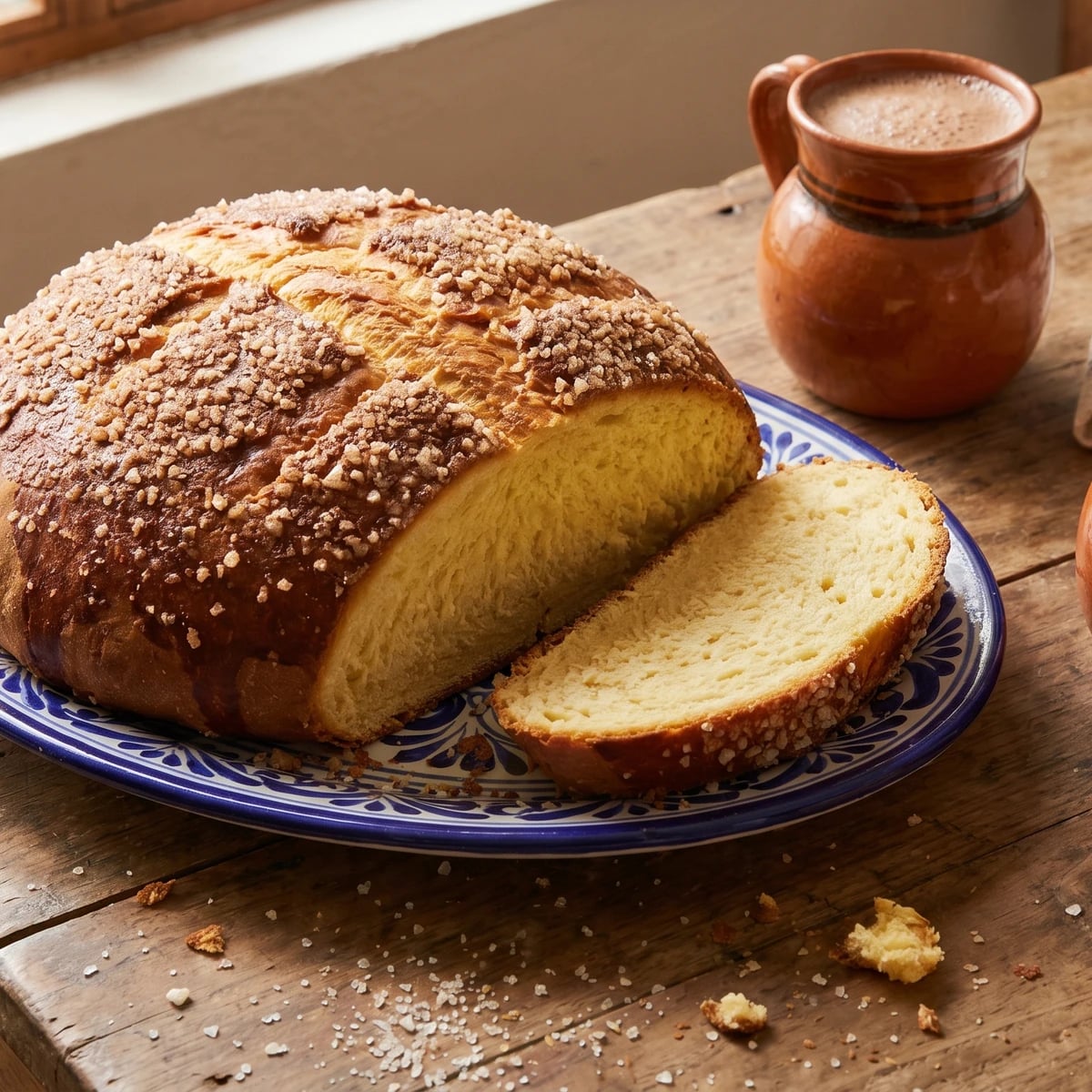
Puebla and Tlaxcala's highland feast loaf, enriched with butter, egg, anise, and orange blossom water, baked under a crisp sugar cap for patronal celebrations and thick slices of afternoon chocolate.
Puebla and Tlaxcala, the highland corridor between Puebla de los Angeles, Cholula, San Martin Texmelucan, Tlaxcala, and Huamantla, is where this picón belongs. Not the northern flour tortilla world. Not a bakery copy of brioche. This is central plateau pan de fiesta, a round enriched loaf set on the table after the patron saint's procession and sliced thick for chocolate at merienda.
The defining thing here is the crust: egg-washed dough under a heavy layer of sugar, baked until the top turns crisp and the inside stays yellow from egg and butter. No chile. No salsa. Mexico also has wheat, convent ovens, dairy, sugar, and women who could knead enough dough for a whole mayordomía before most people finished breakfast.
I learned to watch this dough in Tlaxcala kitchens, not the clock. It should be sticky from eggs and butter, then smooth after patience. Add flour every time it touches your fingers and you'll get a dry loaf. The butter is not decoration. The eggs are not optional. Así se hace y punto.
Put the loaf on Puebla talavera or a plain barro platter, with jarros of chocolate and a woven servilleta on the table. It is generous bread, made for cutting and sharing. Saber cocinar es saber vivir.
Ingredients
whole milk
Quantity
1 cup
warmed to 100F
active dry yeast
Quantity
2 1/4 teaspoons
granulated sugar
Quantity
1 tablespoon
for the yeast
| Ingredient | Quantity |
|---|---|
| whole milkwarmed to 100F | 1 cup |
| active dry yeast | 2 1/4 teaspoons |
| granulated sugarfor the yeast | 1 tablespoon |
Where cooking meets culture.
Culinary guides, cultural storytelling, and the editorial depth that makes cooking meaningful.
Discover Culinary Explorer