
Chef Juliana
Açaí com Camarão do Pará
You think açaí belongs with banana and granola because that's the version that traveled. In Pará, thick unsweetened açaí sits beside shrimp, rice, and farinha. Anota aí: same fruit, different meal.
A cooking platform built around craft, culture, and the stories behind what we eat.
Created by
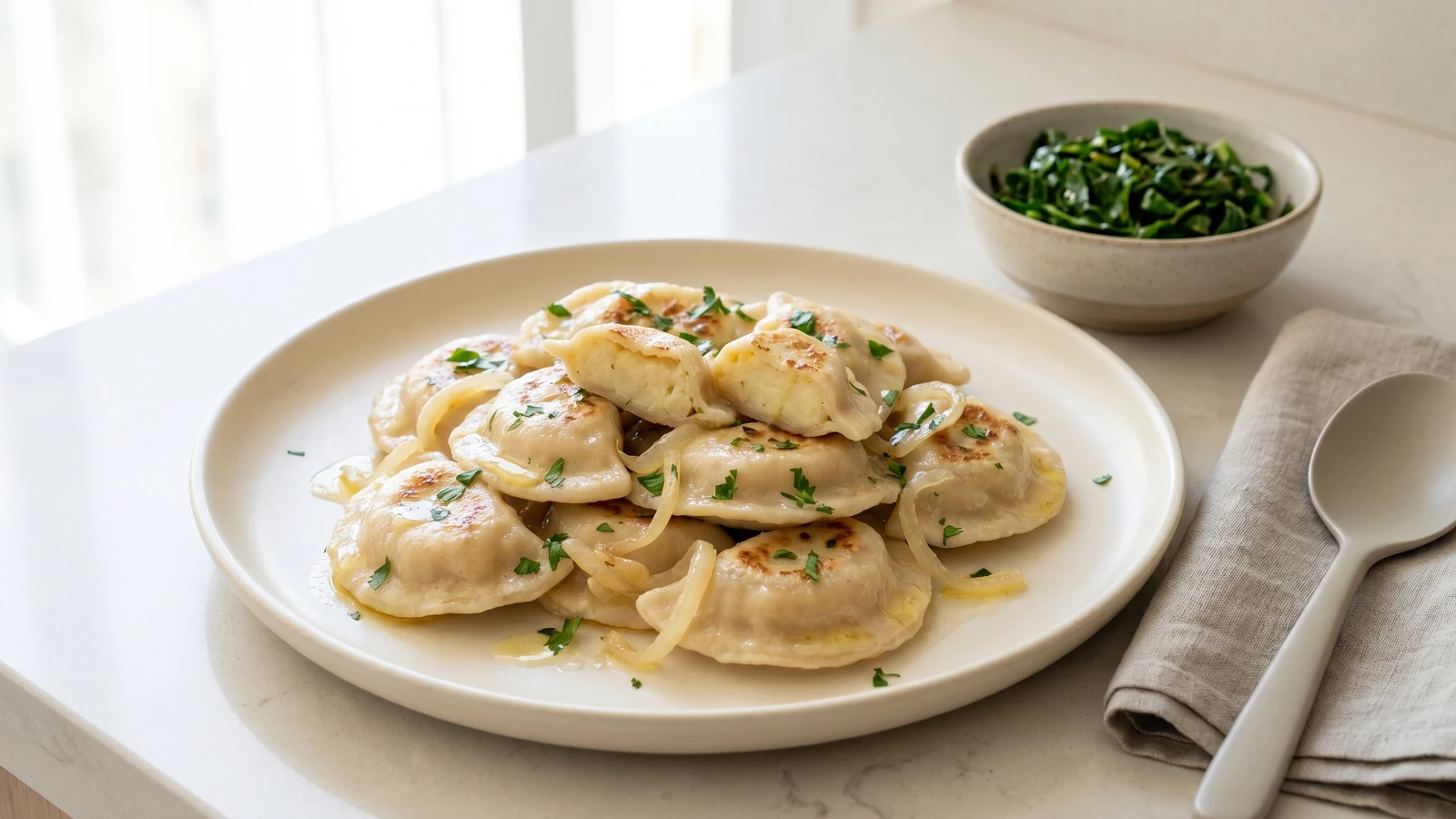
You can make dumplings. Flour, water, potato, cheese, and the patience to seal one pocket at a time. Boil until they float, finish in butter and onion, and dinner is solved.
You look at a tray of little sealed dumplings and hear that old voice: isso não é pra mim. Too delicate. Too many steps. Something somebody's grandmother knows by blood and you don't. Good. Let's bother that voice a little.
Cozinhar não é dom, é um aprendizado. I learned late, with a cheap caderno and several doughs that behaved like wet laundry. Perohê teaches the same lesson beautifully: make a soft dough, mash a filling, fold, seal, boil. None of this is magic. It's repetition you can eat.
In Prudentópolis, in Paraná, Ukrainian-Brazilian families make these by the hundred, and I won't pretend that tradition is mine to carry. What I can do is teach you the home-kitchen version with respect and plain measures: no powder in the filling, no packet pretending to be flavor, just potato, cheese, onion, butter, and the sense to taste as you go.
On a Brazilian table, this can sit proudly beside the pê-efe logic: rice and beans, something green, and a real homemade main that fills the plate without fuss. Serve it with couve refogada or a sharp salad, and a gente has comida de verdade. Reachable. Reproducible. Worth the flour on the counter.
In Prudentópolis, Paraná, a large Ukrainian-Brazilian community has kept perohê, also spelled pierogi or pyrohy, as part of church kitchens, family gatherings, and holiday tables since immigration from Eastern Europe increased in southern Brazil in the late nineteenth century. The potato-and-cheese filling is one of the best-known versions, though fillings vary by family and occasion. In Brazil, the dish became local not by losing its origin, but by being cooked in Brazilian kitchens, with local cheese, local potatoes, and the hands of the families who kept the practice alive.
Quantity
3 cups, plus more for dusting
Quantity
1 teaspoon
divided
Quantity
1 large
Quantity
3/4 cup, plus 1 to 2 tablespoons if needed
Quantity
2 tablespoons
Quantity
600 g
peeled and cut into chunks
Quantity
1 cup
crumbled
Quantity
1/2 cup
grated
Quantity
3 tablespoons
divided
Quantity
1 large
finely chopped
Quantity
2 cloves
minced
Quantity
1/2 teaspoon
Quantity
2 tablespoons
chopped
| Ingredient | Quantity |
|---|---|
| all-purpose flour | 3 cups, plus more for dusting |
| saltdivided | 1 teaspoon |
| egg | 1 large |
| warm water | 3/4 cup, plus 1 to 2 tablespoons if needed |
| oil | 2 tablespoons |
| potatoespeeled and cut into chunks | 600 g |
| farmer's cheese or well-drained ricottacrumbled | 1 cup |
| meia-cura cheese or mild parmesangrated | 1/2 cup |
| butterdivided | 3 tablespoons |
| onionfinely chopped | 1 large |
| garlicminced | 2 cloves |
| black pepper | 1/2 teaspoon |
| parsley (optional)chopped | 2 tablespoons |
Put the flour and 1/2 teaspoon salt in a large bowl and stir with your hand. Add the egg, warm water, and oil, then mix until shaggy pieces gather into a rough ball. Knead for 5 to 7 minutes, until the dough feels smooth and soft like an earlobe. If dry flour stays at the bottom, add warm water 1 tablespoon at a time. Warm water relaxes the flour so the dough rolls without fighting you.
Cover the dough with an overturned bowl or a clean towel and let it rest for 30 minutes. It should feel calmer and easier to press after resting. This pause is not laziness, it's method: the flour hydrates and the dough stops snapping back when you roll it.
Put the potatoes in a pot, cover with cold water by 2 fingers, and add a good pinch of salt. Bring to a boil and cook until a fork slides through the center without resistance, about 15 minutes. Starting in cold water cooks the pieces evenly from edge to middle, instead of giving you mush outside and a hard little heart inside.
While the potatoes cook, melt 1 tablespoon butter in a skillet over medium heat. Add the onion and cook, stirring now and then, until soft, golden at the edges, and sweet-smelling, about 10 minutes. Add the garlic for 1 minute, just long enough to smell it. This is the refogado thinking: onion first so it can murchar and sweeten, garlic last so it doesn't burn and turn bitter.
Drain the potatoes very well and return them to the hot empty pot for 1 minute, shaking the pot so extra moisture dries off. Mash until smooth, then mix in the cheeses, half the onion mixture, the black pepper, and the remaining 1/2 teaspoon salt. Taste it. The filling should be a little more seasoned than mashed potatoes you'd eat alone, because the plain dough will soften the flavor.
Dust the counter lightly with flour and roll half the rested dough until thin but not transparent, about 2 mm thick. Cut rounds with a 3-inch glass or cutter. Keep the other half covered while you work so it doesn't dry out. Dry dough won't seal well, and perohê that won't seal is just dinner trying to escape.
Place 1 teaspoon of filling in the center of each round. Fold the dough over into a half-moon, press the edges together firmly, then pinch again from one end to the other. The edge should feel sealed and slightly flattened, with no filling caught in the seam. Filling on the edge stops the dough from closing, and the boiling water will find that weak spot immediately.
Bring a large pot of salted water to a lively boil, then lower it just enough that the water moves without throwing the dumplings around. Drop in 10 to 12 perohê at a time and stir once so they don't stick to the bottom. Cook until they float, then give them 1 more minute. Floating tells you the dough has cooked and the filling is hot, but that extra minute finishes the edge where the dough is doubled.
Lift the perohê out with a slotted spoon and let the water drip off. Melt the remaining 2 tablespoons butter in the skillet with the reserved onion, then add the boiled dumplings in a single layer and turn them gently until glossy and lightly golden in spots. Don't crowd the skillet. Crowding traps water, the dumplings steam instead of dourar, and you lose the buttery edges you came for.
Serve with the remaining buttery onion over the top and parsley if you're using it. Put something green beside it, couve refogada, cabbage, or a sharp salad, so the plate feels complete and not sleepy. This is how a gente resolves dinner: starch, filling, green, and a table that knows somebody cooked.
1 serving (about 285g)
Culinary guides, cultural storytelling, and the editorial depth that makes cooking meaningful.
Discover Culinary ExplorerChef Juliana
You think açaí belongs with banana and granola because that's the version that traveled. In Pará, thick unsweetened açaí sits beside shrimp, rice, and farinha. Anota aí: same fruit, different meal.

Chef Juliana
You think savory açaí is not for you. I understand. Then you taste the cold, dark bowl beside hot fried fish, rice, greens, and farinha, and dinner gets very quiet.

Chef Juliana
You think salted beef and rice sound like trouble. Anota aí: soak the charque, brown it properly, build the refogado, and this one pot resolves dinner.

Chef Juliana
You think a Maranhão green rice belongs to somebody else's clever hands. It doesn't. Wilt the vinagreira, build the refogado, fold it through arroz soltinho, and dinner gets bright, coastal, and yours.