Chef Thomas
Baked Onions with Cream and Thyme
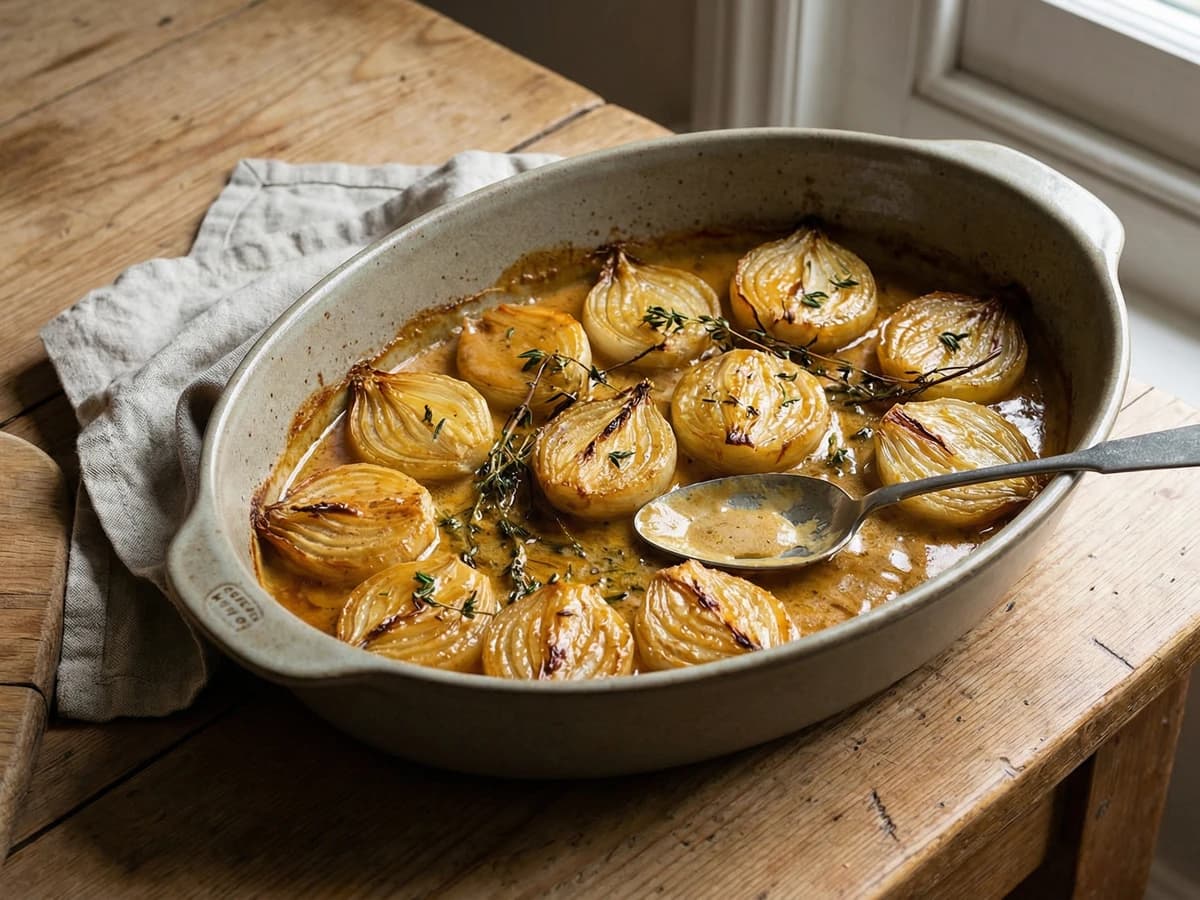
Whole onions surrendered to a low oven with cream and thyme until they collapse into something golden, sweet and yielding, the kind of side dish that quietly upstages everything else on the table.
A cooking platform built around craft, culture, and the stories behind what we eat.
Created by Chef Thomas
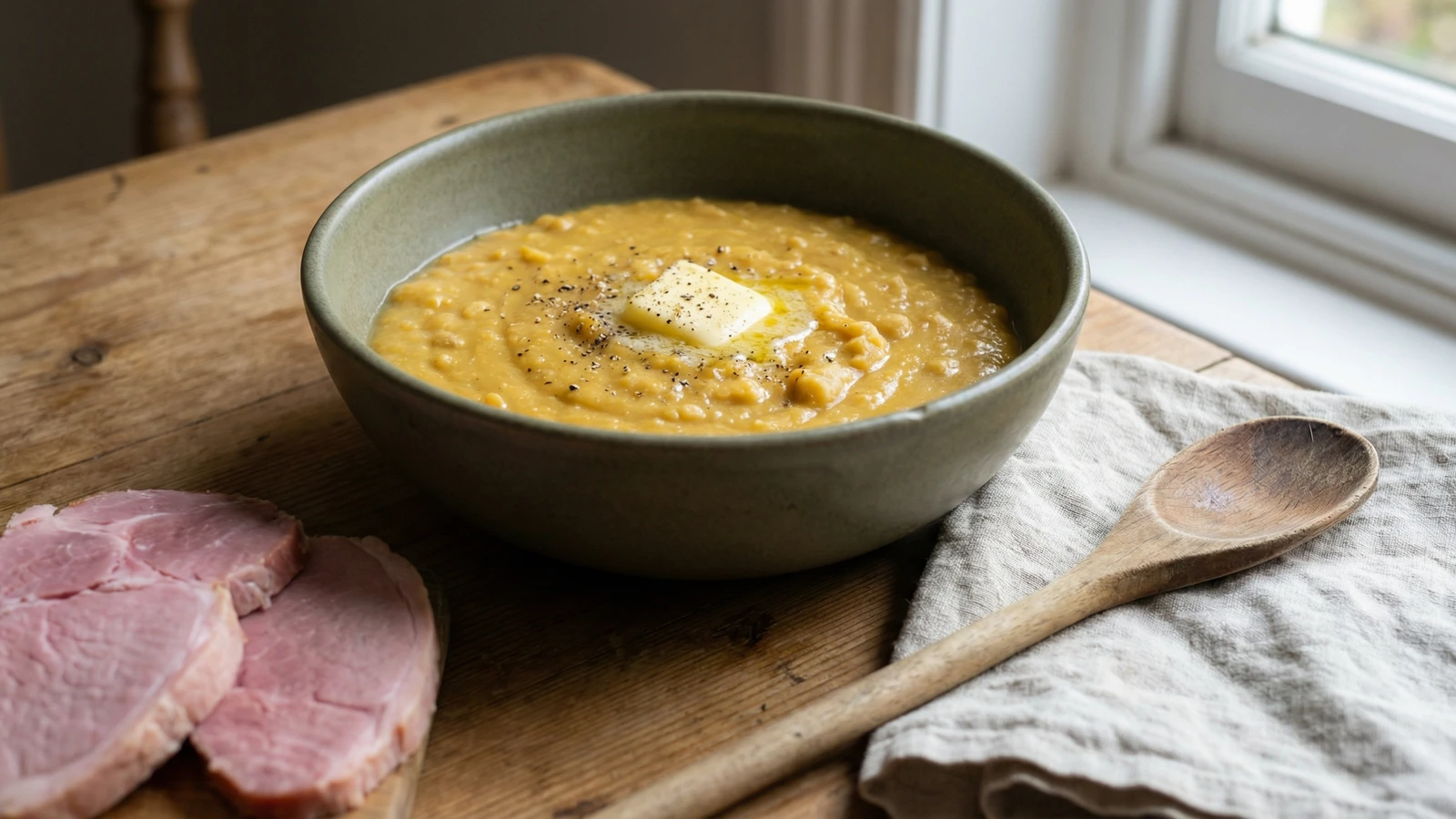
Yellow split peas, simmered slowly in ham stock until thick, golden, and savoury, spooned alongside something salty and good. A dish that has been keeping people warm for centuries and sees no reason to stop.
Cold rain on the kitchen window. The kind of grey afternoon in late November when the light is gone by four and the house needs warming from the inside. That's when I reach for the split peas.
Pease pudding is old. Older than most things you'll cook this year. It fed people long before anyone thought to write a recipe for it, and it survives because it works. Yellow split peas, good stock, patience. The peas soften over a couple of hours into something thick and golden that smells of warmth and ham and the kind of kitchen you want to sit in with your coat still on. A knob of butter stirred through at the end makes it glossy. An egg binds it together. That's the whole of it.
It belongs beside boiled ham. That's the partnership, the old northeastern one: a piece of ham simmered in its own stock, the peas cooked in the same liquor, the two arriving at the table together the way they always have. But it sits just as happily next to roast pork, good sausages, or a plate of greens if you'd rather keep things simple. I've eaten it cold the next day, spread on toast, and written it down in the notebook with the note: "better than it has any right to be."
We're only making dinner. But this one carries weight. The kind of quiet, filling, golden warmth that reminds you what home cooking is for.
Quantity
500g
soaked overnight and drained
Quantity
1 litre
Quantity
1
Quantity
30g
Quantity
1 medium
halved
Quantity
1
beaten
Quantity
to taste
Quantity
to taste
| Ingredient | Quantity |
|---|---|
| yellow split peassoaked overnight and drained | 500g |
| ham stock or good chicken stock | 1 litre |
| bay leaf | 1 |
| unsalted butter | 30g |
| onionhalved | 1 medium |
| eggbeaten | 1 |
| fine sea salt | to taste |
| white pepper | to taste |
The night before, put the split peas in a large bowl and cover with cold water by a good few inches. They'll swell to nearly twice their size overnight. Drain and rinse them the next day. This isn't optional. Unsoaked peas will cook eventually, but they'll fight you the whole way, and the texture won't be the same.
Put the drained peas into a heavy pan with the stock, the bay leaf, and the onion halved and dropped in whole. Bring to a gentle simmer. Not a boil. A boil makes the peas frothy and agitated; a simmer lets them soften into themselves. Cook for an hour and a half to two hours, stirring now and then, particularly towards the end when the pudding thickens and starts to catch on the bottom if you aren't paying attention. The peas should collapse entirely, losing their shape, turning into something thick, golden, and porridge-like. Add a splash more stock or water if the pan runs dry before the peas are ready.
Pull out the bay leaf and the onion halves. They've done their work. Beat the butter into the hot peas until it melts through and the whole thing turns glossy. Then stir in the beaten egg quickly, while the pudding is still properly hot, so the egg cooks on contact and binds the mixture together. It should look smooth and thick, like something between porridge and a rough puree. Season with salt and white pepper. Taste it. The salt matters here more than anywhere. Underseasoned pease pudding is dull; well-seasoned pease pudding is golden and savoury and quietly magnificent.
Spoon it out generously alongside boiled ham, roast pork, or good sausages. It wants something salty and rich beside it. A knob of butter melting on top as it goes to the table isn't necessary, but it is correct. Leftover pease pudding, cold from the fridge the next day, spread thickly on toast with a grind of pepper, is one of the quieter pleasures of the kitchen.
1 serving (about 220g)
Culinary guides, cultural storytelling, and the editorial depth that makes cooking meaningful.
Discover Culinary ExplorerChef Thomas
Whole onions surrendered to a low oven with cream and thyme until they collapse into something golden, sweet and yielding, the kind of side dish that quietly upstages everything else on the table.
Chef Thomas
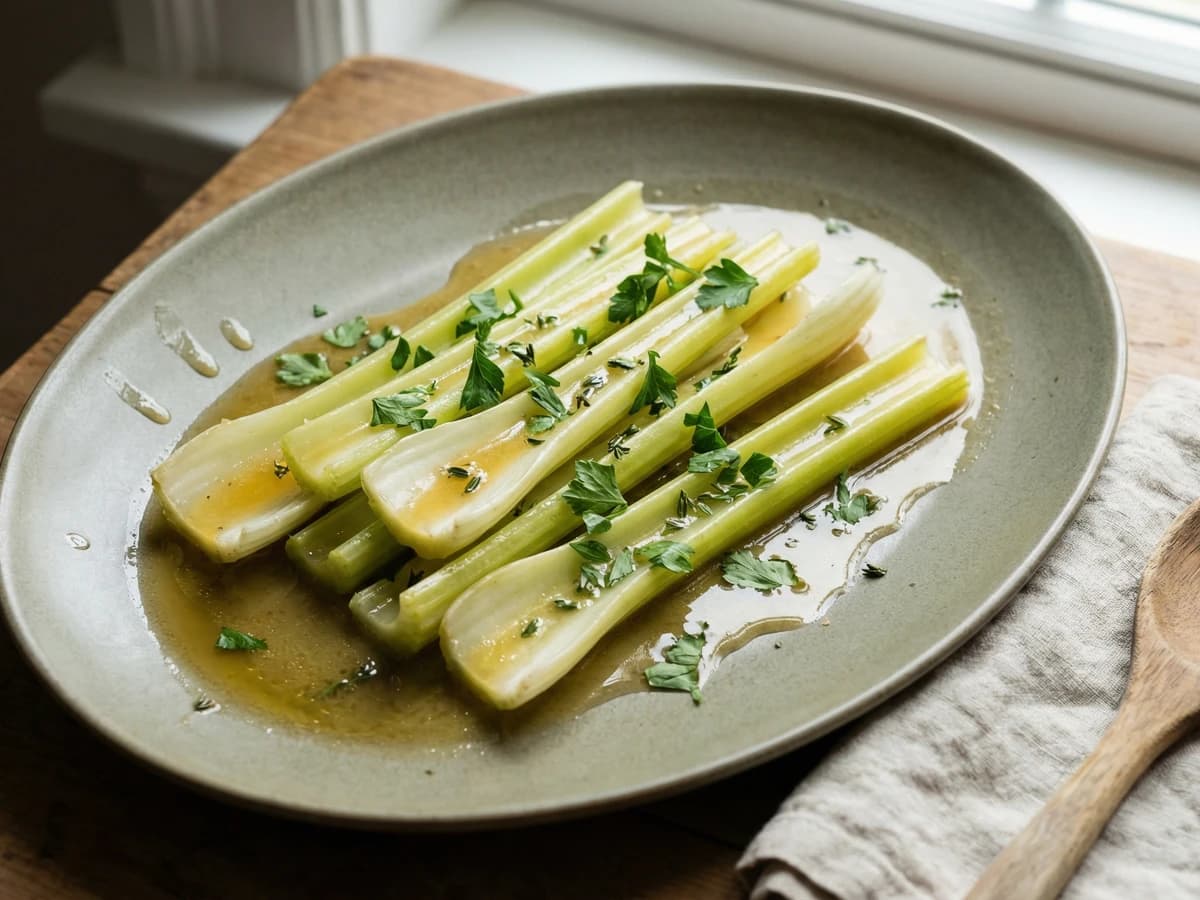
Celery braised long and slow in butter and good stock until it turns soft, silky, and almost sweet, the kind of quiet side dish that makes people ask what you did to it.

Chef Thomas
Leeks surrendered to butter and cream until they turn silky, sweet and yielding, the kind of side dish that quietly becomes the reason you sat down to dinner in the first place.

Chef Thomas
Peas braised in butter with wilted lettuce and spring onions, a dish that is entirely French in spirit and entirely at home on an English table in late May when the garden finally delivers.