Culinary Explorer
A cooking platform built around craft, culture, and the stories behind what we eat.
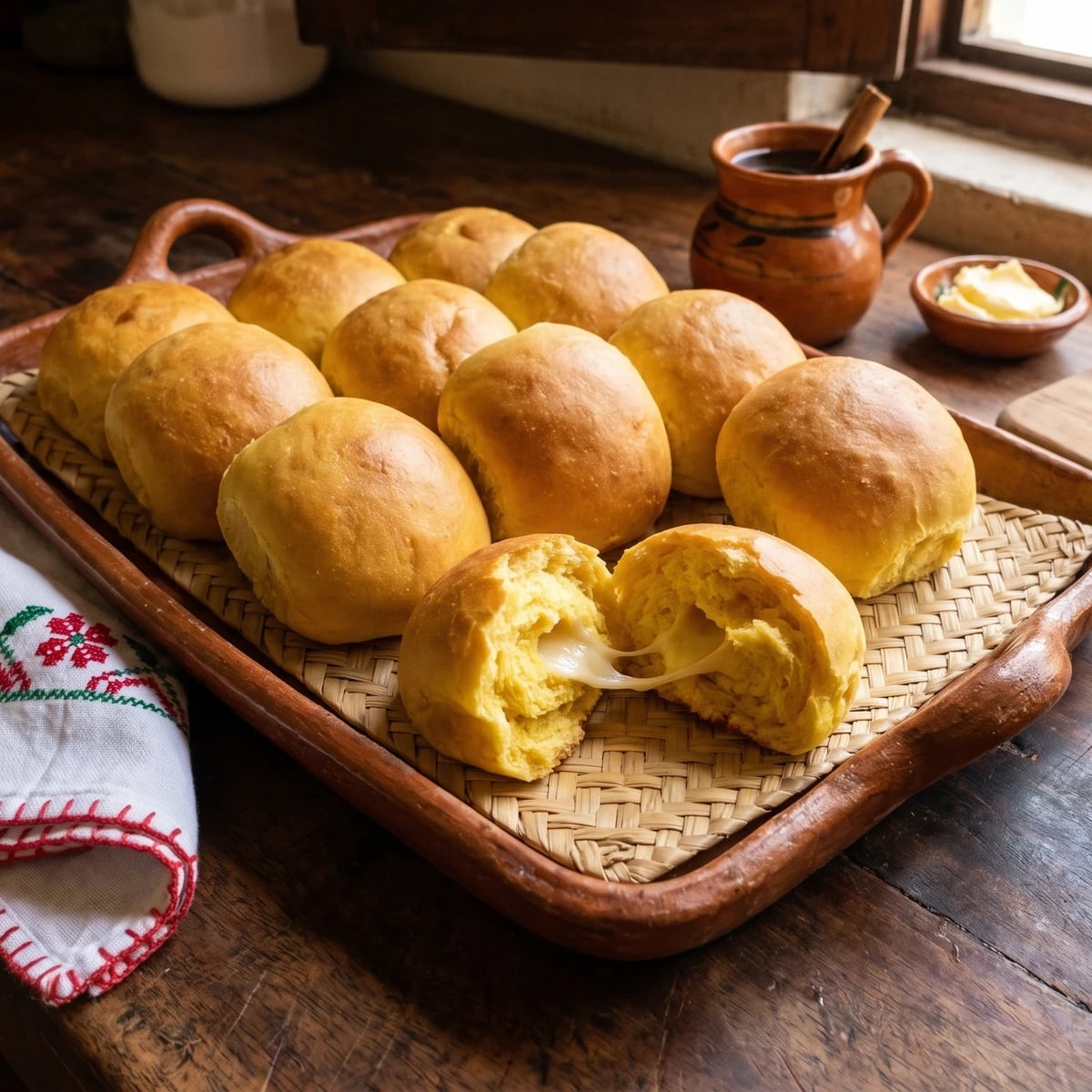
Patas Yucatecas
Created by Chef Lupita
Mérida's elongated soft rolls from the panaderías of the Centro Histórico, enriched with manteca and sometimes hiding a vein of queso de bola, baked golden for the late-afternoon merienda.
These are from Mérida. Not from the panaderías of Ciudad de México, not from the bakeries of Puebla, not from any version of pan dulce you have seen on a national list. The pata is a Yucatecan bread, slimmer than a bolillo, softer than a telera, enriched with lard and eggs, sold by the dozen in the panaderías of the Centro Histórico since the 19th century.
The Yucatán has its own bread tradition because the Yucatán has its own everything. The Peninsula was cut off from the rest of Mexico for most of its history. No roads, no rail, ships came from Havana and New Orleans before they came from Veracruz. That isolation built a cuisine that does not look like the rest of the country. The queso de bola in its red wax rind comes from Dutch trade routes through the Caribbean. The pata is what Mérida's bakers did with European wheat once it arrived and once they decided the bolillo was too austere for the heat and the appetite of the Peninsula.
The lard is not negotiable. La manteca es el sabor and it is also what gives the pata its tender, slightly yellow crumb that pulls apart in shreds instead of crumbs. Butter makes a different bread. Vegetable shortening makes a sad bread. If you do not have manteca, walk to a carniceria and ask for it by name, or render your own from fresh pork fat. It takes an afternoon and it lasts months.
My mother did not bake patas. She was from Jalisco and her bread tradition was different. I learned this one in Mérida from Doña Carmen, who ran a panadería off Calle 62 for forty-three years and who let me sit on a stool in the back of her bakery for two weeks while I wrote down what she did. She rolled each pata between her palms without looking, the way you would tie your shoes. She told me the queso de bola version started in her grandmother's bakery in the 1940s, when the cheese was cheap because there was too much of it coming in through Progreso. Saber cocinar es saber vivir. Saber panificar es saber recordar.
Ingredients
harina de trigo (unbleached all-purpose flour)
Quantity
500 grams (about 4 cups)
granulated sugar
Quantity
100 grams (1/2 cup)
fine sea salt
Quantity
10 grams (1 1/2 teaspoons)
| Ingredient | Quantity |
|---|---|
| harina de trigo (unbleached all-purpose flour) | 500 grams (about 4 cups) |
| granulated sugar | 100 grams (1/2 cup) |
| fine sea salt | 10 grams (1 1/2 teaspoons) |
Where cooking meets culture.
Culinary guides, cultural storytelling, and the editorial depth that makes cooking meaningful.
Discover Culinary Explorer