
Chef Juliana
Abará
You think banana leaves and hand-whipped bean massa mean “isso não é pra mim.” Wrong. Soak, peel, beat, wrap, steam. Abará is learned by touch, not inherited by magic.
A cooking platform built around craft, culture, and the stories behind what we eat.

Created by
You don't need a pastelaria. You need thin dough, creamy palmito, a fork to seal the edges, and the courage to let hot oil do its noisy little job.
You hear the oil and think, isso não é pra mim. I know. Frying makes people stand two steps back from the stove like the pan is going to file a complaint. But cooking isn't a gift, it's something you learn, and pastel is a very good teacher because it tells you everything: the dough stretches, the filling thickens, the oil sings, the surface blisters.
I didn't grow up knowing how to do this either. I learned late, with a caderno beside me and a lot of dough that looked like it had been folded by a nervous committee. The trick is not bravery. It's order. Make the filling thick so it doesn't leak. Rest the dough so it rolls thin without fighting you. Seal the edges so the oil stays outside and the creamy palmito stays where it belongs.
Pastel is feira food, snack food, potluck food, the thing a gente eats standing up with a paper napkin and sauce on the wrist. But it still belongs to the same Brazilian logic as the pê-efe: real ingredients, an honest refogado, something crisp and hot next to rice, beans, greens, and whatever else is solving dinner. Comida de verdade doesn't have to look serious to count.
Anota aí: no powdered filling, no fake seasoning, no mystery. Onion, garlic, tomato, palmito, a spoon of flour to hold the cream, and dough rolled thin enough to puff. That's a receita que funciona.
Pastel became closely tied to São Paulo's open-air feiras in the twentieth century, where Japanese Brazilian vendors helped popularize the thin fried pastry sold beside caldo de cana. Its shape echoes Asian fried and filled pastries, but the feira version became its own Brazilian institution: big, blistered, salty, and eaten hot from paper. Palmito filling reflects a Brazilian taste for preserved palm heart, especially in savory pies, empadinhas, and party snacks.
Quantity
3 cups, plus more for rolling
Quantity
1 teaspoon
Quantity
2 tablespoons
for the dough
Quantity
1 tablespoon
Quantity
1 cup, plus 1 to 2 tablespoons if needed
Quantity
2 tablespoons
for the filling
Quantity
1 medium
finely chopped
Quantity
2 cloves
minced
Quantity
1 medium
seeded and chopped
Quantity
2 cups
drained and chopped
Quantity
1 tablespoon
for thickening the filling
Quantity
1/2 cup
Quantity
1/3 cup
chopped
Quantity
1/2 teaspoon, plus more to taste
Quantity
1/4 teaspoon
Quantity
4 cups
for frying
| Ingredient | Quantity |
|---|---|
| all-purpose flour | 3 cups, plus more for rolling |
| fine salt | 1 teaspoon |
| neutral oilfor the dough | 2 tablespoons |
| cachaça or white vinegar | 1 tablespoon |
| warm water | 1 cup, plus 1 to 2 tablespoons if needed |
| neutral oilfor the filling | 2 tablespoons |
| onionfinely chopped | 1 medium |
| garlicminced | 2 cloves |
| tomatoseeded and chopped | 1 medium |
| palm heartsdrained and chopped | 2 cups |
| all-purpose flourfor thickening the filling | 1 tablespoon |
| whole milk | 1/2 cup |
| parsleychopped | 1/3 cup |
| salt | 1/2 teaspoon, plus more to taste |
| black pepper | 1/4 teaspoon |
| neutral oilfor frying | 4 cups |
Put the flour and salt in a large bowl and stir them together. Add the oil, cachaça or vinegar, and 1 cup warm water. Mix with a spoon until shaggy, then knead with your hands for about 5 minutes, until the dough turns smooth and firm but not dry. The cachaça or vinegar helps the crust fry crisp and blistered, because it weakens the dough just enough and evaporates fast in the oil.
Wrap the dough or cover the bowl and let it rest for 30 minutes at room temperature. Don't skip this. Resting relaxes the flour so the dough rolls thin instead of springing back like it's arguing with you.
Warm 2 tablespoons oil in a skillet over medium heat. Add the onion and cook until it murcha, soft and see-through, about 5 minutes. Add the garlic for 1 minute, just until you smell it. This is where the flavor starts, and burnt garlic is bitter enough to ruin the whole little party.
Add the tomato and cook until it breaks down and the pan looks juicy, about 3 minutes. Stir in the chopped palmito, salt, and pepper, then sprinkle in 1 tablespoon flour and stir for 1 minute so the raw flour taste cooks out. Pour in the milk and cook, stirring, until the filling gets creamy and holds its shape on the spoon. A loose filling leaks in hot oil. A thick filling behaves.
Turn off the heat and stir in the parsley. Spread the filling on a plate and let it cool until it's barely warm. Hot filling softens the dough and weakens the seal, and then the pastel opens in the oil like it has opinions.
Divide the dough into 12 pieces. On a lightly floured counter, roll one piece into a thin rectangle, about 5 by 7 inches. You should almost see the shadow of your fingers through it, but it shouldn't tear. Thin dough puffs and blisters; thick dough fries heavy and chewy.
Spoon 2 tablespoons cooled filling onto one side of the dough, leaving a clean border. Fold the dough over, press out any trapped air, and seal the edges firmly with a fork. Air pockets expand in the oil and can burst the pastry, so press gently from the filling outward before crimping.
Pour 4 cups oil into a heavy pot, leaving plenty of space at the top, and heat to 180°C (350°F). If you don't have a thermometer, drop in a tiny scrap of dough: it should bubble right away and rise steadily, not sink quietly and not darken in seconds. Oil that's too cool makes greasy pastel; oil that's too hot browns the outside before the dough cooks.
Fry 1 or 2 pastéis at a time, turning once, until puffed, blistered, and golden, about 2 to 3 minutes total. Don't crowd the pot. Too many pastéis drop the oil temperature, and then they soak up oil instead of frying crisp. Drain on a rack or paper towels and salt lightly while hot.
Serve right away, when the crust is crisp under your teeth and the filling is creamy inside. Pastel waits badly. If you're feeding a crowd, keep the fried ones on a rack in a low oven while you finish the rest, but don't pretend they'll be better later. They won't.
1 serving (about 105g)
Culinary guides, cultural storytelling, and the editorial depth that makes cooking meaningful.
Discover Culinary ExplorerChef Juliana
You think banana leaves and hand-whipped bean massa mean “isso não é pra mim.” Wrong. Soak, peel, beat, wrap, steam. Abará is learned by touch, not inherited by magic.
Chef Juliana
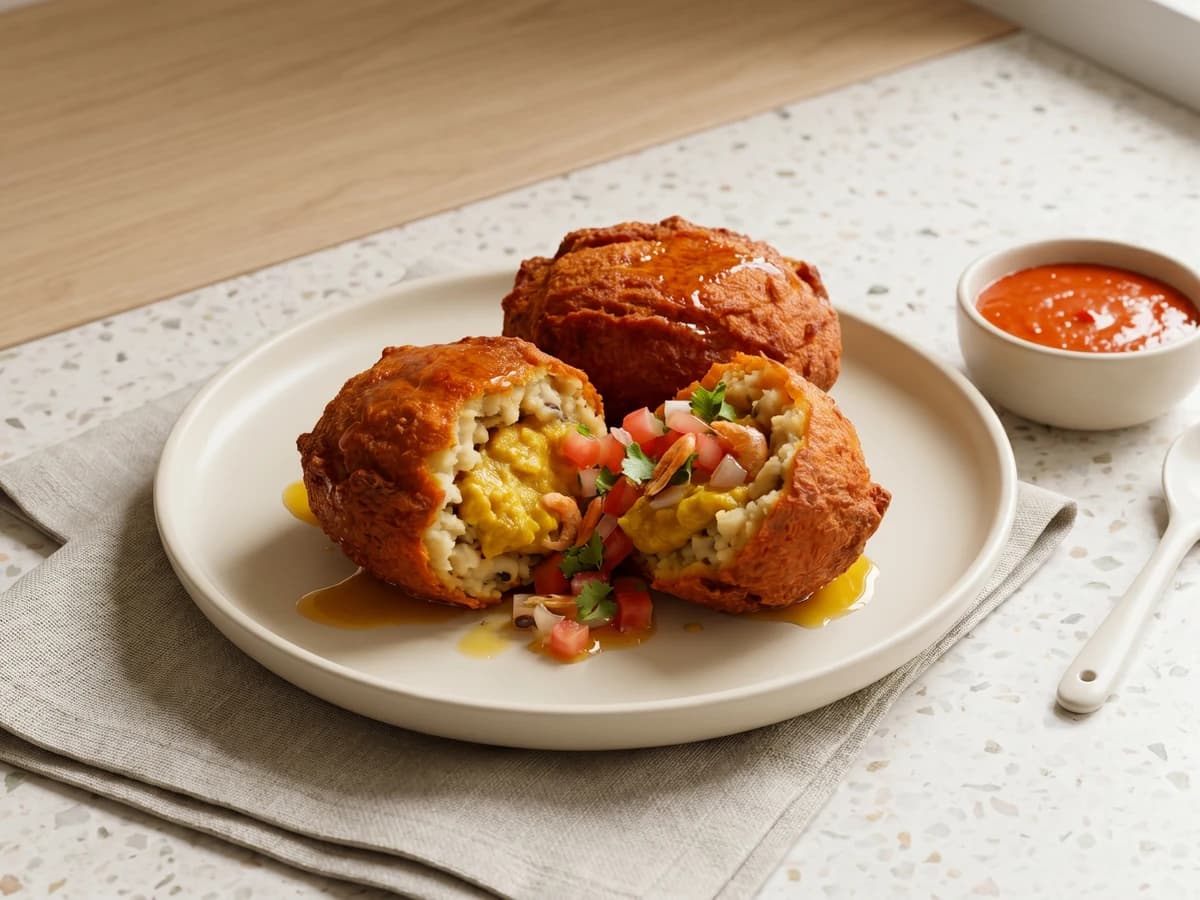
You think food of Iansã from the baianas' tabuleiro is not for your stove. Anota aí: soaked feijão-fradinho, real dendê, and hand-whipping make a home version learnable.

Chef Juliana
You think fried salgados belong to the birthday table you buy, not the one you make. Wrong. Learn the dough, seal the cheese, and the freezer starts working for you.

Chef Juliana
You think stuffed fried bolinhos are for the boteco cook, not your kitchen. Wrong. Mash the aipim warm, keep the filling dry, fry in small batches, and the tray disappears.