Chef Lupita
Aceite de Chiltepin Bajacaliforniano
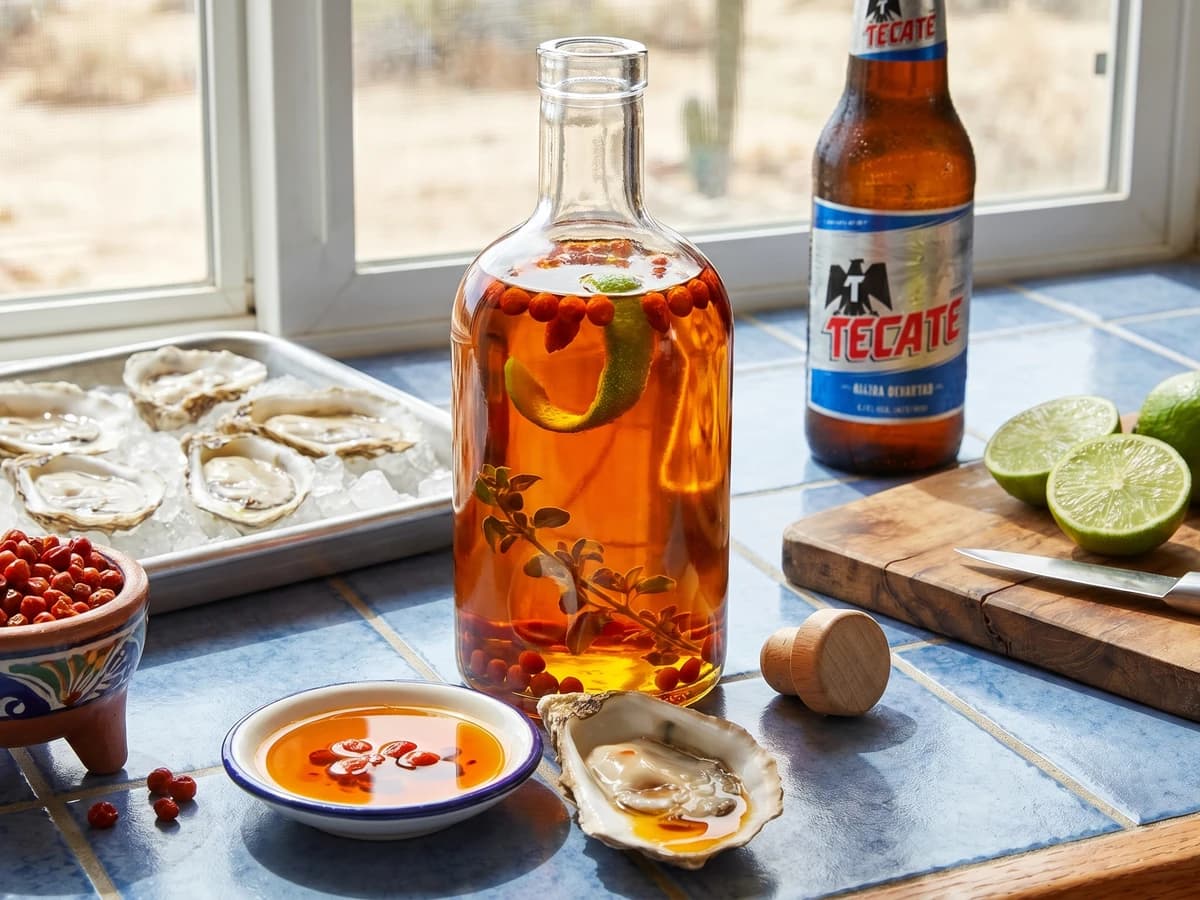
Baja California's wild chiltepin steeped in olive oil with garlic, orejon, and lime peel, until the oil turns ruby-amber and carries the slow, sneaky burn of the desert coast.
A cooking platform built around craft, culture, and the stories behind what we eat.

Created by
Chiapas' brick-red paste of achiote seed, vinegar, garlic, pimienta gorda, and chile simojovel, ground thick for cochito horneado and the pork marinades of Chiapa de Corzo.
Chiapas, the Central Depression around Chiapa de Corzo and Tuxtla Gutierrez, is where this paste lives. It belongs to the kitchens that make cochito horneado for feast tables and asado for family gatherings, where the pork is stained brick-red before it ever sees the oven. Cada estado, su propia cocina. Do not bring me Yucatecan recado rojo and call it the same thing. It isn't.
The achiote seed gives the color, but the Chiapas hand is in the vinegar, garlic, pimienta gorda, oregano, and the little chile simojovel. Simojovel is not pasilla. It is small, red, and local, with a clean bite that stays in its place. This paste is not supposed to burn your mouth. It is supposed to stain the meat, season the fat, and make the room smell like toasted seed and clay.
I learned this version in Chiapa de Corzo from a woman who kept her paste in a rough clay bowl, covered with a plate, not in a branded plastic block. She ground until the achiote stopped feeling like sand. That is the work. A blender can help you, and a spice grinder can save your wrists, but the grind must be fine. No me vengas con atajos. Gritty achiote paste is a cook trying to leave early.
Annatto, Bixa orellana, is native to tropical America and was used before the conquest by Maya and Zoque communities as a colorant and seasoning. In Chiapas and neighboring Tabasco, achiote became part of vinegar-based marinades for pork and fish, especially in the hot lowland kitchens where citrus, seed spices, and local chiles traveled through market networks along the Grijalva and Usumacinta basins. Cochito horneado is especially associated with Chiapa de Corzo, and the Chiapas paste differs from Yucatecan recado rojo by leaning on cane vinegar, pimienta gorda, oregano, and chile simojovel instead of the sour orange profile used for cochinita pibil.
Quantity
1/2 cup
picked over
Quantity
3
stemmed and seeds shaken out
Quantity
1 teaspoon
Quantity
1 teaspoon
Quantity
4
Quantity
1/2 teaspoon
Quantity
1-inch piece
Quantity
1 1/2 teaspoons
Quantity
1/2 teaspoon
Quantity
6
peeled
Quantity
1 tablespoon
Quantity
1/2 cup, plus 2 to 4 tablespoons more as needed
| Ingredient | Quantity |
|---|---|
| whole achiote seedspicked over | 1/2 cup |
| dried chile simojovelstemmed and seeds shaken out | 3 |
| whole allspice berries (pimienta gorda) | 1 teaspoon |
| black peppercorns | 1 teaspoon |
| whole cloves | 4 |
| cumin seeds | 1/2 teaspoon |
| Mexican canela | 1-inch piece |
| dried Mexican oregano | 1 1/2 teaspoons |
| dried thyme | 1/2 teaspoon |
| garlic clovespeeled | 6 |
| coarse sea salt | 1 tablespoon |
| cane vinegar (vinagre de cana) | 1/2 cup, plus 2 to 4 tablespoons more as needed |
Spread the achiote seeds on a tray and pick through them with your fingers. Remove any small stones, stems, or pale dead seeds. Good achiote stains your fingertips orange-red and smells earthy, peppery, and a little floral. If it smells like dust, the paste will taste like dust. Si no conoces el mercado, no conoces la cocina.
Heat a dry comal or heavy skillet over medium-low heat. Add the achiote seeds and stir constantly for 2 to 3 minutes, just until the seeds darken a shade and smell warm. Do not let them blacken. Achiote burns quietly and then punishes the whole batch with bitterness.
Toast the chile simojovel for 5 to 10 seconds per side, just until it becomes fragrant. Remove it immediately. Add the pimienta gorda, black peppercorns, cloves, cumin seeds, and canela to the comal and toast for about 1 minute, shaking the pan. Turn off the heat and add the oregano and thyme for 15 seconds, using the leftover heat only. Dried herbs burn faster than chiles. Watch them.
Let everything cool for 5 minutes. Grind the achiote, chile, spices, oregano, and thyme in a spice grinder in short pulses until you have a fine red powder. If using a molcajete or metate, work in small handfuls and add only a few drops of vinegar when the seed starts to slide. Pass the powder through a fine sieve and grind the coarse bits again. This is where the señoras of Chiapa de Corzo make the difference: the paste should not feel gritty on the tongue.
Put the ground mixture in a blender with the garlic, sea salt, and 1/2 cup cane vinegar. Blend until thick, smooth, and brick-red, scraping the jar as needed. Add more vinegar 1 tablespoon at a time only if the blades refuse to move. You want a paste, not a sauce. It should mound on a spoon and stain everything it touches.
Spoon the paste into a clean glass jar or a small glazed clay bowl. Press the surface flat and cover tightly. Let it rest in the refrigerator for at least 30 minutes before using, better overnight. The vinegar settles the raw garlic and the spices stop shouting at each other. This paste is not shelf-stable. Keep it cold and use it within 3 weeks, or freeze it in tablespoon portions for 3 months.
For cochito horneado, mix 3 tablespoons of this paste with 1/3 cup cane vinegar and 1 teaspoon salt for every 3 pounds of pork shoulder or ribs. Rub it into the meat and let it marinate overnight. Roast in a clay cazuela or heavy baking dish until the fat renders and the achiote darkens against the pork. La manteca es el sabor when the dish calls for it, but this storage paste itself is vinegar-ground. Así se hace y punto.
1 serving (about 14g)
Culinary guides, cultural storytelling, and the editorial depth that makes cooking meaningful.
Discover Culinary ExplorerChef Lupita
Baja California's wild chiltepin steeped in olive oil with garlic, orejon, and lime peel, until the oil turns ruby-amber and carries the slow, sneaky burn of the desert coast.

Chef Lupita
Puebla's Lenten convent adobo, a brick-red vinegar chile paste of ancho, guajillo, garlic, oregano, and comino made to dress fish for the meatless calendar.
Chef Lupita
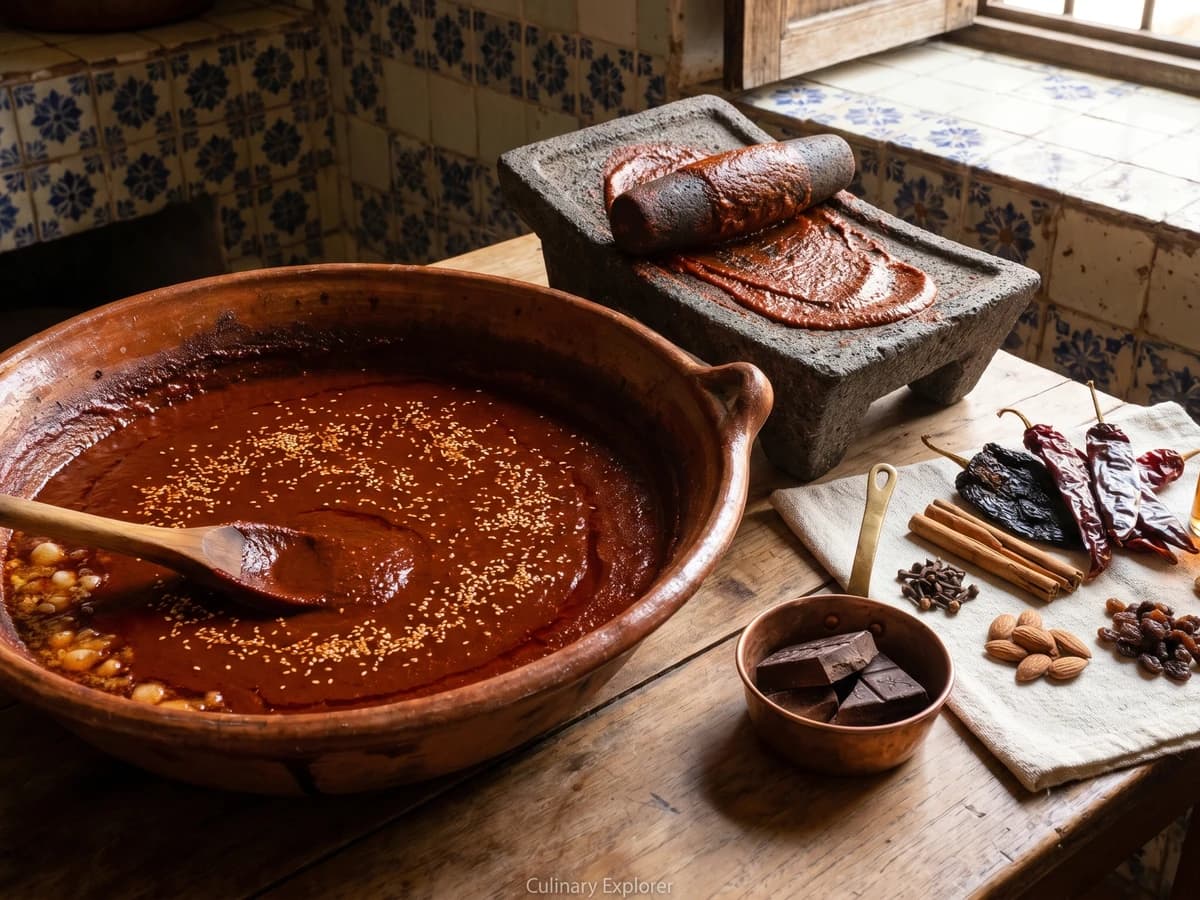
Zacatecas' wedding-table adobo, built from toasted guajillo and ancho, piloncillo, sour orange, chocolate, canela, clavo, almonds, sesame, and lard.

Chef Lupita
Puebla's convent kitchens built this adobo with ancho, guajillo, jerez, almonds, raisins, clove, and lard, a baroque marinade that stains pork loin and finishes as the sauce.