
Chef Graziella
Brodetto alla Romagnola
The fish stew of my home coast, where fishermen brought whatever the Adriatic offered and their wives made it into something that needed nothing more than good bread and an appetite.
A cooking platform built around craft, culture, and the stories behind what we eat.
Created by
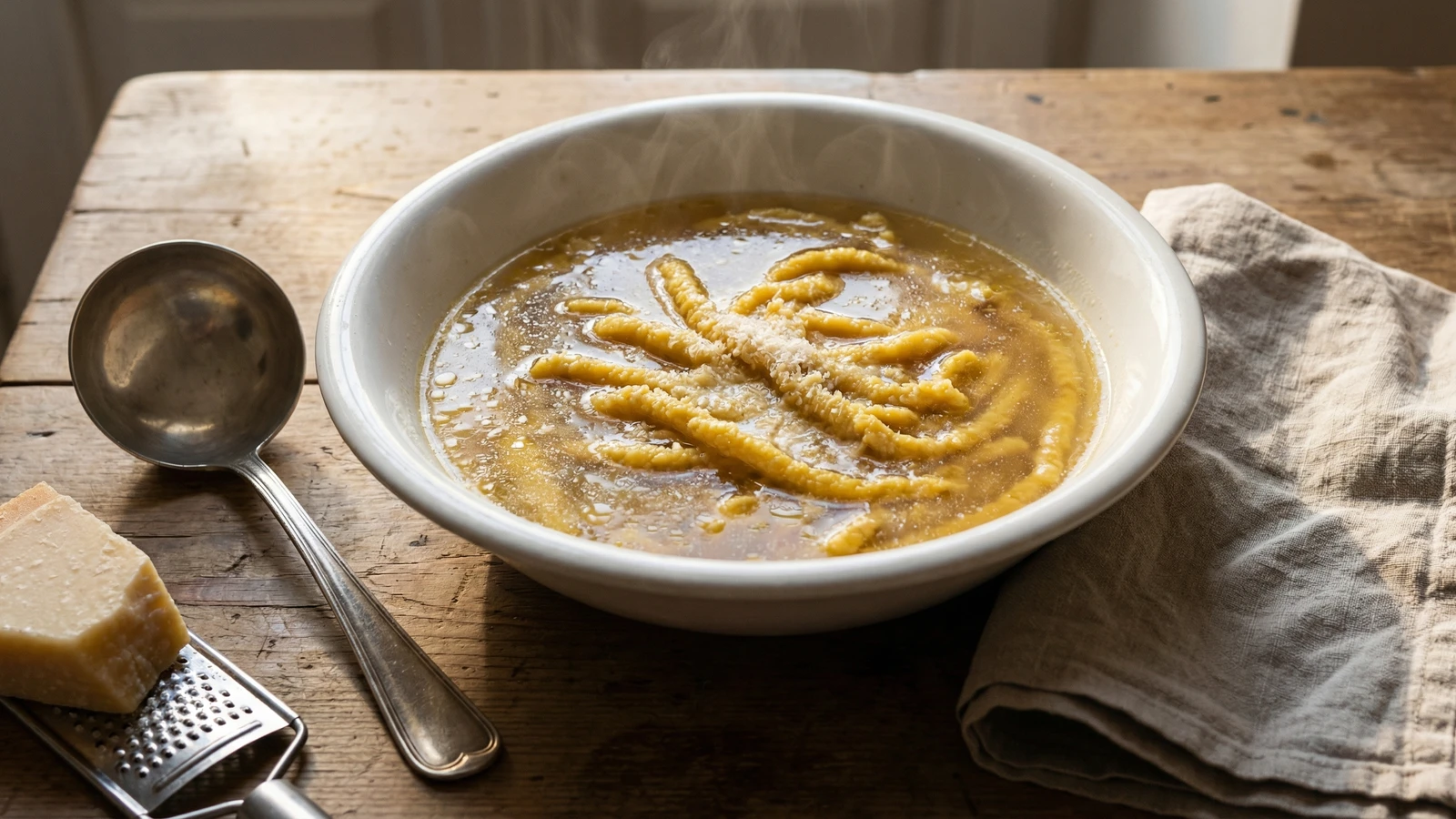
Thick strands of breadcrumbs, Parmigiano, and egg pressed directly into simmering broth. From the farmhouses of Romagna, this is the soup that defines home cooking: simple technique, profound comfort.
In Romagna, the eastern half of Emilia-Romagna that stretches from Bologna to the Adriatic coast, passatelli has been the soup of home for as long as anyone can remember. Farm wives made it from what the kitchen always had: stale bread ground to crumbs, a wedge of the family's Parmigiano, eggs from the chickens, and broth from whatever simmered on the stove. The first useful thing to know about this dish is that it cannot be improved by making it complicated.
The technique is elemental. You mix the crumbs, cheese, and eggs into a soft dough. You press it through a tool with large holes directly into simmering broth. One minute, perhaps two, and it is done. There is no pasta to boil separately, no sauce to prepare, no multiple pots. Everything happens in the broth.
What you keep out is as significant as what you put in. Some add marrow. Some add flour to stretch the dough. These are variations, not requirements. The essential passatelli contains nothing more than what makes it passatelli: breadcrumbs, Parmigiano, eggs, a whisper of nutmeg, and broth that tastes of Sunday. The lemon zest is traditional in some families, heresy in others. I include it because my grandmother did.
Passatelli appears in Romagnol kitchens from at least the 18th century, though its origins likely reach further back. The name derives from 'passare,' to pass through, describing the act of pressing dough through the iron. Every village between Ravenna and Rimini claims its version as authentic, though the arguments are friendly. What unites them all is the understanding that this soup exists to transform humble ingredients into something that tastes of home.
Quantity
1 1/2 cups
Quantity
1 1/2 cups (about 4 ounces)
freshly grated
Quantity
3
Quantity
1/4 teaspoon
freshly grated
Quantity
zest of 1 small lemon
finely grated
Quantity
pinch
Quantity
8 cups
Quantity
for serving
freshly grated
| Ingredient | Quantity |
|---|---|
| fine dry breadcrumbs | 1 1/2 cups |
| Parmigiano-Reggianofreshly grated | 1 1/2 cups (about 4 ounces) |
| large eggs | 3 |
| nutmegfreshly grated | 1/4 teaspoon |
| lemon zestfinely grated | zest of 1 small lemon |
| fine sea salt | pinch |
| homemade meat broth | 8 cups |
| Parmigiano-Reggianofreshly grated | for serving |
In a large bowl, mix together the breadcrumbs and grated Parmigiano-Reggiano. Add the nutmeg and lemon zest. Toss with your hands until evenly distributed. The mixture should smell faintly of cheese and citrus. This is your foundation.
Beat the eggs lightly with a fork. Pour them over the breadcrumb mixture. Add a small pinch of salt. Work the mixture with your hands, pressing and kneading until it comes together into a soft, pliable dough. The dough should hold its shape when squeezed but not crack at the edges. If it crumbles, add another egg yolk. If it feels sticky, add a tablespoon more breadcrumbs.
Bring the meat broth to a steady simmer in a large pot. The broth should bubble gently, not boil violently. Violent boiling breaks the passatelli apart. Taste your broth now, before the passatelli go in. Season it properly. The passatelli absorb the flavor of the broth, so it must taste right.
Working directly over the simmering broth, press the dough through a passatelli iron or potato ricer with large holes. The strands should fall directly into the broth in pieces about two inches long. Use a knife to cut them as they emerge. Work quickly. The dough firms as it cools.
The passatelli cook in one to two minutes. They are done when they float to the surface and look slightly swollen. Do not overcook them. Overcooked passatelli become mushy and begin to dissolve into the broth. This is a disaster. Remove the pot from heat the moment they float.
Ladle the passatelli and broth into warmed soup bowls. Pass freshly grated Parmigiano-Reggiano at the table. The soup must be served immediately. It cannot wait. The passatelli continue to absorb liquid and will swell unpleasantly if left sitting. Call your family to the table before you press the dough.
1 serving (about 350g)
Culinary guides, cultural storytelling, and the editorial depth that makes cooking meaningful.
Discover Culinary ExplorerChef Graziella
The fish stew of my home coast, where fishermen brought whatever the Adriatic offered and their wives made it into something that needed nothing more than good bread and an appetite.

Chef Graziella
The Christmas soup of Romagna, where delicate cheese-filled pasta floats in amber capon broth. Smaller than their Bolognese cousins, these little hats require patience and reward it generously.

Chef Juliette
Marseille's great fish stew, saffron-gold and garlic-scented, proves that a hard boil can be the careful choice: it binds olive oil into broth before the whole pot meets bread.

Chef Juliette
Waterzoi asks fresh, bone-in river fish to thicken its own buttery broth, with parsley root and pepper for company. No flour, no stockpot, just a brisk simmer watched closely.